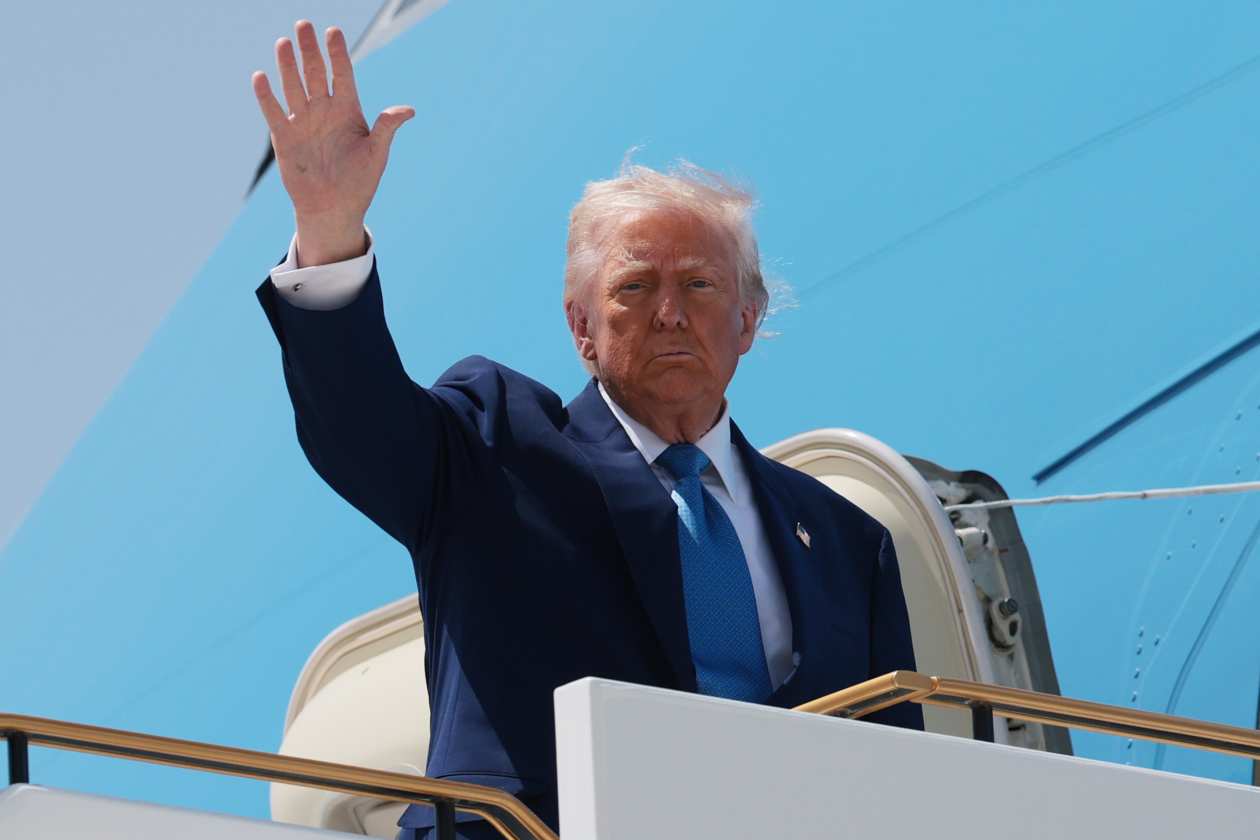
The U.S. government's growing budget deficit, highlighted by Moody's recent credit downgrade, is under renewed scrutiny as House Republicans advance a tax and spending bill expected to exacerbate the fiscal outlook. Analysts anticipate the bill will become even pricier in the Senate due to resistance to spending cuts, particularly to Medicaid, which could impact 8.6 million Americans by 2034. This situation is putting upward pressure on Treasury yields and potentially leading to higher interest rates, with some strategists suggesting that political dysfunction is preventing necessary fiscal course correction.
The U.S. government's fiscal position is deteriorating, as highlighted by Moody's recent credit downgrade and a federal budget deficit reaching $1.8 trillion in 2024, projected to hit $1.9 trillion (over 6% of GDP) in 2025—significantly above the historically sustainable 2-3% of GDP. House Republicans are advancing a tax and spending bill that analysts, including Henrietta Treyz of Veda Partners, warn could exacerbate this situation, particularly as the Senate is unlikely to approve contentious cost-saving measures such as the proposed $715 billion in Medicaid cuts, which the CBO estimates could leave 8.6 million Americans uninsured by 2034. This legislative friction, exemplified by Senator Josh Hawley's opposition to Medicaid cuts and moderate Republicans' demands for a higher SALT deduction cap (currently proposed to rise from $10,000 to $30,000 for joint filers under $400,000), signals political challenges in achieving fiscal consolidation. Market repercussions are already evident, with U.S. government bond yields remaining stubbornly high and analysts like Thierry Wizman of Macquarie attributing this to a "political and institutional breakdown." David Kelly of J.P. Morgan Asset Management notes the proposed tax bill and tariffs could prevent Federal Reserve rate cuts, leading to persistently higher long-term interest rates. The prevailing sentiment, echoed by Ethan Harris, former chief economist for Bank of America, is that without a significant policy shift, a funding crisis seems increasingly probable, as Washington appears unwilling to address the worsening debt problem.
AI-powered research, real-time alerts, and portfolio analytics for institutional investors.
Overall Sentiment
Negative
Sentiment Score
-0.60
Ticker Sentiment
