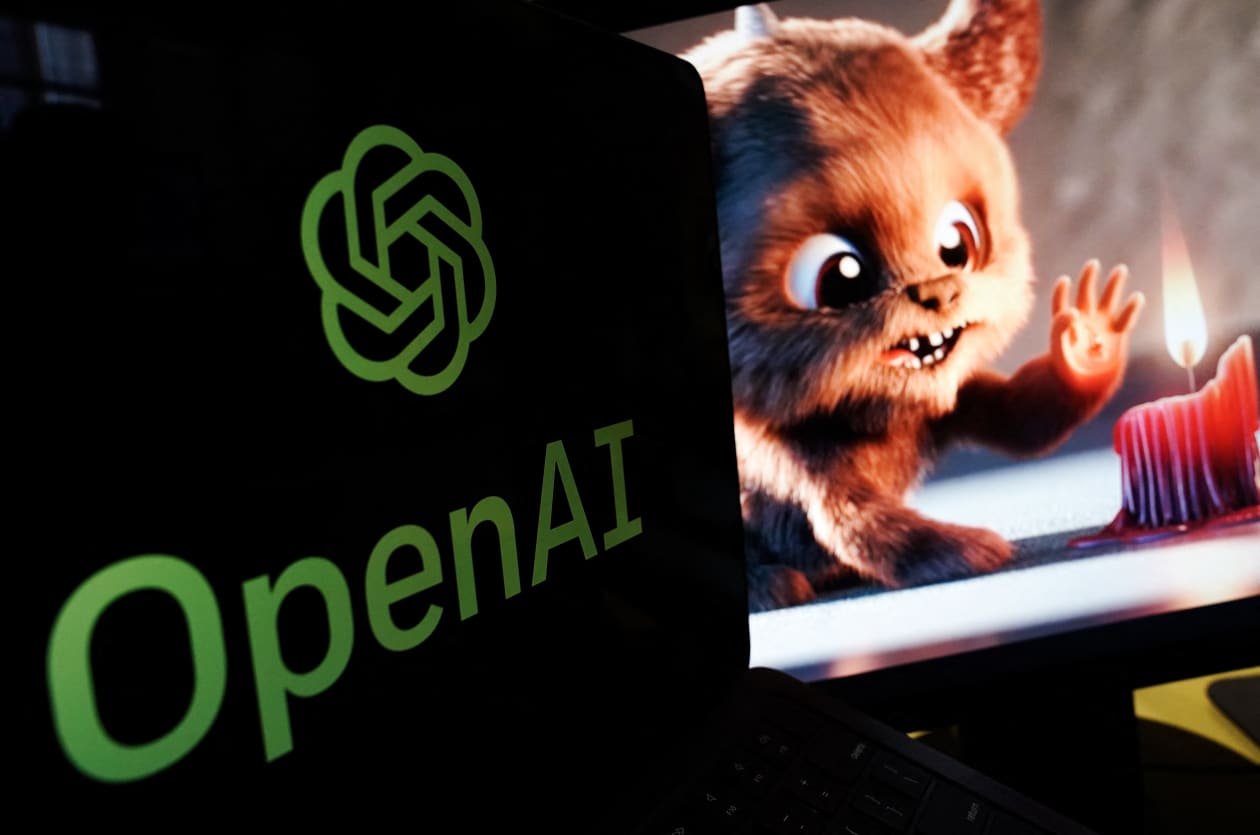
OpenAI announced it will shut down Sora, its AI video generator launched in December 2024, without providing a reason or timeline. An analyst said the move highlights that generative video technology remains immature and has a long way to go before replicating any vertical, signaling limitations and continued uncertainty in production-ready AI video.
Many vertical AI use-cases — especially media/video — are revealing a higher-than-expected engineering and safety tax versus text-first products. Expect product roadmaps to lengthen: moving from prototype to commercially reliable output will likely take 12–36 months longer than current sell-side decks assume because of per-domain data needs, adversarial testing, and moderation pipelines.
The economics favor a concentrated infra stack: generative video is roughly an order of magnitude (10–50x) heavier on inference/training resource intensity and creates tens of GBs per minute of data during iterative development, so hyperscalers and GPU suppliers capture most of the surplus. That implies a second-order reallocation of capex — more spend at NVDA/AMD and AWS/GCP/MSFT, less incremental SaaS spending on downstream consumer apps in the near-term (one to four quarters).
Regulatory and tooling markets are the most actionable emergent theme: watermarking, provenance, and deepfake-detection vendors will see an enterprise-grade procurement cycle once regulators define minimum standards — think 6–12 month catalysts. The market consensus underestimates two durable outcomes: (1) a multi-year premium to infra/cloud providers and (2) a sharper-than-expected reset for pure-play generative app valuations as monetization windows slip and compliance costs bite.
AI-powered research, real-time alerts, and portfolio analytics for institutional investors.
Overall Sentiment
mildly negative
Sentiment Score
-0.25
