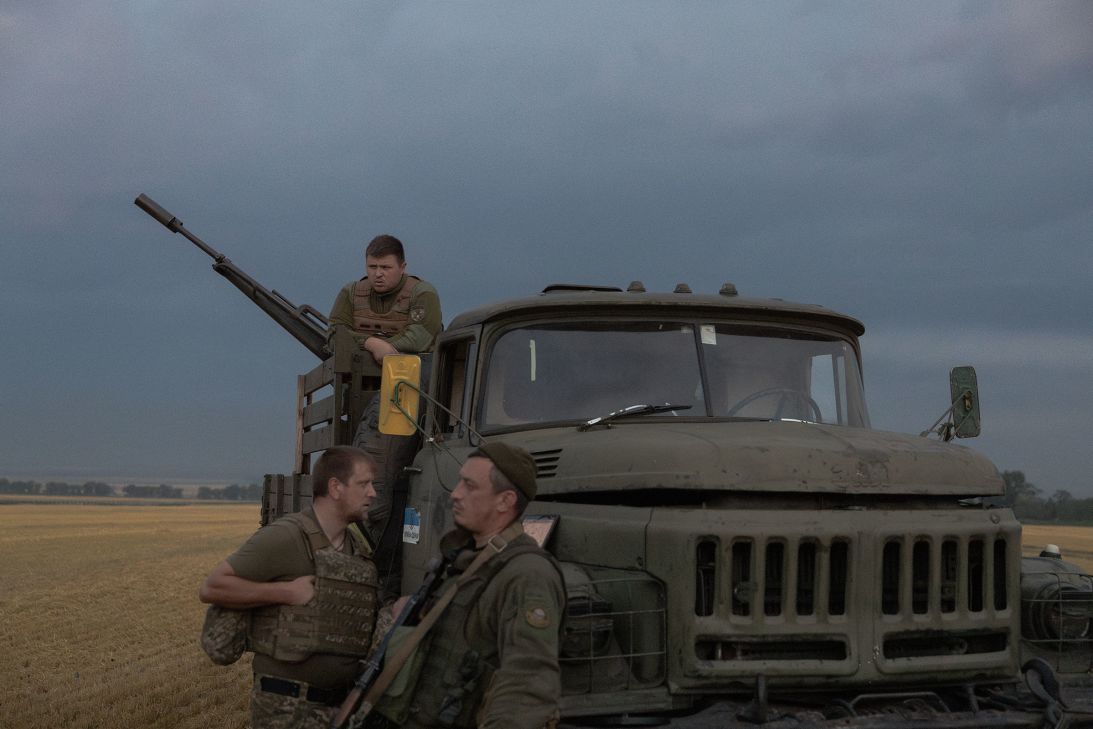
A potential Trump-Putin meeting is being considered, with both leaders having distinct objectives: Trump seeks to personally negotiate an end to the conflict, while Putin aims to consolidate significant battlefield gains from Russia's ongoing summer offensive and buy time. Given Russia's current military momentum, an unconditional ceasefire is highly unlikely. The article outlines various scenarios for the war's trajectory, from Russia cementing territorial gains to potential Western disunity, concluding that none are immediately favorable for Ukraine and a bilateral summit without Kyiv's involvement is unlikely to yield a lasting resolution.
A potential meeting between US President Donald Trump and Russian leader Vladimir Putin is framed by divergent strategic objectives, creating a high-stakes geopolitical environment with significant market implications. Trump's approach is predicated on the belief that personal diplomacy can overcome months of intransigence, while Putin's calculus appears focused on buying time to solidify territorial gains from an ongoing summer offensive. The analysis presents an unconditional ceasefire as "highly unlikely," given Russia's current military momentum and its prior rejection of a similar proposal in May. The scenarios outlined range from a pragmatic pause that freezes Russian gains ahead of winter to a catastrophic failure of Western unity that imperils Ukraine's sovereignty. Conversely, a potential Russian overextension, drawing parallels to the Soviet war in Afghanistan, represents a high-impact but less probable outcome. The prevailing view is one of sustained conflict and heightened uncertainty, reflected in the strongly negative sentiment and high market impact scores, with no scenario offering a near-term, favorable resolution for Ukraine.
AI-powered research, real-time alerts, and portfolio analytics for institutional investors.
Request DemoOverall Sentiment
strongly negative
Sentiment Score
-0.60
