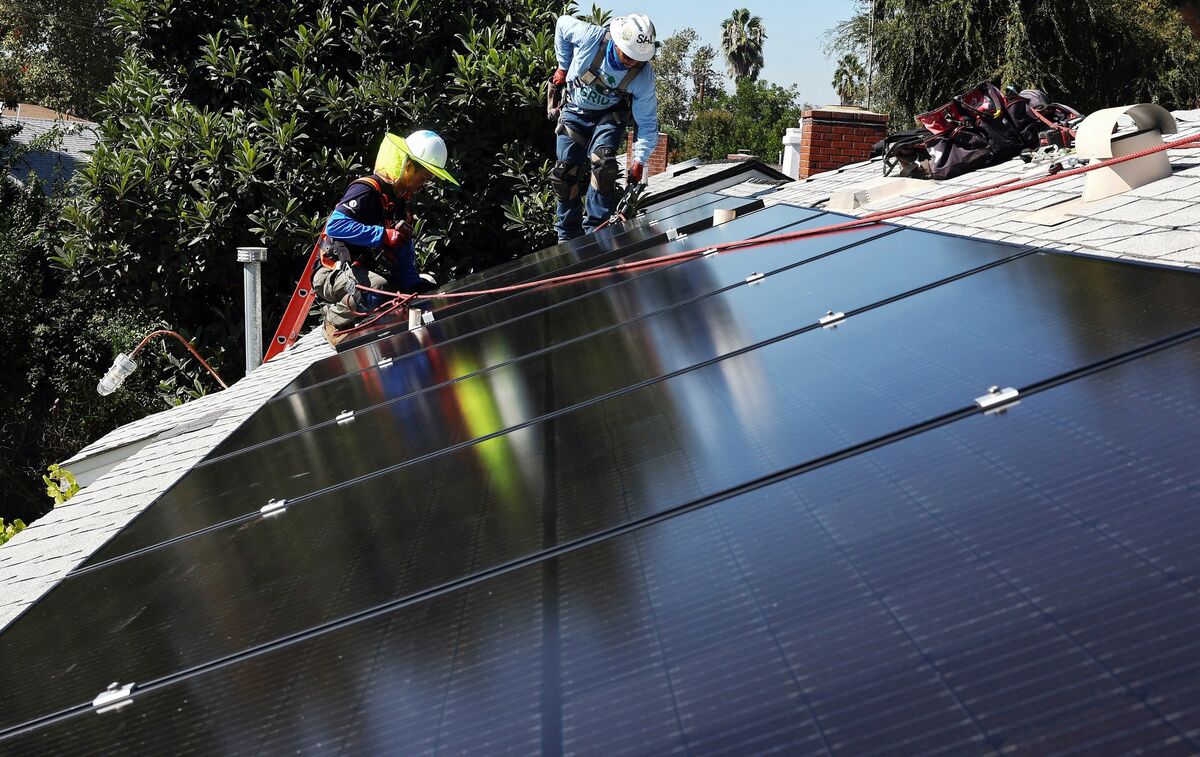
A month-end rush to claim expiring federal rooftop solar and battery tax credits has created installation bottlenecks, risking that some homeowners will miss out on thousands of dollars in incentives. While the surge mirrors earlier demand spikes when EV tax credits were curtailed and boosts near-term order volumes for residential solar providers, constrained installer capacity threatens realized deployments and could reduce near-term revenue capture and incentive utilization for suppliers and installers.
Market structure: The cliff-driven rush benefits upstream equipment OEMs (inverters, microinverters, modules) and battery component suppliers because orders are placed now even if installation lags; incumbents with scale (ENPH, SEDG, FSLR exposure) can capture order flow while smaller installers face cancellations and margin pressure. Installers (Sunrun RUN, Sunnova NOVA, Tesla TSLA solar) are winners in immediate revenue but losers on profitability if overtime/subcontractor costs and cancellation churn rise. The key imbalance is installer labor/permitting capacity >> hardware supply, meaning equipment inventory risk and uneven revenue recognition over 1–3 months.
Risk assessment: Tail risks include a last-minute Congressional extension of the ITC (collapses urgency) or large-scale consumer refunds/litigation from missed installs; both would hit installers most and could cut expected near-term EBITDA by 20–40% for exposed operators. Immediate (days–weeks): booking volatility and cancellations; short-term (1–3 months): inventory build and margin compression; long-term (12+ months): structural residential penetration depends on policy clarity and interconnection reforms. Hidden dependencies: utility interconnection queues, local permitting and certified electrician labor are binding constraints that can amplify churn.
Trade implications: Favor equipment makers and commodity exposure that benefit from accelerated module/battery orders while underweight execution-dependent installers. Specific plays: initiate small 1–2% long exposure to ENPH/SEDG via 2–3 month call spreads (10–20% OTM) to limit downside, and a 1% short or 3-month put on RUN to express execution risk. Rotate 1% into lithium exposure (ALB or LIT ETF) with a 6–12 month horizon; trim if lithium prices fall >20% or if Congress extends credits.
Contrarian angles: Consensus assumes hardware wins and installers rebound; missing is post-cliff demand cliff if credits are extended and reputational damage causing long-term higher customer acquisition costs for installers. Historical parallel: EV credit rush produced a short spike then multimonth sales normalization — expect similar 3–12 month mean reversion. Use option structures to cap downside; avoid large outright longs in installers until 90–120 days of realized install throughput confirms conversion rates.
AI-powered research, real-time alerts, and portfolio analytics for institutional investors.
Request DemoOverall Sentiment
mildly negative
Sentiment Score
-0.30
