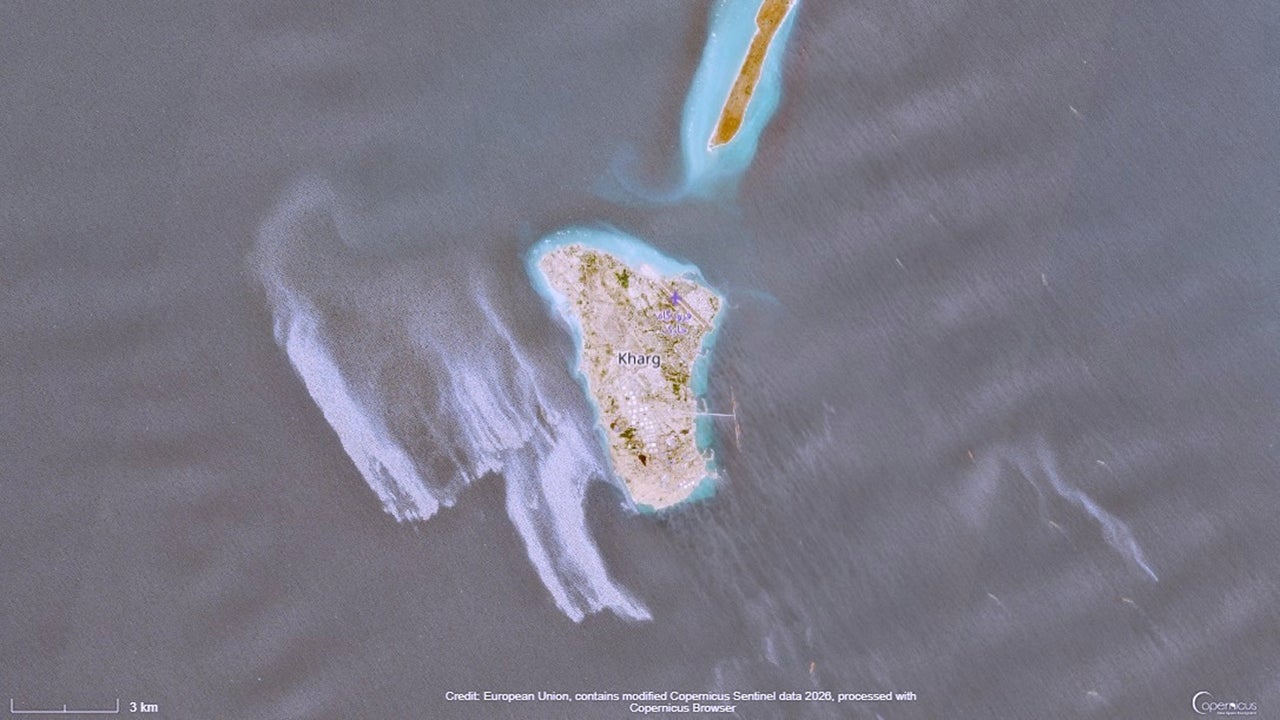
Pentagon officials said the U.S. war against Iran has cost about $29 billion, up from $25 billion in late April, with roughly $24 billion tied to munitions replacement and equipment repairs. Separately, Iran said a large oil slick near Kharg Island likely came from a foreign tanker dumping contaminated ballast water rather than a leak from its export facilities. The combination of higher war spending and continued Middle East geopolitical risk is relevant for defense budgets and energy market volatility.
The near-term market read-through is less about the headline damage and more about the regime shift in tail-risk pricing. A war that is now expensive enough to start stressing replenishment cycles for precision munitions creates a hidden tax on U.S. readiness: even if operations pause, the Pentagon’s need to rebuild inventories tightens supply for other theaters and can lift margins for defense primes with exposed missile, air-defense, and naval systems. That makes the winners less the broad defense complex and more the niche suppliers with backlog visibility and constrained replacement capacity.
On energy, the spill allegation matters because it adds a second layer of operational risk to an already fragile export corridor. If the incident is real pollution from third-party shipping activity, it becomes a political excuse for tighter inspection, slower liftings, and potentially higher insurance premia around Gulf cargoes; if it is a cover for infrastructure damage, then the market is underpricing the probability of intermittent outages. Either way, the second-order effect is not a durable supply shock but a higher volatility band for freight, marine insurance, and regional crude differentials over the next 2-8 weeks.
The contrarian point is that the market may be over-focusing on the prospect of renewed strikes and underappreciating escalation fatigue. The fiscal and munitions costs raise the hurdle for sustained kinetic action, which increases the odds of a noisy but ultimately contained standoff rather than a full-blown widening war. That favors selling realized volatility after spikes, while keeping optionality on localized disruption; the asymmetry is in the short-dated move, not a clean medium-term directional trend.
AI-powered research, real-time alerts, and portfolio analytics for institutional investors.
Request DemoOverall Sentiment
mildly negative
Sentiment Score
-0.15
