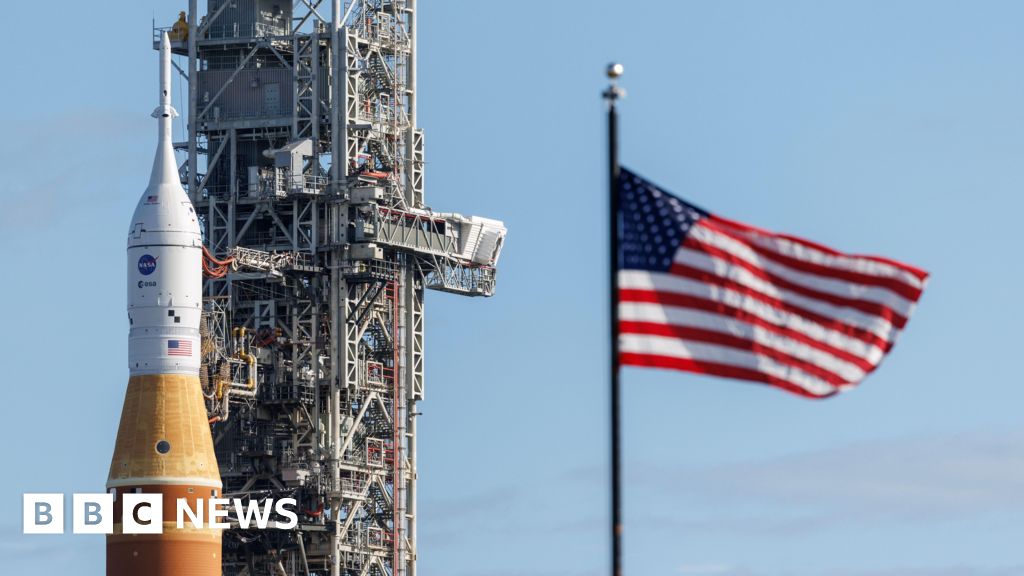
NASA removed 6 March from consideration for its Artemis II crewed lunar mission after engineers found an interruption in helium flow during a wet dress rehearsal at Kennedy Space Center, prompting additional maintenance and a launch delay. The 10-day mission—fuelled with about 730,000 gallons of propellant and crewed by Reid Wiseman, Victor Glover, Christina Koch and Jeremy Hansen—is intended to validate systems ahead of Artemis III; further schedule slips could affect program timelines and contractors tied to the lunar program, which aims for a landing by 2028.
Market structure: A near-term delay in Artemis II is a negative shock to sentiment for commercial small-cap launchers and suppliers that price on near-term milestones (Rocket Lab RKLB, Virgin Galactic SPCE), while large defense primes (Lockheed LMT, Northrop NOC, RTX) see muted impact because >70% of revenue is defense/space backlog and multiyear contracts. Helium/cryogenics quality-control issues spotlight single-source suppliers and could raise contractor change-order risk by an incremental mid-single-digit percentage of program cost over 12–24 months. Cross-asset effects are small but expect a bump in short-dated put IV on aerospace names, modest safe-haven flows into 2–5y Treasuries (<20bps move), and no meaningful commodity move for helium unless multiple program delays concentrate demand into a quarter.
Risk assessment: Tail risk includes a catastrophic test failure or multi-launch grounding that could trigger a 15–30% drawdown in small-cap space equities and a government review delaying payments for 3–12 months; regulatory/oversight actions are medium-probability within 90 days. Immediate (days) — volatility spike; short-term (weeks–months) — re-pricing of delivery schedules and contract margins; long-term (years) — program continuity largely depends on Congressional funding votes and demonstrated fixes to hardware. Hidden dependencies: single-source valves/filters, cryo logistics, and contractor schedule interlocks that can cascade into other DoD programs.
Trade implications: Favor selective long positions in diversified defense primes with strong space backlog (LMT, NOC) sized 1–3% taxable portfolio positions and use 3–6 month call spreads to limit cash outlay; avoid or short small-cap launchers (RKLB, SPCE) outright or buy 30–60 day put spreads if IV cheapens. Pair trade: long LMT, short RKLB (1:1 notional) to capture relative resilience; options: buy 45–60 DTE put spreads on RKLB/SPCE sized to expected max drawdown of 20–30%. Rotate capital from speculative commercial-space names into aerospace & defense suppliers (HON, LHX) over 2–8 weeks.
Contrarian angles: Consensus underestimates that program delays often increase government willingness to fund remediation, creating multiyear revenue visibility for primes — dips of 5–10% in LMT/NOC could be buying opportunities. Reaction is likely underdone for majors and overdone for hyped launchers; 1960s–70s NASA program delays show long-term contractor winners recoup value once technical fixes are certified. Unintended consequence: tighter QA could lengthen supply chains and raise margins for diversified subsystem suppliers (Honeywell HON), a second-order long idea over 6–18 months.
AI-powered research, real-time alerts, and portfolio analytics for institutional investors.
Request DemoOverall Sentiment
mildly negative
Sentiment Score
-0.25
