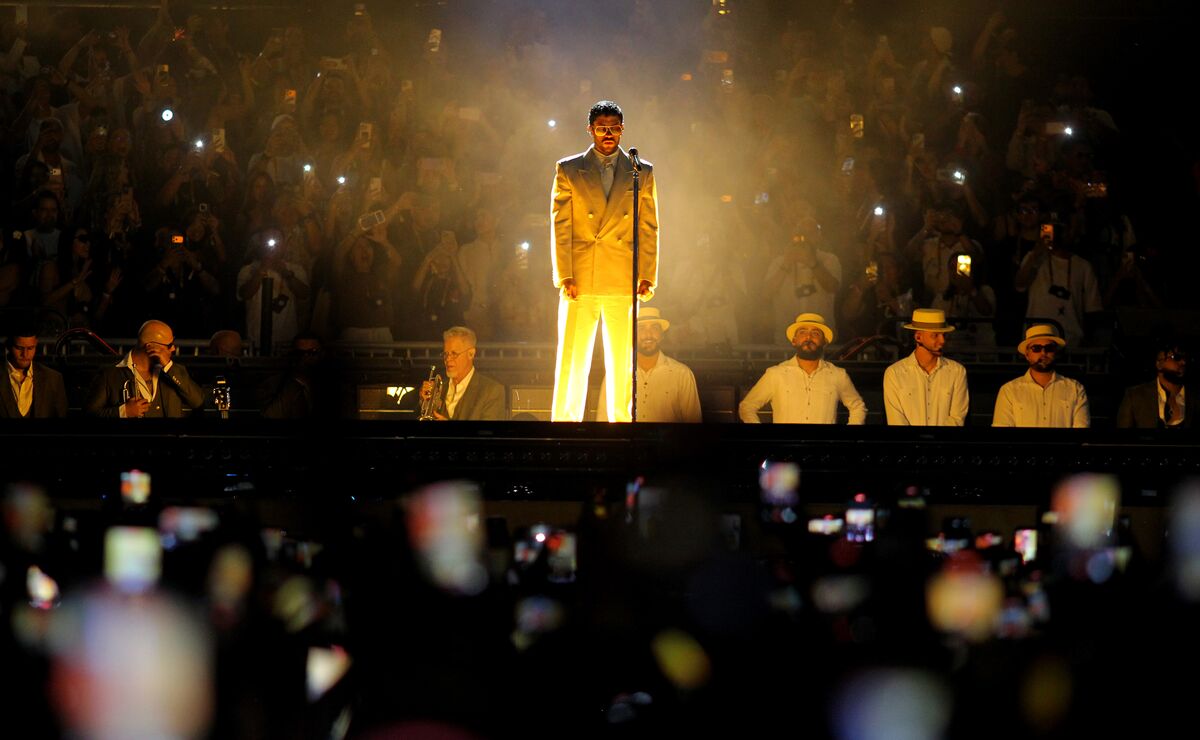
Heavy rain threatened to disrupt three sold-out Bad Bunny shows in Medellin, creating the risk of multimillion-dollar losses for the event. Traditional cancellation insurance was unavailable so close to the performance date, and the nearest weather sensor was too far from the venue to serve as a reliable payout trigger. The article highlights niche insurance/parametric solutions as a workaround for weather-related event risk.
This is a small but important signal that parametric insurance is moving from a niche workaround to a viable risk-transfer product for high-value live events. The economics matter because the limiting factor is not demand for protection — it is basis risk: if the trigger is too crude, buyers won’t trust it; if it is too bespoke, capacity disappears. That creates a durable advantage for underwriters and data providers that can fuse localized weather models, private sensors, and claims automation, while traditional event-cancellation carriers are structurally disadvantaged on late-stage placements and highly localized exposures. The second-order winner is likely the infrastructure around this market rather than the headline policy buyer. Weather data, sensor networks, and workflow software can price convexity better than legacy insurers, and they can scale across concerts, sports, tourism operators, and municipal events with similar climate volatility. The losers are conventional brokers and admitted markets that depend on broad, one-size-fits-all wordings; they will be forced either to shrink their niche or accept lower margins as more risk migrates to specialty and parametric capacity. The catalyst is not a one-off concert; it is the frequency of climate-driven event disruption over the next 12-36 months. As weather volatility rises, buyers will increasingly pre-commit to coverage earlier in the planning cycle, which should expand premiums and reduce last-minute “can’t place it” friction. The main reversal risk is a cluster of basis-risk failures — a few highly publicized misses would slow adoption, because trust is the product here more than capital. The contrarian take is that this is not primarily an insurance story, but a data and pricing story. If markets assume parametric products are merely a substitute for cancellation insurance, they miss the larger implication: more granular climate pricing can re-rate an entire ecosystem of live entertainment, travel, and outdoor leisure by making weather risk explicit rather than implicit. That means the opportunity is likely underappreciated in software, data, and specialty MGAs before it becomes obvious in insurers’ topline growth.
AI-powered research, real-time alerts, and portfolio analytics for institutional investors.
Request DemoOverall Sentiment
neutral
Sentiment Score
0.05
