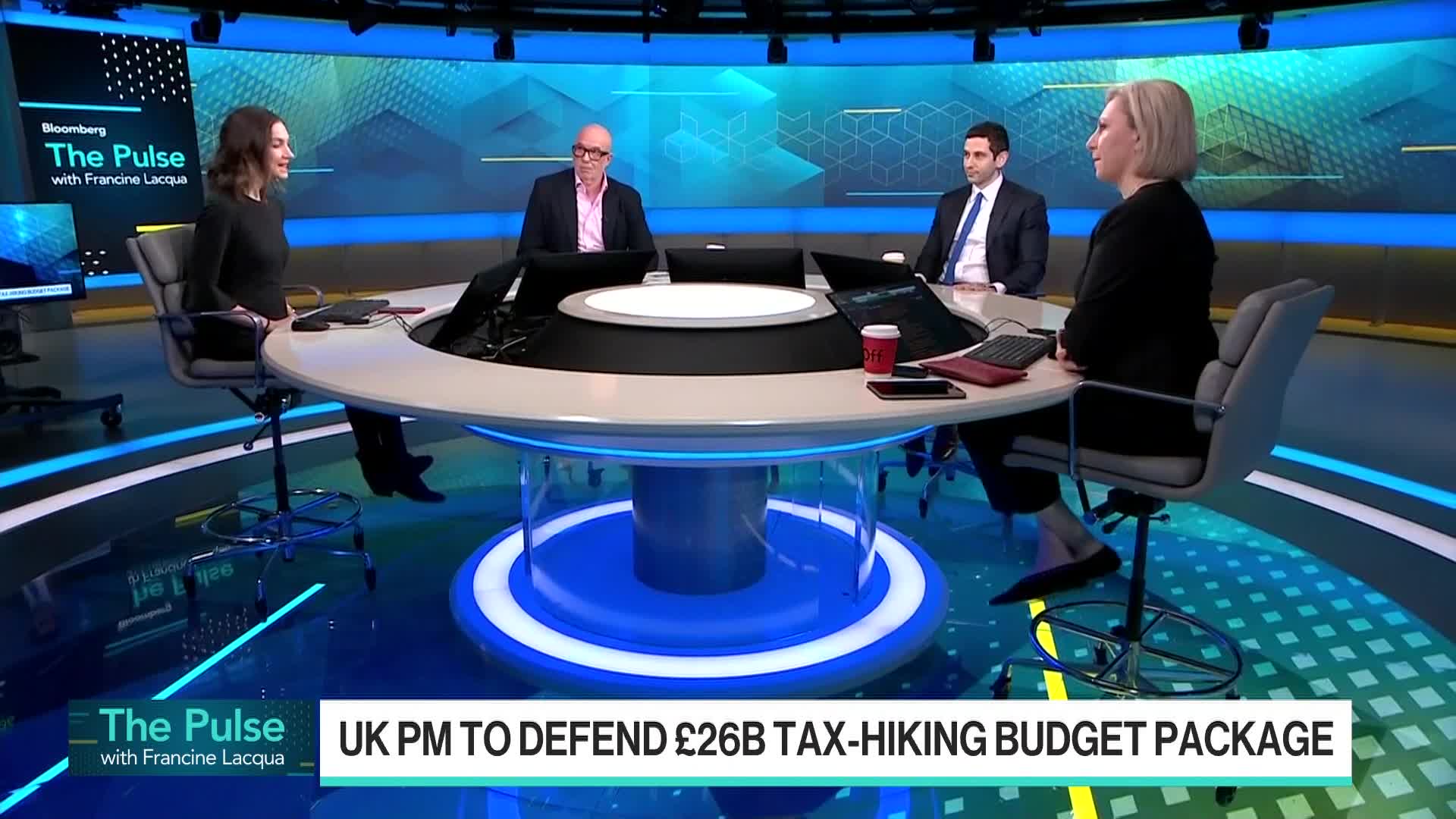
The UK budget has failed to boost the pound, which has weakened toward $1.32 amid perceptions it lacked growth and fairness and amid lingering political uncertainty. Markets should price lower terminal Bank of England rates — the view here is for two cuts in December/early next year and the risk of two more into 2027 — which supports UK fixed income; the team expects UK gilt supply to fall by roughly £50bn next year (about 20%) and favors UK 10-year versus Germany and receiving the UK front end. Equities are mixed with UK large caps outperforming European peers in risk-off moves, while gilt yields have risen with European peers but longer-dated yields fell after the budget, reflecting stabilization rather than a currency-positive growth impulse.
Market structure: Lower expected terminal BoE rates (two cuts by early next year, +2 more into 2027) combined with a potential ~£50bn fall in gilt issuance (~20% of prior supply) creates a classic demand-over-supply bid for UK duration. Direct winners are long-duration gilt holders and large export-oriented FTSE 100 names (miners/oil majors) that benefit from a weaker sterling; losers are import-dependent consumer and small-mid cap domestic plays and FX-sensitive financials as GBP trades closer to $1.32.
Risk assessment: Immediate (days) risk is political noise and gilt auction volatility; short-term (weeks–months) hinge points are Nov–Dec inflation prints, the BoE Nov/Dec meetings and the gilt issuance calendar; long-term (2026–27) risk is BoE cutting more than priced or a fiscal reversal that reintroduces supply. Tail risks: a fiscal shock (snap election or large unfunded fiscal package) could spike yields; a surprise BoE pause or global rates shock could compress the expected rally.
Trade implications: Mechanical plays favor long UK 10y duration (via futures/ETFs) and receiving the front end (long 2y) ahead of the first expected cuts, paired with short GBP/USD via 3‑month puts (strike ~1.30) to hedge FX risk. Relative value: buy UK 10y vs short 10y Bunds to capture expected cross-market easing and lower UK supply; options: buy puts on GBP and consider selling short-dated gilt-call spreads to finance position if vols remain elevated.
Contrarian angles: Consensus emphasises political downside for GBP but underappreciates the size of the supply shock supporting gilts; gilt rally could be larger and more persistent than FX weakness implies. History shows budget-driven GBP squeezes can reverse; an unintended consequence: easier yields lower government financing costs and may permit fiscal loosening, which would reverse duration gains—size positions to withstand such regime flips.
AI-powered research, real-time alerts, and portfolio analytics for institutional investors.
Request DemoOverall Sentiment
moderately negative
Sentiment Score
-0.35
