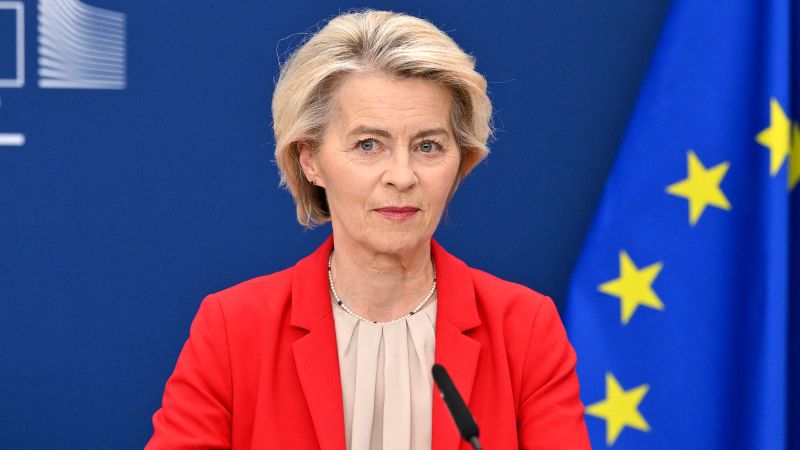
The EU has proposed an 18th package of sanctions against Russia, targeting its oil and gas revenues by lowering the price cap on Russian oil exports from $60 to $45 per barrel and introducing a full transaction ban on Russian banks and financial institutions in third countries that help Russia circumvent existing sanctions. The EU also seeks to ban the use of Russian energy infrastructure, forbidding any EU operator from engaging directly or indirectly in transactions involving the Nord Stream pipelines. These measures aim to increase pressure on Russia due to its continued aggression in Ukraine and the failure of diplomatic efforts, with the EU Commission President stating that oil exports still represent one third of Russian government revenues.
The European Union has proposed its 18th package of sanctions against Russia, signaling a continued escalation of economic pressure in response to Moscow's persistent aggression in Ukraine and the failure of diplomatic overtures. Key measures aim to curtail Russia's energy revenues, with a proposed reduction in the price cap on Russian oil exports from $60 to $45 per barrel, reflecting the 18% drop in Brent crude prices since the initial cap's implementation in December 2022, with Brent recently trading near $68 a barrel. The EU also intends to impose a full transaction ban on Russian banks and, significantly, on financial institutions in third countries found to be assisting Russia in circumventing existing sanctions. Further measures include a ban on EU operators engaging in transactions involving Nord Stream pipelines, the addition of 22 Russian banks to the sanctions list, an expanded prohibition on the export of materials and technologies that could modernize Russian weaponry, and sanctions against 22 entities supporting Russia's military-industrial complex. The European Commission President emphasized that oil exports still constitute one-third of Russian government revenues, underscoring the strategic targeting of this sector. While approval from all 27 EU member states is required, and concerns from nations like Hungary and Slovakia have been noted in the past, these have not historically blocked such measures. The 'hawkish' tone and 'strongly negative' sentiment associated with this announcement, coupled with a 'market_impact_score' of 0.6, suggest significant anticipated effects on targeted sectors and geopolitical stability.
AI-powered research, real-time alerts, and portfolio analytics for institutional investors.
Request DemoOverall Sentiment
strongly negative
Sentiment Score
-0.60
