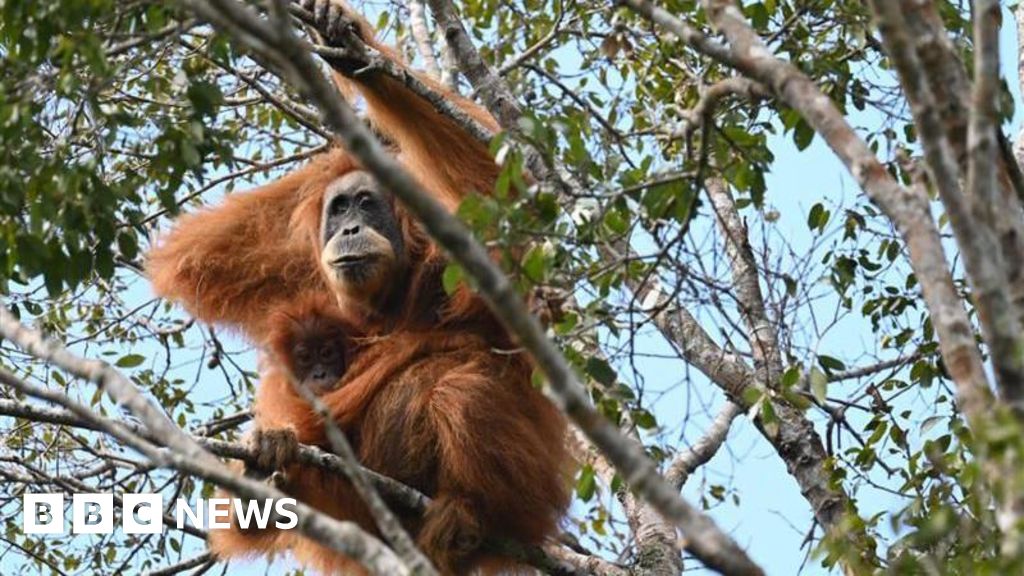
Cyclone Senyar’s extreme rains, floods and landslides in late November have devastated parts of north Sumatra, killing more than 900 people and leaving hundreds missing, and conservationists warn the disaster may have wiped out a significant number of the world’s rarest ape, the Tapanuli orangutan. Fewer than 800 Tapanuli orangutans remain and a carcass found in debris has heightened fears; preliminary satellite analysis estimates 4,800–7,200 hectares of mountain forest were stripped by landslides — an area likely to have contained roughly 35 orangutans that may have perished. The event is a major setback for the species and regional conservation efforts, with key research centres such as Ketambe heavily damaged and urgent rebuilding needed to protect the remaining population.
Cyclone Senyar’s extreme rainfall, floods and landslides in late November devastated mountainous forests in north Sumatra and have caused more than 900 human fatalities with hundreds still missing, according to reports. Conservation workers report an unusual silence in Batang Toru where the Tapanuli orangutan lives, and a carcass recovered in Pulo Pakkat village has heightened fears that some animals were swept away or killed in debris flows.
Fewer than 800 Tapanuli orangutans remain globally; preliminary satellite analysis by Prof. Erik Meijaard estimates 4,800–7,200 hectares of forest on the mountain slopes were stripped by landslides, and he extrapolates that those destroyed areas likely contained roughly 35 orangutans that may have perished. Key research and conservation infrastructure has been damaged — the Ketambe research centre is reported as almost completely destroyed — creating immediate gaps in protection, monitoring and rehabilitation capacity.
Direct public-market consequences are likely limited (market impact score ~0.1), but the event materially raises biodiversity and ESG risk in the region and creates near-term demand for rebuilding and conservation funding. The loss of habitat and research capacity increases the likelihood of long-term species decline and may trigger greater NGO, donor and regulatory focus on Sumatra forestry and conservation practices.
AI-powered research, real-time alerts, and portfolio analytics for institutional investors.
Request DemoOverall Sentiment
strongly negative
Sentiment Score
-0.75
