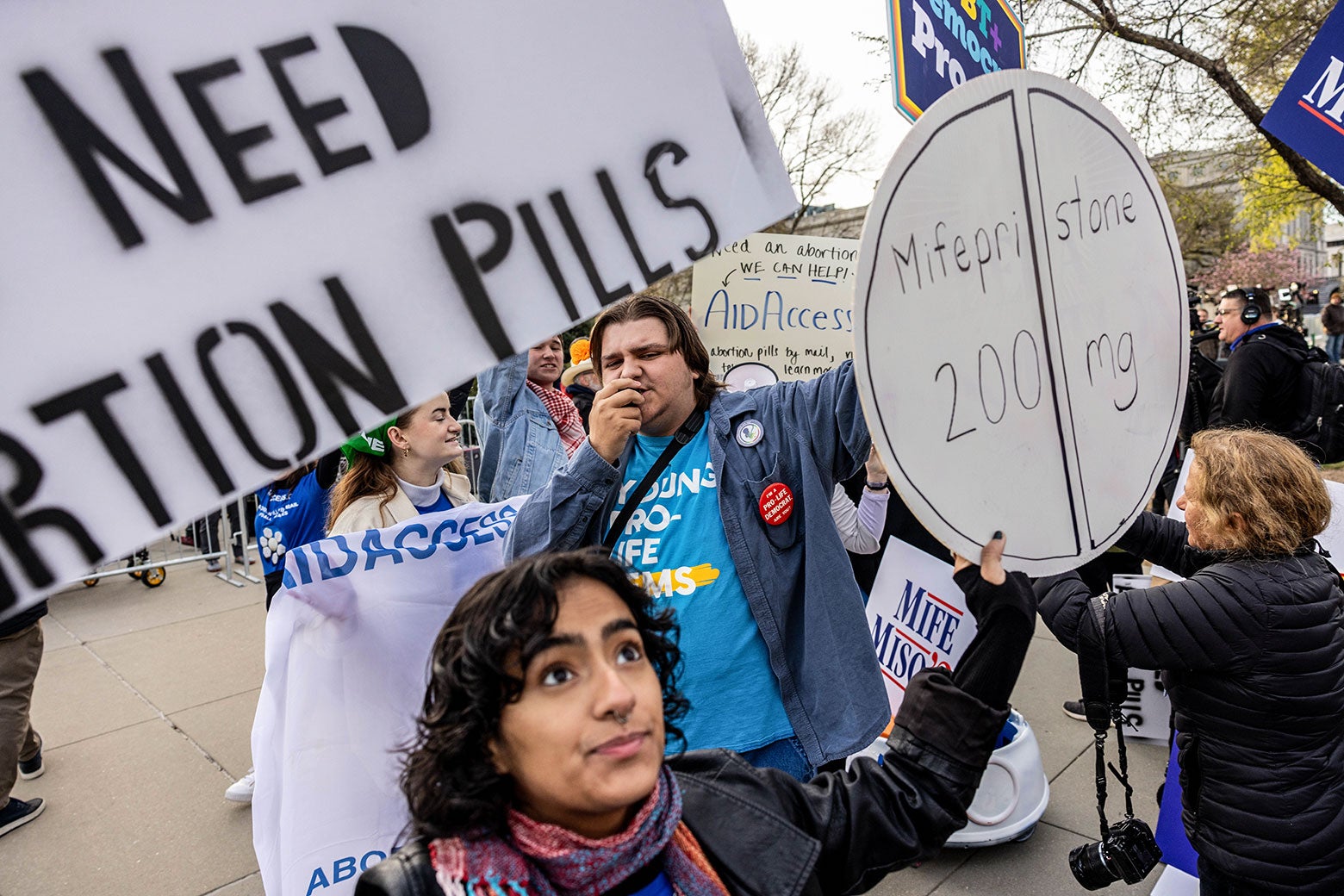
The 5th Circuit issued a nationwide injunction that would block mailing of mifepristone, threatening telehealth access for the drug used in medication abortion and miscarriage management. The Supreme Court has temporarily stayed the ruling for now, but the article says the Trump administration’s FDA has effectively supported the challenge by opening a safety review and declining to defend the merits. The decision could affect roughly one-fourth of U.S. abortions and has potential nationwide regulatory and healthcare implications.
The market impact is less about the drug itself and more about a self-inflicted regulatory credibility shock. Once an agency signals that long-settled safety determinations are “under review,” it invites plaintiffs to reprice every adjacent rule as provisional; that raises the odds of broader judicial carve-outs against telehealth dispensing, REMS normalization, and eventually other pharmacy-benefit pathways in women’s health and select specialty drugs. The second-order loser is the digital-care stack: any platform monetizing remote prescribing, home delivery, or mail-order fulfillment in politically sensitive therapeutic areas now faces a higher discount rate on policy durability. The near-term catalyst set is binary and court-driven, but the trade is really about months, not days. A continued stay from the Supreme Court only delays the operating damage; if the merits path ultimately preserves the injunction, utilization can roll over quickly in abortion-ban states while also impairing cross-border demand from permissive states that rely on mail access as a backup channel. The more important tail risk is precedent: once one circuit blesses the idea that an agency’s own review process can be weaponized against its prior scientific judgment, challengers will test the same playbook in other FDA-adjacent areas. Consensus may be underestimating how much of the threat has already been priced into generic political risk and not into provider economics. The real P&L hit lands on intermediaries: telehealth platforms, reproductive-health clinic networks, mail pharmacies, and any contract manufacturers whose volume relies on remote fulfillment rather than in-person dispensing. Conversely, the headline risk is asymmetric if the FDA ultimately backpedals under political pressure, because that would create a multi-quarter air-pocket in policy-sensitive healthcare names without any immediate offset in earnings.
AI-powered research, real-time alerts, and portfolio analytics for institutional investors.
Request DemoOverall Sentiment
strongly negative
Sentiment Score
-0.65
