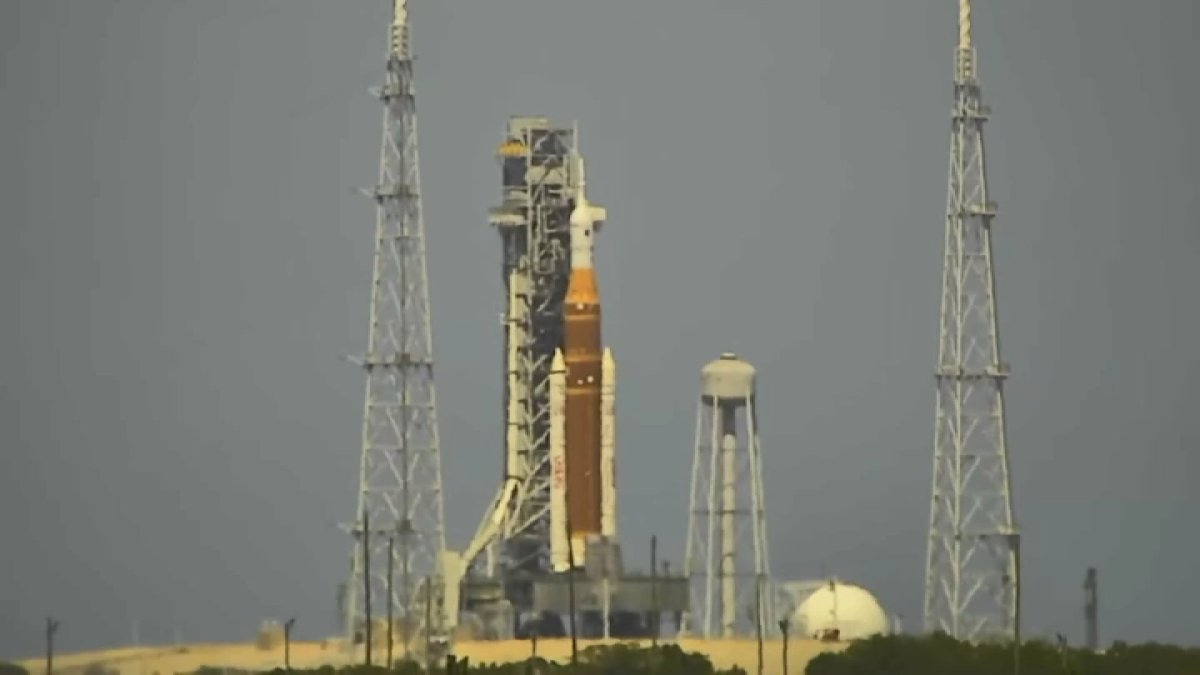
Artemis II is scheduled to launch in a window from April 1–6, carrying four astronauts on a 10-day mission around the Moon before returning to Earth. NASA Ames in Mountain View contributed significant science, re-entry and safety technology, and conducted key aerodynamic testing in its wind tunnel prior to the launch.
The immediate market implication is not the headline mission itself but the latent, multi-year pull-through to specialized engineering services, high-fidelity simulation software, and test instrumentation. Expect procurement and subcontract awards to shift demand away from broad-based OEM capex toward niche suppliers and software vendors—a structural mix shift that can raise gross margins for winners even if overall program spend is lumpy. Over 12–24 months this can translate into mid-single-digit revenue bumps for a leading simulation vendor and high-teens EBITDA expansion for specialist test-equipment makers as utilization and pricing power improve.
Supply-chain second-order effects are concentrated in composite materials, telemetry/sensor suppliers, and HPC/cloud providers that accelerate digital twins and CFD workloads. Regional manufacturing hubs near major R&D centers will see a halo effect: small-system integrators and precision-machining shops can grow capacity rapidly but are M&A targets, compressing their forward free cash flow yield and creating buyout opportunities within 6–18 months. Procurement timelines mean public-contract-inflected stock moves will be catalyst-driven (award announcements) rather than steady-rising revenue beats.
Key risks and catalysts: the binary downside is a high-visibility failure or budget reprioritization that triggers congressional scrutiny—this can compress multiples across primes for weeks and delay subcontracts for 6–12 months. Positive catalysts include successful demo outcomes, follow-on procurement rounds, or policy-language in defense appropriations that explicitly funds commercialized lunar tech; these are 3–12 month catalysts. Watch for sentiment swings around next funding cycles, and treat early awards as validation events that materially de-risk small-cap suppliers.
Contrarian view: the market is underpricing software and simulation exposure and overpricing hardware execution risk at primes. Consensus tends to lump all aerospace exposure together; we see better risk-adjusted upside in firms selling repeatable, high-margin engineering workflows and test services than in large OEMs saddled with fixed-cost program execution risk. That dispersion creates actionable pair trades and asymmetric option structures over the next 6–24 months.
AI-powered research, real-time alerts, and portfolio analytics for institutional investors.
Request DemoOverall Sentiment
neutral
Sentiment Score
0.10
