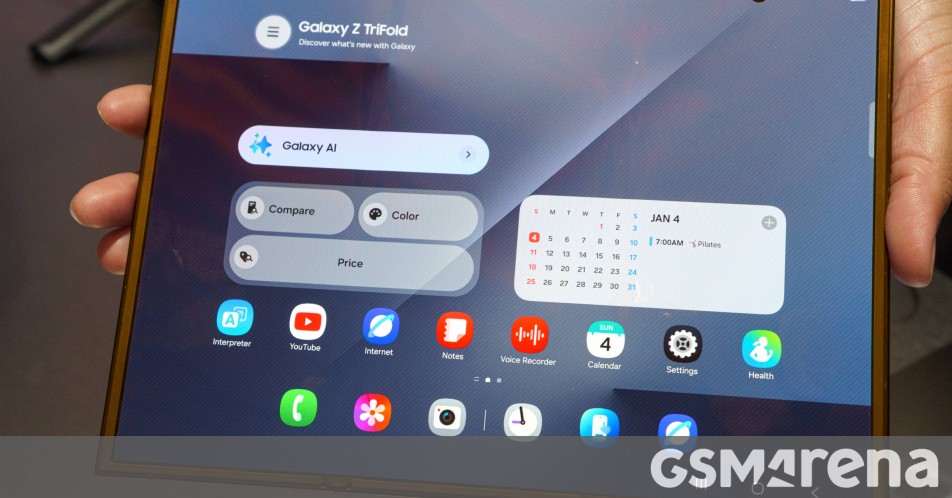
Samsung will restock the Galaxy Z TriFold in the US on Feb. 20 at 10 AM ET after the $2,899 512GB/16GB model sold out within minutes following its late-January launch. The company has notified registrants but has not signaled larger inventory, suggesting persistent strong demand for premium foldables while near-term revenue is likely constrained by limited supply and unlikely to materially move Samsung's stock.
Market structure: The minutes-long sellout of a $2,899 Galaxy Z TriFold signals premiumization in smartphones: Samsung Electronics (SSNLF / 005930.KS) and upstream suppliers (display, UTG glass, camera sensors, selected 5G chipset vendors) are direct beneficiaries of higher ASPs and stronger pricing power over the next 1–4 quarters. Incumbent low-end Android OEMs and discount channels are losers as consumer dollars shift up the ladder; carriers/retailers that capture full-price sales (Samsung.com, BBY) see SKU-level margin upside in the near term.
Risk assessment: Key tail risks are a large-scale durability/recall event (recall costs >$500m) or an Apple foldable launch within 12–18 months that compresses Samsung’s premium window. Short-term (days–weeks) risks center on inventory scarcity and PR backlash; medium-term (3–12 months) on margins and supply chain ramp; long-term (>12 months) on category adoption and competitive pricing pressures.
Trade implications: Tactical exposure should favor upstream suppliers of unique foldable components (GLW for cover glass, select display/hinge vendors) and Samsung equity, while using options to cap downside given event risk. Expect 1–3% revenue mix lift to Samsung’s premium line in the next two quarters if restocks repeatedly sell out; position sizing should reflect that asymmetry and potential rapid mean-reversion.
Contrarian angles: Consensus treats sellout as pure demand signal; it could be supply-constrained marketing and not sustainable — watch repeat restock cadence and return rates. Historical parallels: early Galaxy Fold shortages that normalized after durability issues and price adjustments; if return rates exceed ~3–5% or if discounting appears within 6 months, premium thesis weakens.
AI-powered research, real-time alerts, and portfolio analytics for institutional investors.
Request DemoOverall Sentiment
mildly positive
Sentiment Score
0.35
