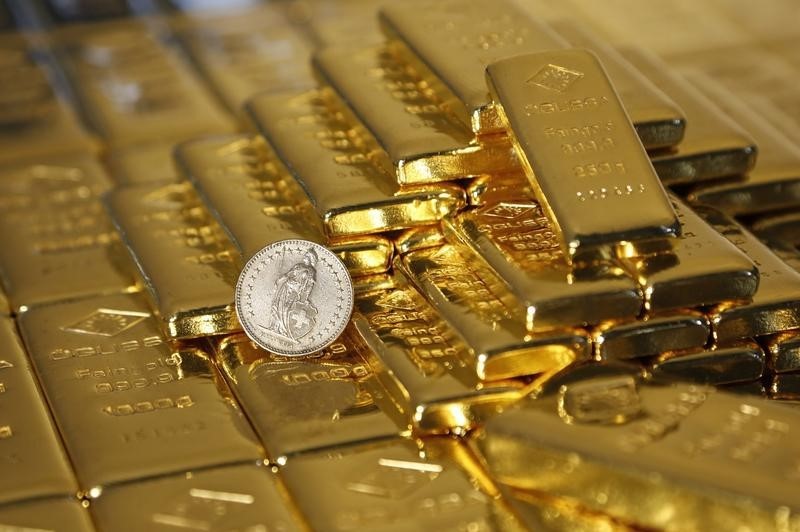
President Trump's ultimatum that Iran must reopen the Strait of Hormuz by Tue 8pm ET raises significant geopolitical risk, although an Axios report of talks on a possible 45-day ceasefire offers a partial offset. Spot gold slid 0.7% to $4,644.74/oz (gold futures down ~0.2%) after a 4% weekly gain; silver fell 0.6% to $72.58/oz and platinum edged down 0.4% to $1,985.60/oz, while the US Dollar Index rose 0.1%. Disruptions to the Hormuz corridor (carries ~20% of global oil) have helped oil more than double YTD, feeding inflation and keeping rate-hike expectations elevated — a key headwind limiting gold's upside.
Market pricing is oscillating between a near-term tail-risk premium (military escalation risk -> commodity shock) and a medium-term diplomatic-decompression scenario (temporary ceasefire talks). That creates a volatility-rich environment where convex assets (oil, tanker rates, insurers) can gap higher in days while rate-sensitive assets (gold, long-duration bonds) remain capped by higher real-rate expectations.
Mechanically, an oil-driven inflation impulse compresses real yields only if nominal yields do not reprice higher; in the current regime the Fed’s reaction function is the dominant governor — stronger labor/inflation prints will keep nominal rates elevated and cap bullion despite safe-haven flows. This makes short-duration, event-driven plays preferable to long-duration carry trades on commodities.
Second-order winners if escalation occurs are underpriced: tanker owners, specialty war-risk insurers, and commodity trading houses that can re-route cargoes and capture spreads; losers include refiners with tight light-sweet crack exposure and airlines with short jet-fuel hedges. Over a 45–90 day window, a negotiated pause would likely unwind risk premia quickly, producing rapid mean reversion in oil and gold — ideal for gamma-rich option structures rather than directional carry.
AI-powered research, real-time alerts, and portfolio analytics for institutional investors.
Overall Sentiment
mildly negative
Sentiment Score
-0.20
