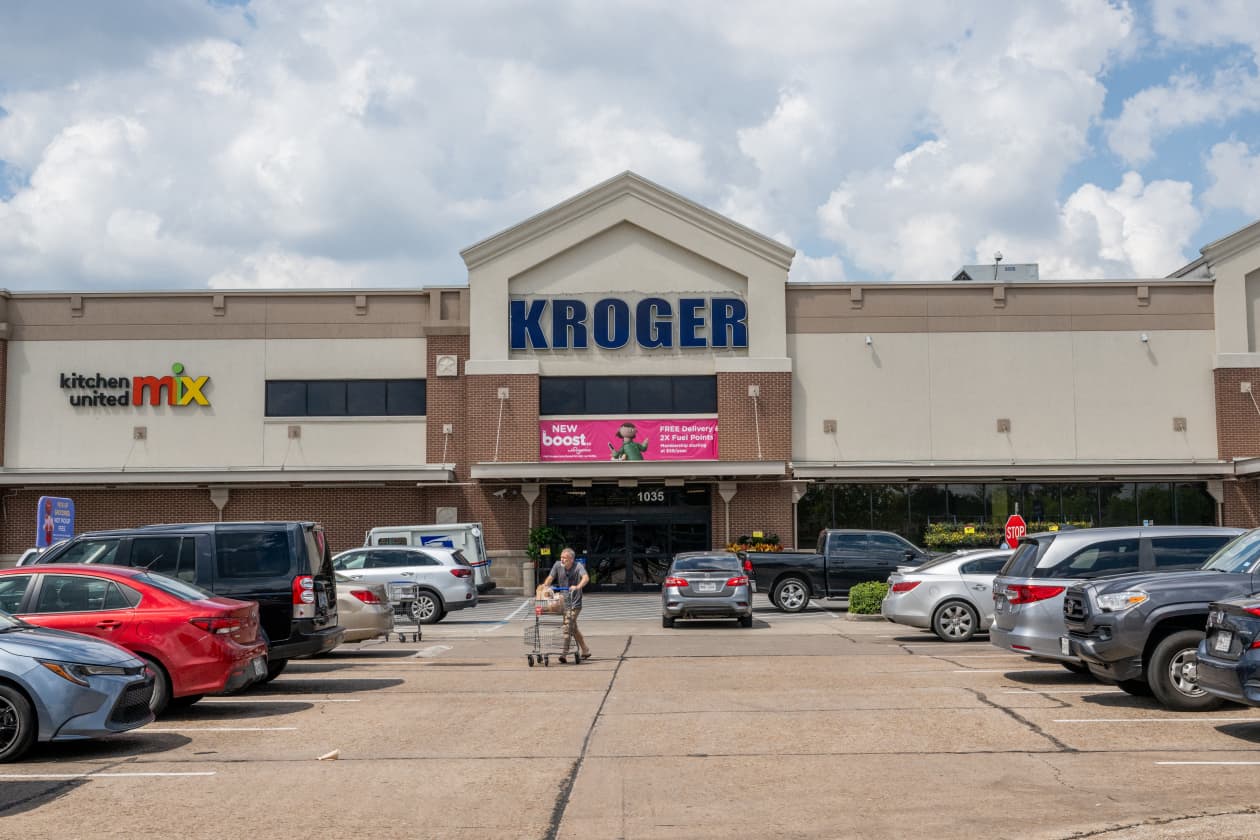
Kroger reported better-than-expected first-quarter earnings and sales, driven by a shift in consumer behavior towards dining at home amid economic uncertainty and tariff concerns. This trend led to Kroger's stock experiencing its largest gain in over three years, as consumers opt for supermarket purchases over eating out. The company indicated that tariff-related price increases would be a last resort.
The Kroger Co. (KR) reported fiscal first-quarter results that surpassed both profit and sales expectations, driven by a discernible shift in consumer behavior. The primary catalyst for this outperformance is a trend of consumers choosing to dine at home more frequently, a defensive reaction to uncertainty surrounding potential tariffs and the broader economic environment. This behavioral change directly benefits supermarkets over the restaurant sector. The market reacted strongly to this news, with Kroger's stock heading for its most significant single-day gain in over three years, underscoring investor confidence in the company's ability to capitalize on the current consumer climate. Furthermore, management has addressed a key risk by stating that passing on tariff-related price increases to consumers would be a 'last resort,' signaling a strategic focus on maintaining value and market share.
AI-powered research, real-time alerts, and portfolio analytics for institutional investors.
Request DemoOverall Sentiment
strongly positive
Sentiment Score
0.80
Ticker Sentiment
