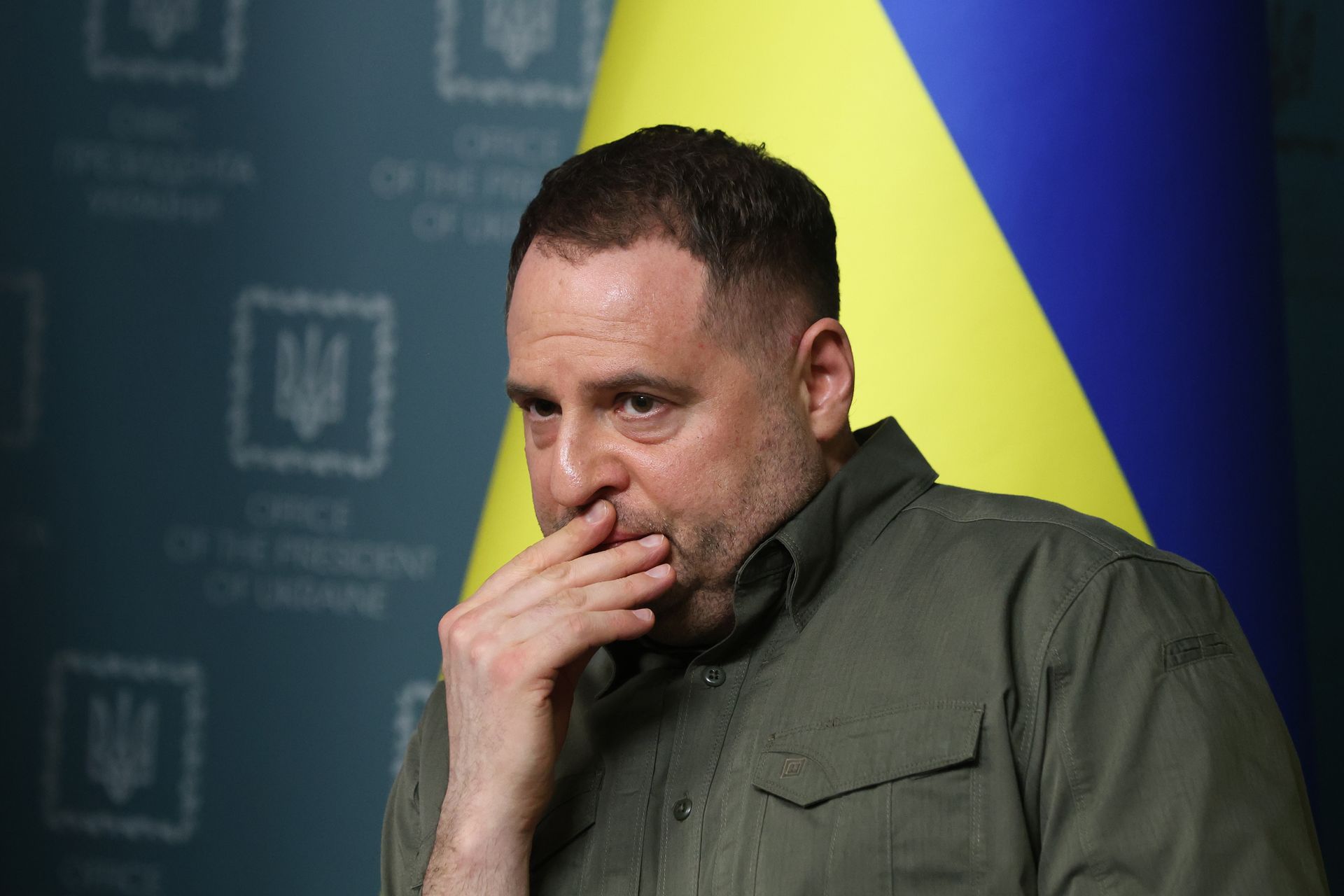
Ukraine's former presidential chief of staff Andriy Yermak has been charged in a money-laundering case tied to a luxury residential compound outside Kyiv, with investigators alleging more than Hr 460 million ($8.9 million) was routed through shell companies and cash transactions. The broader context is a $100 million corruption probe around state nuclear monopoly Energoatom, in which nine suspects have already been charged. The case raises governance and political-risk concerns in Ukraine, but is unlikely to have immediate broad market impact.
This is less about one politician and more about the market finally pricing a genuine governance reset premium into Ukraine. The near-term loser is any domestic contractor, land bank, or quasi-state operator reliant on opaque permitting, because the case reinforces that money trails can now be reconstructed retroactively through shell structures and cash nodes. That raises the probability of broader follow-on actions against lenders, developers, and politically connected intermediaries that may have looked insulated a quarter ago.
The second-order effect is on capital formation, not just headlines. International donors and private capital will likely demand tighter escrow, audit, and procurement controls, which slows project execution but improves survivability of the remaining pipeline; that favors higher-quality, foreign-linked assets over local balance-sheet stories. In real estate, the implied overhang is not a collapse in end-demand but a repricing of trust: discount rates rise, transaction velocity slows, and illicitly financed premium inventory becomes harder to monetize over the next 3-6 months.
Politically, this increases pressure on the administration to prove that anti-corruption institutions are independent rather than selective. If the probe widens into the energy and defense spheres, the market takeaway will be that personnel risk is still high and policy continuity still fragile, which matters for reconstruction names and sovereign risk spreads more than for any one official. The contrarian view is that this could ultimately be bullish for Ukraine risk assets if it reduces the governance discount, but that is a 6-18 month story and only if investigations remain credible after the current shock passes.
The biggest tail risk is institutional backlash: if the case is perceived as factional infighting, it could trigger elite retaliation, slow reforms, and reduce Western willingness to backstop financing. Conversely, a clean, transparent prosecution path would improve the odds of longer-duration capital returning, but that upside will likely be gated by political turnover and not visible in the next few weeks.
AI-powered research, real-time alerts, and portfolio analytics for institutional investors.
Request DemoOverall Sentiment
strongly negative
Sentiment Score
-0.75
