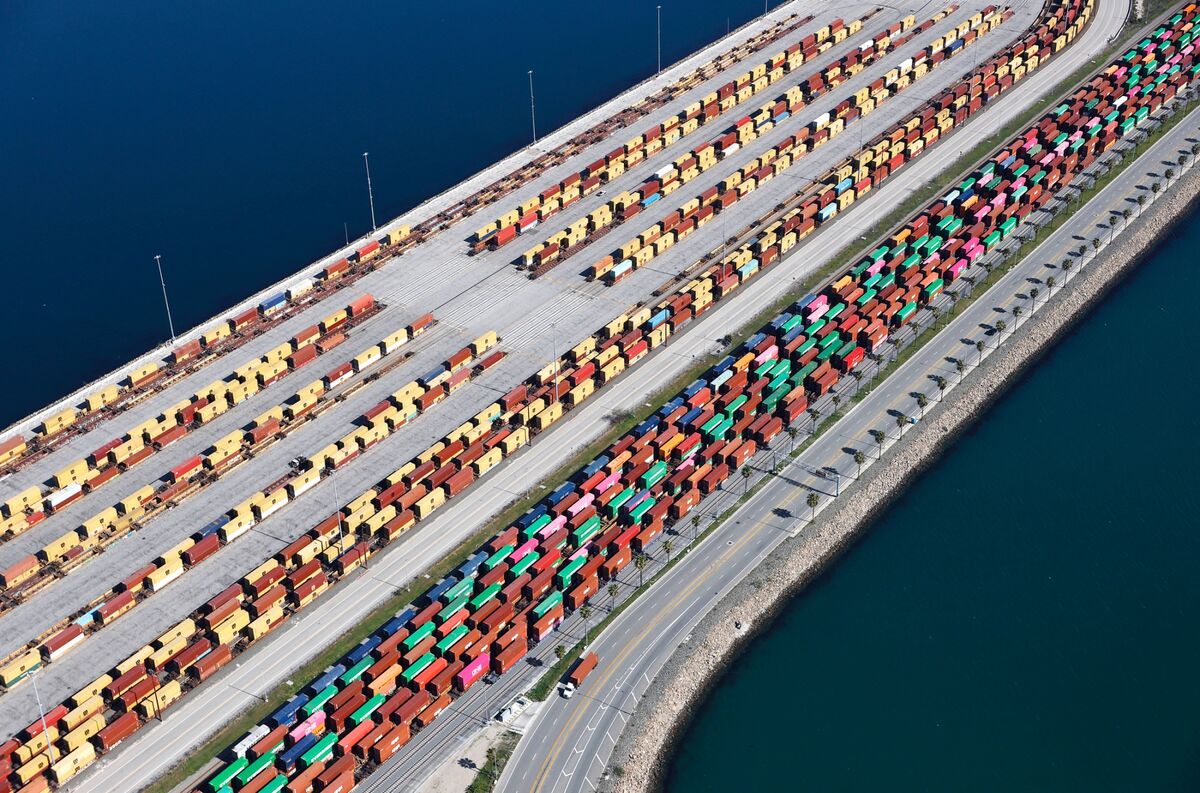
US import container volumes declined for a second consecutive month, with June registering a 7.9% year-over-year drop after a 6.6% decline in May. This downturn, which offset April's inventory front-loading and resulted in a 1.8% Q2 decrease, is primarily driven by President Trump's tariffs and indicates one of the sharpest year-on-year reversals on record for the economic indicator.
US import container volumes are experiencing a significant contraction, marking a sharp reversal that points to the tangible economic impact of ongoing trade tariffs. According to a private industry gauge covering the ten largest US ports, inbound container volume fell 7.9% year-over-year in June, accelerating from a 6.6% decline in May. This two-month downturn has completely erased the nearly 10% gain from April, which was driven by inventory front-loading ahead of tariff implementations. The net effect is a 1.8% year-over-year decline for the second quarter. This trend is described as one of the most severe reversals on record for this economic indicator, signaling that the initial buffer created by stockpiling has been exhausted and that the tariffs are now actively disrupting and reducing the flow of goods into the US.
AI-powered research, real-time alerts, and portfolio analytics for institutional investors.
Request DemoOverall Sentiment
moderately negative
Sentiment Score
-0.60
