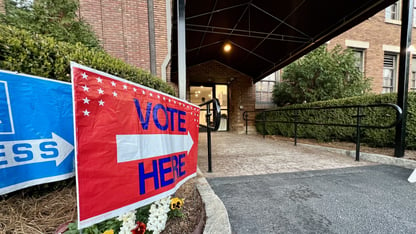
Voters are in runoffs to fill one U.S. House seat (GA-14) and three state legislative seats; these specials will fill seats only through the end of 2026 with full-term primaries in May and general elections in November. Democrats have flipped 30 state legislative seats since January 2025 while Republicans have zero flips; key last-month results ahead of Tuesday’s runoffs include HD-94: Mason 44% vs Kautz 23% (21pp gap), SD-53: Thomas 39% vs Zibluk 27% (12pp gap), and HD-130 where Republican McAdams led Karen Gordon by just 7 votes. Republicans retain control of both state chambers, so these races are unlikely to change legislative majorities, though winners could participate in any special session called this year; seats were vacated by resignations or legal issues (e.g., Marjorie Taylor Greene resigned; former Rep. Karin Bennett pleaded guilty to pandemic unemployment fraud charges).
Localized runoffs are low-probability, high-information events for market participants that monetize short bursts of political activity rather than long-term policy change. Expect a concentrated uptick in hyper-local political ad spend and micro-targeted digital ad inventory over a 4–10 week window around runoffs and the subsequent May primaries; historical analogs show local broadcast CPMs rising 15–35% for 2–6 weeks in close contests, translating into a discrete revenue jolt for incumbents in local media and cable.
A separate, underpriced channel is procurement and legal spend tied to election-adjacent technical rules: any legislative push to replace QR-based counting or to implement alternative ballot-handling creates a 3–9 month procurement cycle for voting equipment, IT integration, and cybersecurity, and a 6–18 month runway for litigation and vendor lock disputes. Vendors and security integrators therefore have optionality from a handful of contested jurisdictions even if state chamber control is unchanged; this optionality is asymmetric because modest incremental state budgets can translate to outsized multiyear contracts for niche suppliers.
Tail risks are concentrated: a decisive narrative swing (either demonstrable Democratic momentum or a high-profile judicial injunction) could reprice national political-risk premia within days and force rapid redeployment of campaign capital that flows into ad markets, while a perceived status-quo outcome will compress the near-term opportunity to a few weeks. Positioning should be tactical, small relative to NAV, and focused on event windows (weeks to a few months) rather than long-duration policy bets, with explicit triggers to exit on certification, primary calendars, or court rulings that remove legislative urgency.
AI-powered research, real-time alerts, and portfolio analytics for institutional investors.
Request DemoOverall Sentiment
neutral
Sentiment Score
0.00
