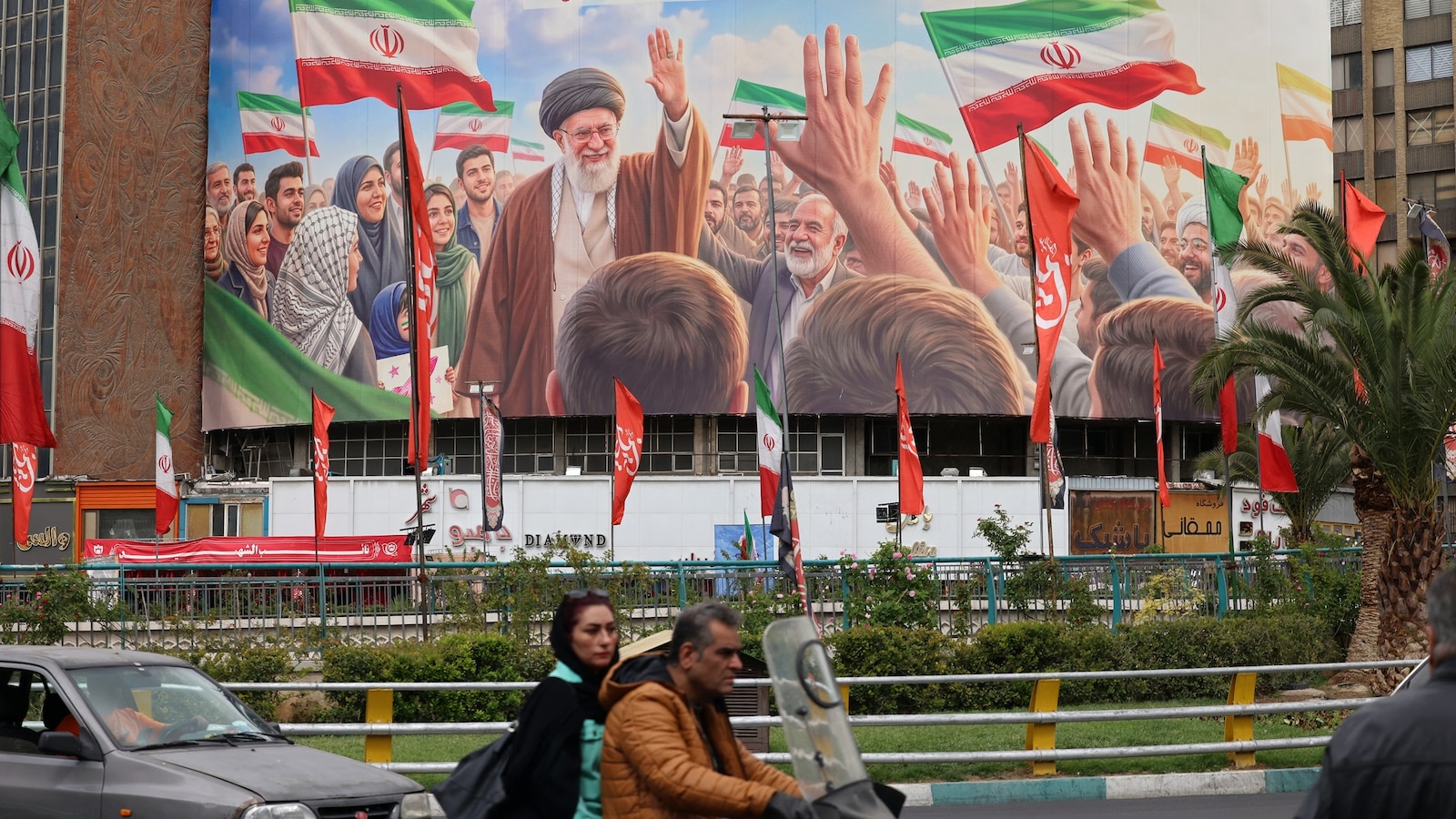
President Trump said Israel did not talk him into war with Iran and reiterated that Iran "can never have a nuclear weapon." He also suggested Iran could have a "great and prosperous future" if its leadership is smart. The comments are geopolitically relevant but do not indicate an immediate policy shift or market-moving action.
The market implication is less about immediate de-escalation and more about how much optionality remains embedded in a Middle East risk premium. By publicly distancing himself from direct escalation while preserving the nuclear red line, Trump is signaling a preference for coercive diplomacy over sustained kinetic commitment, which should cap the probability-weighted tail of a prolonged US-Iran air campaign. That typically compresses defense-adjacent volatility after the initial headline spike, but keeps a floor under crude, shipping insurance, and cyber/ISR demand because the underlying strategic tension is unresolved. The second-order winner is not necessarily prime defense, but the broader security stack: missile defense, sensors, EW, and munitions replenishment names that benefit from elevated readiness without needing a declared war. The loser is risk assets that depend on a clean global energy and shipping backdrop, especially cyclicals with high input-cost sensitivity and EM importers. If this rhetoric reduces near-term escalation odds, the short duration trade is in oil volatility rather than outright oil direction; if it emboldens Iran to test limits, the market will reprice through freight, not just Brent. The key catalyst window is days to weeks, not quarters: watch for retaliation asymmetry, proxy activity, and any forced response that changes the narrative from posturing to action. A constructive path for markets would require follow-through on diplomatic channels and visible restraint from all sides; absent that, the base case is a series of headline-driven risk-on/risk-off swings that fade quickly but leave defense budgets, cyber spending, and strategic stockpiles structurally higher over months. The consensus may be underpricing how often geopolitical premiums mean-revert while the industrial winners continue to compound. From a contrarian perspective, the move may be overinterpreted as a dovish signal when it is really an attempt to control escalation bandwidth. That means selling immediate panic in defense and oil after any relief headline may work, but only tactically; the deeper thesis remains that persistent instability extends the procurement cycle and supports a higher multiples regime for select defense enablers. In other words, the trade is not 'war/no war' but 'episodic fear + durable capex.'
AI-powered research, real-time alerts, and portfolio analytics for institutional investors.
Request DemoOverall Sentiment
neutral
Sentiment Score
-0.05
