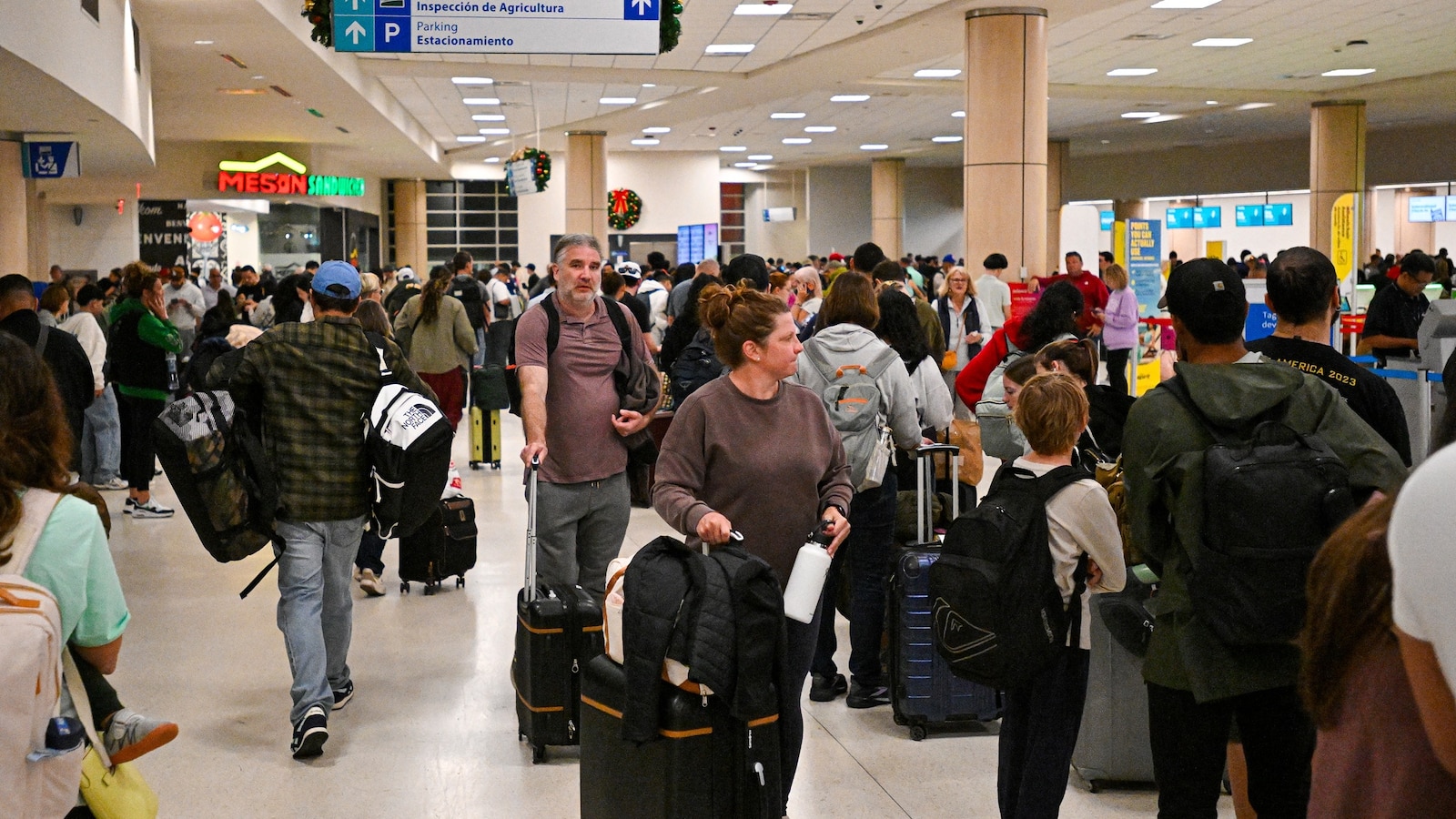
A U.S. military operation that resulted in the capture of Venezuelan President Nicolás Maduro prompted an FAA NOTAM closing Eastern Caribbean airspace for safety reasons, leading major U.S. carriers (Southwest, JetBlue, United, Delta, American) to cancel hundreds of flights and strand American tourists. The FAA reopened the airspace effective midnight ET Sunday, but disruptions persisted: roughly 400 inbound/outbound cancellations on Saturday in Puerto Rico fell to about 29 on Sunday, while American Airlines announced 5,000 additional seats and deployment of a Boeing 777-300 to the region. Continued delays and added capacity deployments create near-term operational costs and customer-impact liabilities for carriers, though the episode is unlikely to be materially market-moving.
Market structure: Large network carriers (AAL, DAL, UAL, LUV, JBLU) are near-term beneficiaries because they can redeploy widebody capacity and capture higher last‑minute fares (American added ~5,000 seats). Independent hosts (ABNB) may see short spikes in length-of-stay/occupancy where flights are canceled. Short-term pricing power shifts to carriers with available lift and to charter/rescue operators; overall capacity supply to the Eastern Caribbean is constrained for days, creating 10–40% price dislocations on last‑minute tickets and modest fuel/route cost inflation (<1%–2%).
Risk assessment: Tail risks include escalation of military action or prolonged NOTAMs causing multi-week closures (weeks→months) which would inflict low‑double‑digit revenue losses across carriers and push insurance premiums and crew costs higher. Immediate timeframe (0–7 days): operational disruption and rebooking costs; short (1–12 weeks): yield dilution from schedule churn and higher opex; long (>3 months): possible regulatory changes to NOTAM processes and higher aviation insurance. Hidden dependencies: airport ramp capacity, crew duty-day rules, and insurer contract triggers that can amplify costs.
Trade implications: Tactical trades favor short-dated exposure to carriers and platform lodging: consider AAL exposure to capture rebooking revenue but hedge downside with defined‑risk option structures; consider small ABNB longs to capture occupancy upside for 2–6 weeks. Relative-value: long ABNB vs short MAR/HLT for 2–6 weeks (distributed lodging absorbs stranded travelers faster than branded hotels). Use VIX/volatility hedges if closures extend beyond 7 days.
Contrarian: Consensus overstates systemic travel collapse risk—the event is geographically concentrated and likely resolves in days unless geopolitics escalate; credit spreads and airline equities that gap down >8–12% on this news look oversold. Historical parallels (localized airspace closures after military incidents) show recovery in airline pax demand within 2–6 weeks, creating mean-reversion opportunities in beaten-down carriers and lodging platforms. Unintended consequences: heavy repositioning by majors could permanently win share from smaller operators if they execute rescue capacity effectively.
AI-powered research, real-time alerts, and portfolio analytics for institutional investors.
Request DemoOverall Sentiment
moderately negative
Sentiment Score
-0.30
Ticker Sentiment
