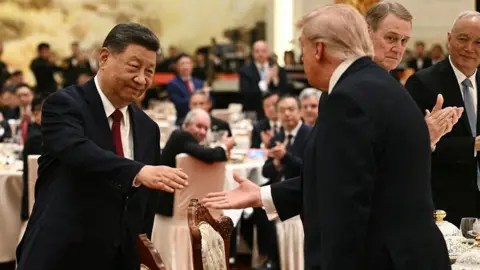
Trump’s China visit produced a high-profile thaw in rhetoric but no concrete deal details, with the White House saying only that the sides discussed expanding U.S. access to Chinese markets and Chinese investment in U.S. industries. Key unresolved issues remain tariffs, Taiwan, and U.S. requests for China’s help on Iran and the Strait of Hormuz, while Beijing highlighted leverage through rare earths and manufacturing dominance. Markets may focus on any future commitments around U.S. soybeans, beef, Boeing aircraft, and tariff reductions when the leaders meet again Friday.
The market implication is not a blanket de-risking of China exposure, but a narrower repricing of which bottlenecks Beijing can actually weaponize. If the thaw holds, the first beneficiaries are not broad China beta but firms tied to controlled flows: high-end semis, industrial aircraft, and agricultural exporters, because those are the clearest bargaining chips for both sides and the fastest channels for a headline deal. The more important second-order effect is that a stable tariff truce would lower the immediate probability of a renewed supply-chain shock, compressing the geopolitical risk premium embedded in logistics, electronics assembly, and EM manufacturing proxies. NVDA is the cleanest incremental beneficiary, but not because of near-term unit demand; the edge is that any relaxation in China access or enforcement intensity improves the longevity of its China revenue stream and reduces downside from export-control tit-for-tat. The larger overhang is policy asymmetry: Beijing can offer purchases and market access, while Washington’s leverage sits in licensing and technology controls, so any agreement is likely to be reversible and headline-driven rather than durable. That argues for trading the event with options, not owning it outright on a thesis of structural détente. BA is a more nuanced trade. A Chinese commitment to buy aircraft could lift order visibility and sentiment, but the equity reaction may be muted unless there is a credible pace of deliveries and financing support; Chinese procurement tends to be used as a negotiating lever, not a permanent concession. The contrarian point is that the visit may actually reinforce China’s bargaining power over time by normalizing its role as a gatekeeper for rare earths and manufacturing capacity, which is negative for long-duration industrial supply chains even if the near-term tone improves.
AI-powered research, real-time alerts, and portfolio analytics for institutional investors.
Overall Sentiment
neutral
Sentiment Score
0.05
Ticker Sentiment
