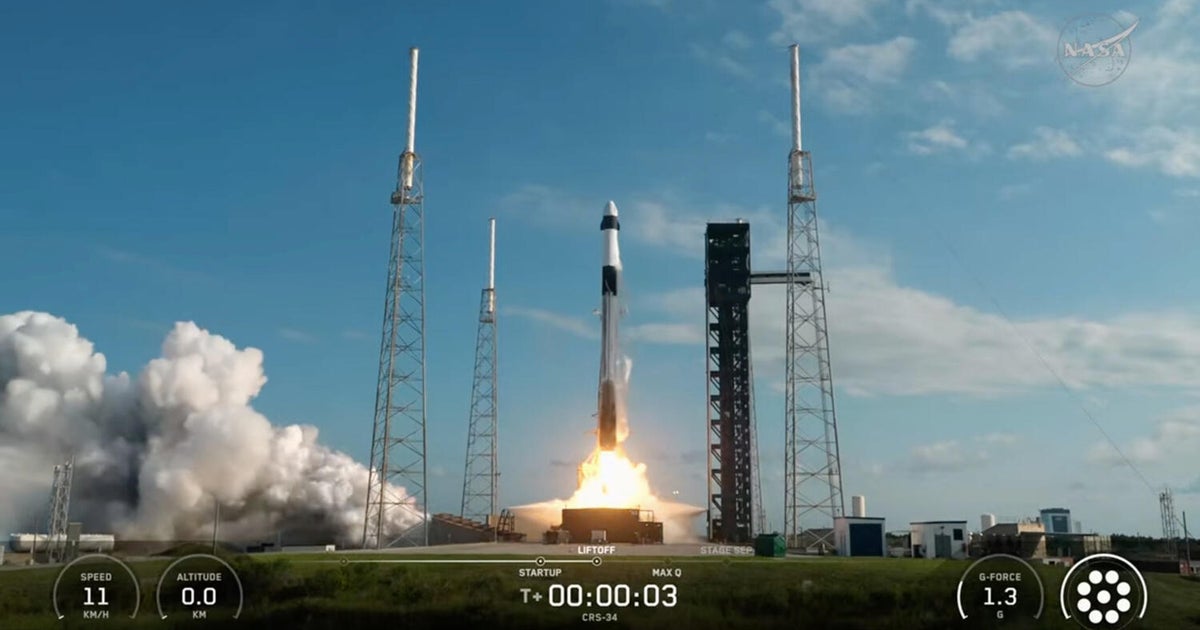
SpaceX successfully launched a Cargo Dragon carrying 6,500 pounds of supplies and research equipment to the International Space Station, marking the spacecraft's first sixth flight milestone. The Falcon 9 booster completed a pinpoint landing, extending SpaceX's record to 611 successful booster recoveries and 638 Falcon 9 launches overall. The mission is routine but reinforces SpaceX's launch cadence and reusability leadership, with limited near-term market impact.
The near-term market signal is not the launch itself but the cadence: a reusable heavy-lift stack executing on schedule after a weather slip reinforces confidence in the low-cost, high-tempo model that underpins commercial ISS logistics. That is supportive for the broader space supply chain because reliability, not headline payload size, is what drives procurement budgets; the winners are the integrators and subsystems vendors that get designed into repeat missions, while pure-play launch competitors remain trapped in a race to the bottom on price per kilogram. Second-order, the more interesting beneficiary is the “mission content” layer. A growing share of cargo is research hardware, samples, life-support upgrades, and computer gear rather than just consumables, which increases demand for specialized materials, thermal management, automation, and lab-processing equipment. That shifts value capture away from transport margins and toward firms with sticky qualification status across NASA/DoD-adjacent programs; those are the names most likely to see repeat orders even if launch pricing compresses further. The main risk is not technical failure but budget and program-duration uncertainty. Any delay in ISS successor planning, or a shift in NASA cadence after the current crew-rotation cycle, would hit the ecosystem on a 6–18 month lag by reducing visible flight opportunities and slowing requalification spend. A cleaner contrarian read is that the market may be underestimating how quickly SpaceX’s operational advantage commoditizes launch while simultaneously making payload integration more valuable — a dynamic that favors picks-and-shovels over launch-beta. For ISSC specifically, the data suggests no direct near-term earnings delta, but the thematic basket is constructive if one believes in continued orbital logistics spend and defense-space spillover. The setup is better for relative-value longs in space infrastructure than for outright chase in launch names, because the article supports volume growth but not pricing power.
AI-powered research, real-time alerts, and portfolio analytics for institutional investors.
Request DemoOverall Sentiment
mildly positive
Sentiment Score
0.20
Ticker Sentiment
