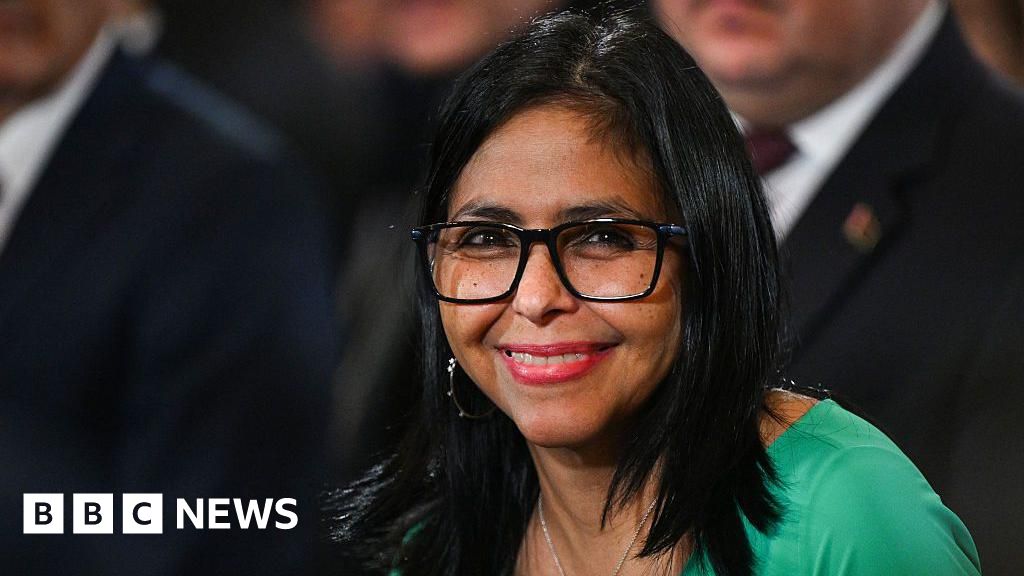
Venezuela's vice president Delcy Rodriguez was sworn in as interim president after US forces carried out an overnight raid that apprehended Nicolás Maduro, who pleaded not guilty in a New York court to four charges including narco‑terrorism and cocaine trafficking. The operation — described as involving over 150 aircraft and 200 US personnel and prompting a UN Security Council emergency session — heightens geopolitical risk for holders of Venezuelan assets and global energy markets given the country's vast oil reserves and US statements about facilitating U.S. oil company involvement; the next hearing in Maduro’s case is set for 17 March.
Market structure: Near-term winners are US integrated oil majors (XOM, CVX) and specialist heavy-crude refiners (VLO, PBF) if Western firms gain access; losers are holders of Venezuelan sovereign and PDVSA debt (very high default risk) and Russian/Chinese energy contractors. Expect a short-term supply-risk premium in Brent/WTI (likely +5–15% within days) and a jump in oil volatility (OVX) and Venezuelan CDS; medium-term (12–24 months) the market could see incremental supply of ~200–500kbd if infrastructure and sanctions allow foreign investment.
Risk assessment: Tail risks include full-scale conflict or widespread sabotage to oil infrastructure (low probability, high impact: >$20/bbl spike) and unilateral sanctions reversals leading to asset seizures; immediate (days) risk is price and FX volatility, short-term (weeks–months) is commodity dislocation and EM outflows, long-term (quarters–years) is capital allocation to rebuild Venezuelan oil capacity. Hidden dependencies: PDVSA technical capacity, availability of diluent/transport, and OPEC+ reactions — any one could delay supply restoration by 6–24 months.
Trade implications: Tactical plays should capture a near-term volatility spike while protecting vs. medium-term re-opening. Prefer 1–3% directional exposures to XOM/CVX (3–12m horizon) and small gold hedge (GLD) for tail protection; use options (1–2% notional) to buy upside in Brent/WTI 1–3m. Reduce unhedged EM sovereign and frontier exposure (ILF, EEM overweight risk) and consider credit hedges on Venezuela/EM high-yield.
Contrarian angles: Consensus may overestimate permanent supply loss — historical parallels (Iraq 2003) show front-loaded spikes then gradual supply normalization as new operators invest. That implies selling mid-term oil call spreads (3–12m) funded by short-dated long volatility (0–3m). Unintended consequence: rapid US-led entry could create political backlash, raising nationalization risk and wiping investor returns; size positions accordingly.
AI-powered research, real-time alerts, and portfolio analytics for institutional investors.
Request DemoOverall Sentiment
strongly negative
Sentiment Score
-0.60
