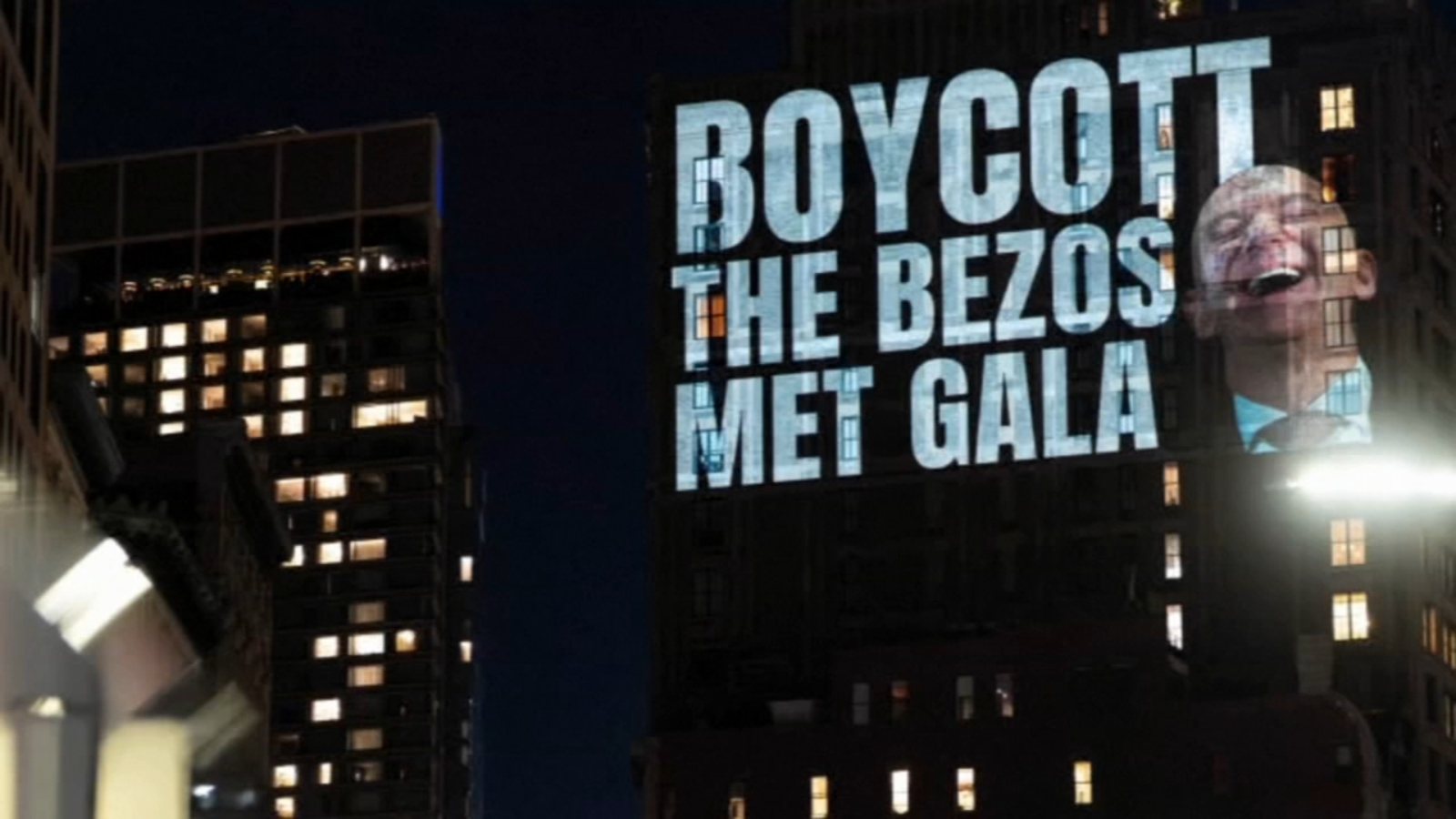
The 2026 Met Gala is expected to raise $31 million again, but this year’s event is drawing backlash because Jeff Bezos and Lauren Sánchez Bezos are the main benefactors and honorary chairs. The gala’s $100,000 individual ticket price and $350,000 table price underscore its fundraising scale, while protests and boycott calls highlight reputational risk rather than direct financial impact. The article is largely about philanthropy, fashion, and controversy around wealth inequality, with limited immediate market relevance.
The market-relevant signal is not the gala itself; it is the increasing salience of reputational externality around AMZN, which creates a persistent headline overhang without materially changing fundamentals. For a mega-cap with low multiple sensitivity to any single event, the direct earnings impact is negligible, but the narrative risk matters because it can widen the gap between consumer brand strength and labor/regulatory scrutiny, especially as political attention shifts from antitrust to workplace standards and wealth concentration. The second-order issue is coalition risk: the protest angle links AMZN to labor organizing, while SBUX and UBER are pulled in as sympathetic comparables in the broader worker-rights frame. That matters because it can embolden cross-industry messaging campaigns that are cheap to execute and repeatable, creating a cyclical burst of negative press around consumer-facing names ahead of key shopping periods, earnings calls, or policy milestones. The effect is more acute for SBUX and UBER than for AMZN because their operating leverage is more exposed to sentiment-driven demand and partner/labor relations. The contrarian view is that the market likely overestimates the incremental damage: controversy is now part of the engagement engine for cultural institutions, and for AMZN specifically, notoriety can coexist with sticky demand and strong cash generation. The more durable risk is not a boycott; it is gradual policy and wage pressure if this narrative reinforces broader political momentum around labor standards. Over a 3-12 month horizon, that would show up first in compressed goodwill toward the brand and tighter scrutiny of labor expense assumptions, not in an immediate revenue shock.
AI-powered research, real-time alerts, and portfolio analytics for institutional investors.
Overall Sentiment
neutral
Sentiment Score
-0.05
Ticker Sentiment
