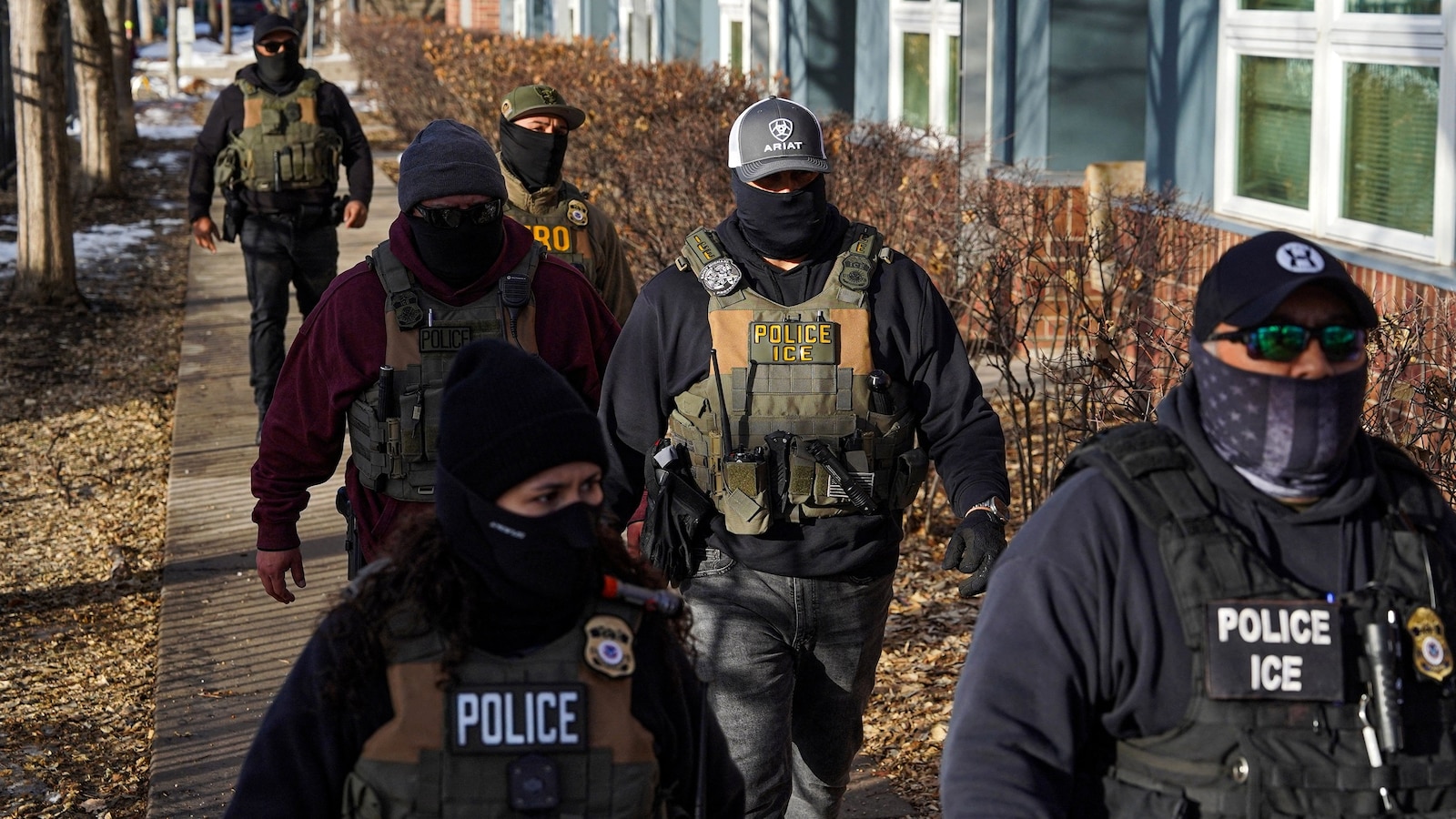
Two independent polls show a majority of Americans view the fatal shooting of Renee Good by an ICE agent as unjustified and reflect broad skepticism of ICE and federal handling: a Quinnipiac poll (Jan. 8-12, n=1,133, ±3.7%) found 53% of registered voters say the shooting was not justified (35% justified) and 57% disapprove of how ICE enforces immigration laws, while CNN (Jan. 9-12, n=1,209, ±3.1%) found 56% call the shooting an inappropriate use of force and 51% say it reflects bigger problems with ICE and makes cities less safe. Polls reveal sharp partisan splits on ICE enforcement and deep distrust in a federal investigation (62% little or no trust, 47% no trust at all), and show majorities disapproving of Trump’s handling of immigration (58%) and low approval for Homeland Security Secretary Kristi Noem (38% approve, 61% disapprove).
Market structure: Political backlash against ICE shifts demand away from private detention and federal immigration-support services, directly hurting public-company exposure to immigration detention (CoreCivic CXW, GEO Group GEO) and analytics vendors tied to ICE operations. Winners are likely short-term: local private security/riot-mitigation services and legal/liability insurers that sell crisis coverage; winners on a 3–12 month view are defensive staples and muni-safe assets if urban unrest rises. Pricing power: private-prison operators face margin compression risk of 10–30% on lost contracts or higher compliance costs if states restrict contracts within 3–12 months.
Risk assessment: Tail risks include (A) Congress or blue-state legislatures banning private immigration detention (low-probability within 6–12 months, high-impact on GEO/CXW, -40–60% NAV), and (B) sustained city-level litigation or federal investigations causing multi-quarter revenue declines for contractors. Immediate (days) volatility around headlines; short-term (weeks–months) contract cancellations or budget reallocations; long-term (quarters–years) reputational damage and tighter procurement. Hidden dependencies: muni credit stress in protest-heavy cities and contingent-liability exposure for insurers and vendors that contract with ICE.
Trade implications: Direct short bias on GEO (GEO) and CoreCivic (CXW) via 3-month puts 10–15% OTM (size 2–3% each of portfolio) and pair with 1–2% long in KO and PG as defensive offset; buy a 3-month put on MUB (~1% notional) as tail-risk hedge for municipal spread widening >50bps. Options: consider 90–180 day put spreads on GEO/CXW to limit capital at risk and a long straddle around scheduled hearings or DHS budget votes to capture event volatility. Reallocate away from small-cap local-government contractors with >30% revenue from ICE in favor of larger diversified defense primes only if legislative risk exceeds a 5% DHS budget cut.
Contrarian angles: Consensus assumes durable policy change; historically, federal contract flows are sticky—after 2018 controversies private-prison stocks rebounded when enforcement continued—so rapid short squeezes are possible if funding remains. Mispricing risk: if no material contract loss within 60–90 days, short positions could underperform; hedge with limited-cost call spreads or reduce size by half after a 20% adverse move. Monitor legislative text, DHS budget amendments, and 30–90 day municipal credit actions as the true determiners of long-term impact.
AI-powered research, real-time alerts, and portfolio analytics for institutional investors.
Request DemoOverall Sentiment
mildly negative
Sentiment Score
-0.25
