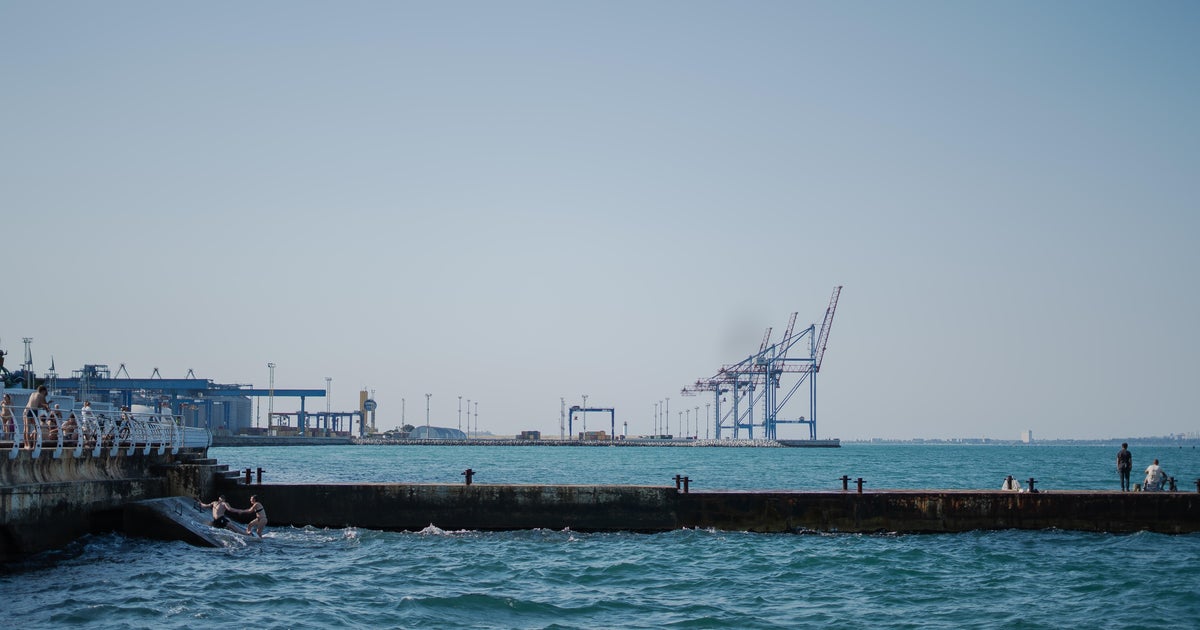
A nighttime Russian ballistic missile strike hit port infrastructure in Odesa, killing 8 and wounding 27, damaging trucks and vehicles and prompting Russian claims of targeting transport and energy facilities. Ukraine simultaneously reported drone strikes on a Russian patrol ship (Okhotnik) and a Lukoil-operated drilling platform at the Filanovsky field in the Caspian Sea, raising risks to regional energy assets and supply; Lukoil and Gazprom have been recent U.S. sanction targets. The incidents heighten geopolitical risk and potential energy-market volatility amid ongoing diplomatic efforts, including planned meetings in Miami between U.S. envoys and a Kremlin sovereign fund head.
Market structure: Immediate winners are holders of physical-export optionality and logistics substitutes — tanker owners (Frontline FRO, Euronav EURN) and major integrated oil producers (XOM, CVX, XLE ETF) who can price into a tightened seaborne market; losers are Ukrainian port operators, grain exporters, regional shippers and P&I insurers whose capacity/pricing power is impaired. Pricing power shifts toward owners of flexible tanker capacity and non-Russian crude buyers; expect spot tanker rates to spike 30–100% in weeks if Black Sea routes stay disrupted, and a 5–15% upside bias to Brent in the near term absent diplomatic de-escalation.
Risk assessment: Tail risks include a sanctions-driven Russian output shock pushing Brent >$100 (10–20% probability over 3 months) or escalation that provokes broader maritime insurance exclusions, raising re-route costs by an estimated 10–25%. Near-term (days) look for volatility in commodities and FX (RUB down, USD up); short-term (weeks–months) expect freight and refining bottlenecks; long-term (quarters+) the shock accelerates energy-security capex and renewables investment, putting structural downside pressure on oil in 12–36 months.
Trade implications: Tactical trades favor 3–9 month energy exposure (2–3% long XOM/CVX or XLE) and 1–2% dedicated long in FRO/EURN to capture tanker dislocation, paired with defined-risk options (3‑month Brent call spreads). Defense primes (LMT, RTX) are 6–12 month longs on procurement upside; hedge macro with 1% GLD and USD strength (UUP) if risk-off deepens. Use stop-losses (20%) and profit targets (50%) on equities; size options at 1–2% notional.
Contrarian angles: Consensus may overprice persistent oil upside — if diplomatic talks yield measurable progress (formal security framework or export corridor in 30–60 days), energy risk premia could mean-revert by 20–40%, creating a short-mean-reversion opportunity. Also, rising freight rates will attract supply/orderbook responses in 12–24 months, capping long-term tanker equity returns; prefer short-duration option exposure rather than large buy-and-hold positions in hydrocarbons.
AI-powered research, real-time alerts, and portfolio analytics for institutional investors.
Request DemoOverall Sentiment
strongly negative
Sentiment Score
-0.60
