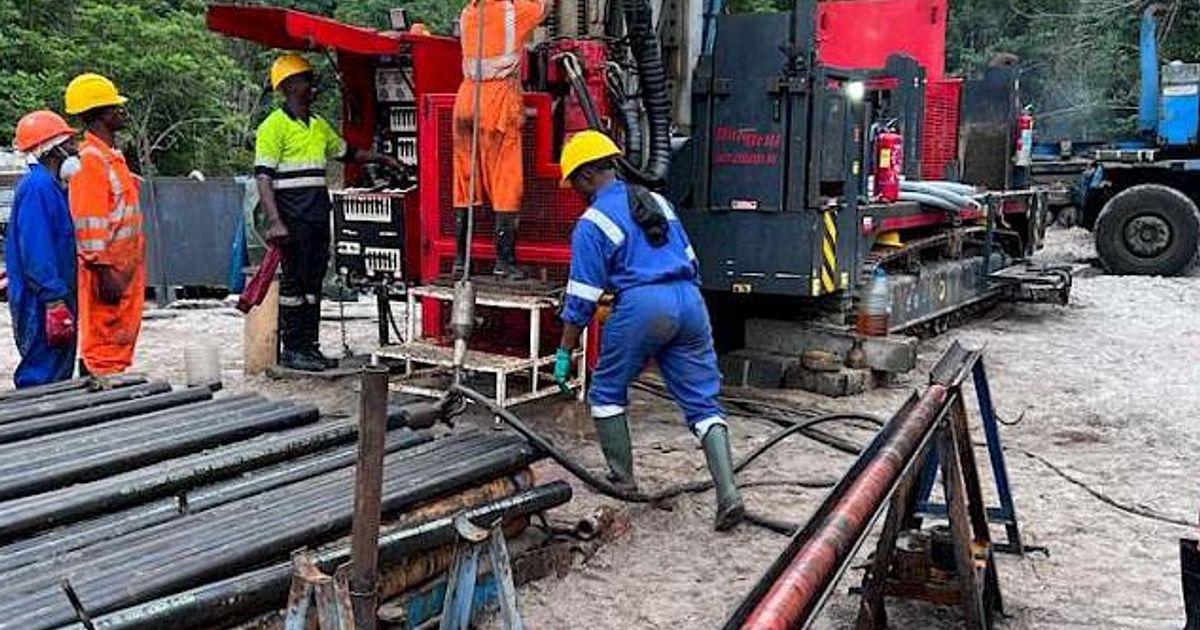
Millennial Potash (TSX-V:MLP; OTCQB:MLPNF) has launched a definitive feasibility study (DFS) for its Banio potash project in Gabon, following a near 300% increase in total resources to about 6 billion tonnes (measured, indicated and inferred) while having tested only ~5% of the property. The DFS — targeting completion by around September (~8–9 months) — will include solution mining tests, hydrogeological/hydrological work, processing trade-offs (cold vs. hot leach) and logistics/port planning; the US International Development Finance Corporation has signalled intent to lead project financing upon DFS completion, potentially enabling full funding by late‑2026/early‑2027.
Market structure: Millennial Potash’s (TSXV:MLP / OTCQB:MLPNF) move from PEA to DFS materially de-risks a project-level binary but does not immediately change global potash supply; an 800ktpa feasibility case is <0.5% of global MOP supply, so near-term pricing power for majors (Nutrien NTR, Mosaic MOS) is unchanged. Regional winners include port/ship operators and engineering contractors active in West Africa; losers are higher-cost inland producers if new low-cost Gabon solution mining proves economic. Cross-asset: successful DFS and DFC backing would increase EM project financing issuance (lifting spreads for similar sovereigns) and buoy dry-bulk shipping names; small-cap equities and implied vol on MLP will remain highly sensitive to milestones.
Risk assessment: Tail risks include government renegotiation/nationalization in Gabon, failed solution-mining tests, or DFC withdrawal — each can wipe out junior equity (probability low-medium, impact very high). Timing: immediate price movement on announcement, DFS due ~Sep 2026 (8–9 months) is the primary short-term catalyst, and project-financing execution is targeted late-2026/early-2027; production is multi-year beyond that. Hidden dependencies: port capacity, power, water management, and binding offtake; thresholds to watch are DFS capex/annual-tonne and opex/ton (see decisions).
Trade implications: Tactical direct play is a small, staged long in MLP (see sizing rules) ahead of DFS, paired with hedges in large-cap fertilizer equities (NTR) or dry-bulk shippers (Star Bulk SBLK) to capture logistics upside while limiting single-asset binary risk. Options: use 9–15 month call spreads on NTR to express fertilizer upside with defined risk; avoid naked call buying on illiquid TSXV options. Sector rotation: shift 2–4% from speculative junior-mining and EM small caps into large-cap fertilizer producers and selected dry-bulk names over the next 30–90 days.
Contrarian angles: The market often conflates resource size with mineability — 6 billion tonnes across 5% footprint is not proof of economics; expect the consensus to re-rate only if DFS shows capex < $2.0–2.5bn for an 800ktpa case (capex/annual-tonne < $2,500–$3,000). Historical analogs (2007–13 potash plays) show many DFS-backed projects still failed on capex overruns and permitting delays; be skeptical of financing timelines despite DFC interest. Unintended consequences: strong DFC involvement may shift offtake dynamics away from Chinese buyers, altering price realization and marketing risk.
AI-powered research, real-time alerts, and portfolio analytics for institutional investors.
Request DemoOverall Sentiment
moderately positive
Sentiment Score
0.42
