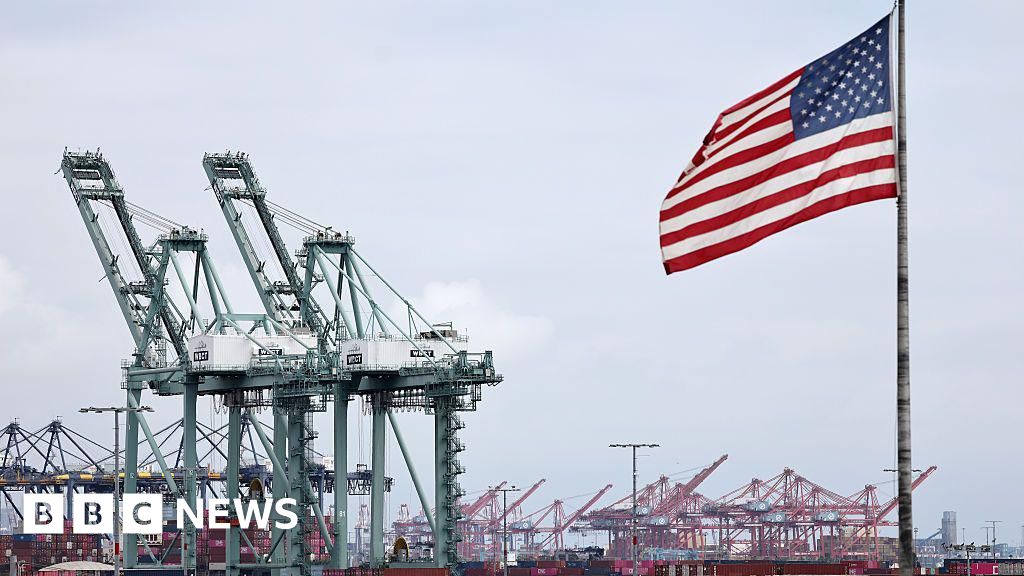
The White House has implemented President Trump's new global import tariff at a 10% rate (despite his public references to 15%), using Section 122 of the 1974 Trade Act for a 150-day levy while the Supreme Court struck down broader IEEPA-based tariffs last week. The ruling opens the prospect of large tariff refunds — businesses and groups (including FedEx and a coalition of 900+ firms) are seeking reimbursement of previously paid IEEPA duties (the US has collected at least $130bn under IEEPA) — and market participants warn the policy confusion raises retaliation risk and supply-chain uncertainty; US goods deficit hit roughly $1.2tn last year. Managers should monitor potential refund liabilities, sectoral exposure (logistics, exporters, manufacturing), and rapid policy shifts as litigation and administrative changes proceed.
Market structure: A 10% global tariff (with risk of a last-minute move to 15%) directly penalises import-dependent retailers, apparel, electronics and logistics (FedEx FDX). Domestic-intensive sectors (steel, aluminum, capital goods) gain pricing power; expect incremental margin expansion for US steel producers if imports fall by 5-15% over 3-12 months. Cross-asset: tariffs are modestly inflationary — 25–75bp upside to CPI over 12 months is plausible, pressuring long-duration Treasuries and supporting commodity prices (steel, base metals) and the USD intermittently on safe‑haven flows.
AI-powered research, real-time alerts, and portfolio analytics for institutional investors.
Request DemoOverall Sentiment
moderately negative
Sentiment Score
-0.50
Ticker Sentiment
