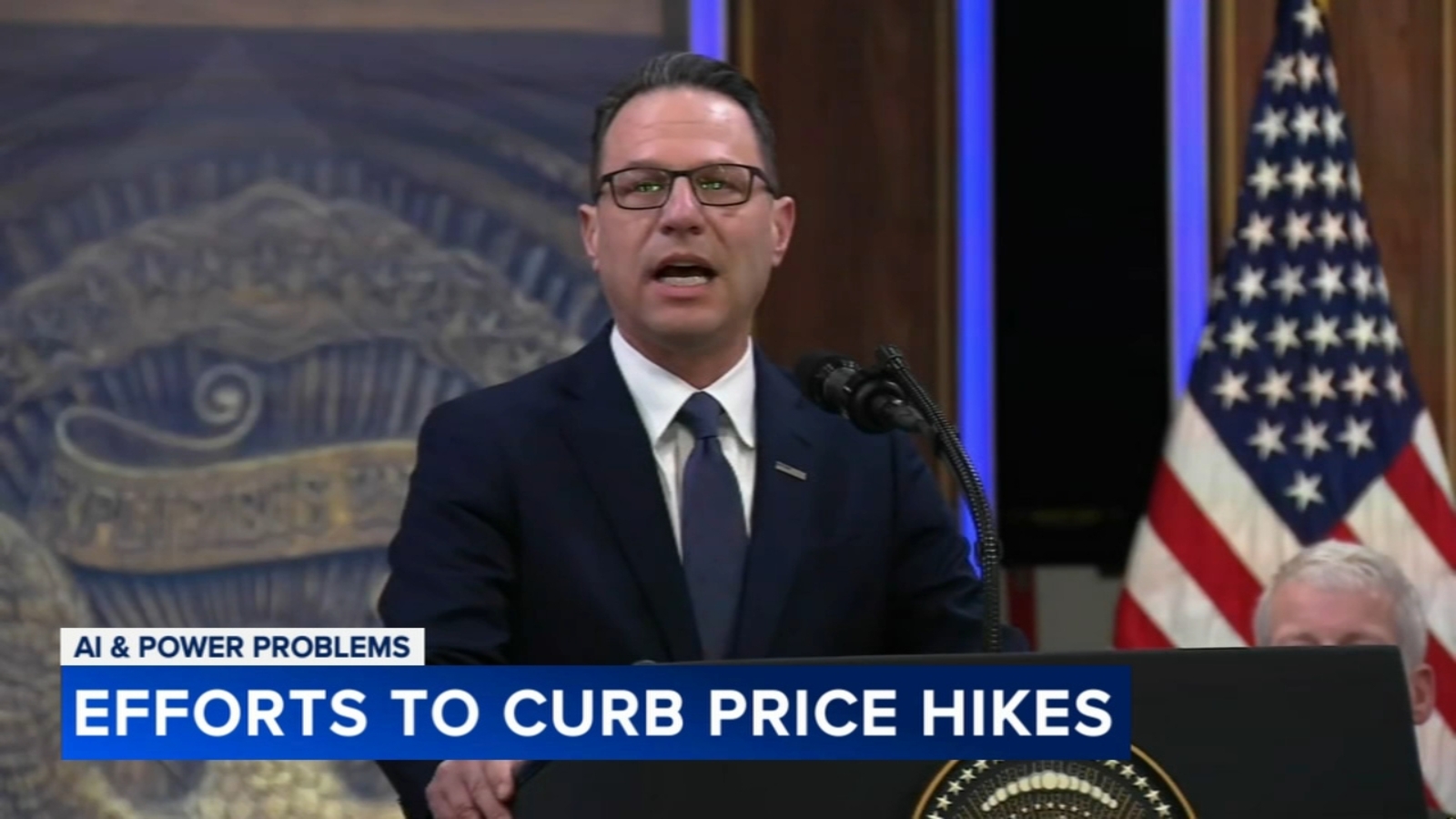
The Trump administration and a bipartisan group of mid-Atlantic governors urged PJM Interconnection to hold auctions requiring data-center operators to fund new generation and to extend a wholesale payment cap to restrain consumer bills, arguing this is critical to power AI growth and compete with China. PJM is preparing its own plan while facing criticism that slow interconnection and lack of long-term contracts have left consumers underwriting capacity for tech firms without delivering new plants, raising risks of higher retail bills and potential reliability stress in the region.
Market structure: The near-term winners are regulated utilities, transmission builders and renewables contractors who capture regulated returns or new build fees; losers are merchant generators (price-capped revenues) and ratepayers subsidizing uncertain new capacity. The White House push + governors increases probability of an ordered procurement/auction and preserves the wholesale payment cap through mid-2028, compressing merchant-generator economics while shifting capital to developers who can secure long-term offtake from tech buyers.
Risk assessment: Tail risks include a FERC mandate forcing tech-funded buildouts (raises cloud capex 5-15% for big hyperscalers) or a mid-Atlantic blackout in 2026–2028 that forces emergency market redesign and liability losses for data centers. Timeline: political noise immediate (days), PJM plan & FERC review within 30–90 days, permitting/construction 2–5 years; hidden dependency: state-level permitting and gas-supply constraints that can stall any auction outcome.
Trade implications: Favor regulated utility/renewables exposure and transmission contractors for a 3–12 month horizon while hedging cloud/capital-intensive tech exposure with short-dated options. Credit stress on merchant generators argues for selective short/credit-protection on names concentrated in PJM capacity revenue (e.g., Calpine), and long positions in EXC/D/NEE or XLU to capture bill-recovery and build-fee flows if auctions proceed.
Contrarian angle: The consensus assumes auctions will force tech to fund capacity; that may be overdone given permitting inertia and state pushback — if auctions fail, merchant-generator valuations could rebound sharply. Historical parallel: ERCOT demand surge created rapid policy changes but also entrenched market winners; monitor FERC language and PJM’s plan (60-day trigger) — mispricing likely in small-cap generator equity and short-dated tech option premium.
AI-powered research, real-time alerts, and portfolio analytics for institutional investors.
Request DemoOverall Sentiment
moderately negative
Sentiment Score
-0.32
Ticker Sentiment
