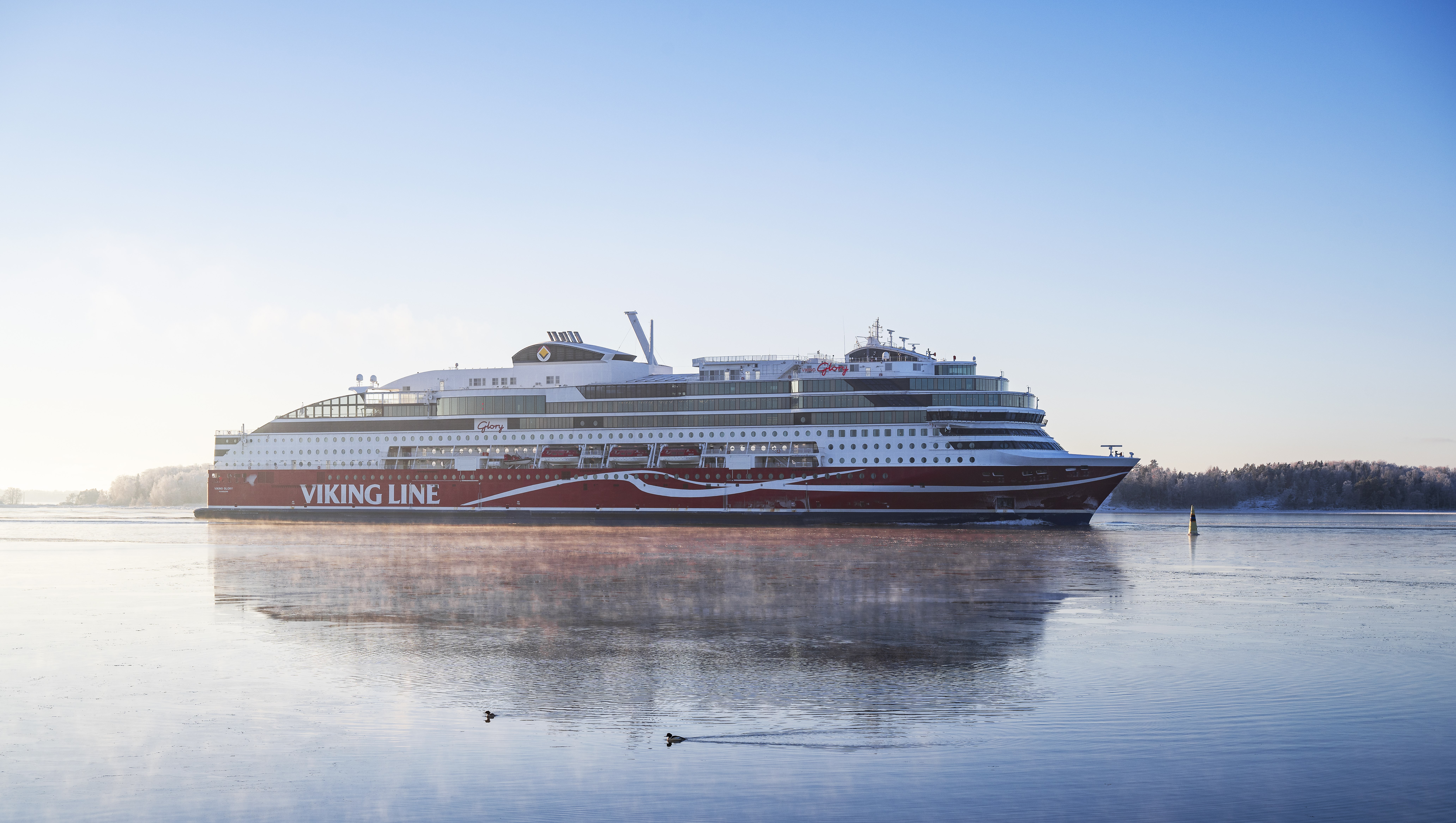
Viking Line, Port of Turku and Ports of Stockholm marked two years of a joint project (launched 6 February 2024) to establish a fossil-free shipping corridor between Turku and Stockholm by 2035, reporting concrete progress on biofuels, onshore power and vessel efficiency. Key measures include battery-installation studies for Viking Grace and Viking Glory, installation of Elogrids, a planned tenfold increase in renewable biogas use in 2025 versus 2024 with ~50% biogas use targeted through H1 2026, onshore power pilot works and quay pipeline integration at Ferry Terminal Turku, and the first public heavy-vehicle charging station in Finnish ports — developments that imply incremental capex for ships and ports and a structural shift in bunkering demand toward sustainable fuels and shore-power services.
Market structure: Ports, electrification vendors and biomethane suppliers are the clear near-term winners—expect procurement cycles (onshore power, chargers, mesh-hull tech, battery retrofits) to materially lift order books for industrial electrification and marine-engine OEMs over 12–36 months. Incumbent bunker-fuel value chains (heavy fuel oil suppliers, some refiners) face demand erosion as ferries pivot to biogas/electricity; pricing power will shift toward niche renewable fuel producers and grid-capacity owners in Finland/Sweden.
Risk assessment: Key tail risks are biogas feedstock scarcity, slow permitting for shore power, and cost overruns on retrofit projects; a single-year shortfall (e.g., >30% below targeted biomethane deliveries) could delay adoption and capex flow for suppliers. Near-term (0–6 months) volatility will track government funding and Gasum-type supply contracts; medium-term (6–24 months) exposure is to order-book conversion; long-term (to 2035) is regulatory (carbon pricing/mandates) that could both accelerate or depress ROI assumptions.
Trade implications: Tactical alpha lies in equipment suppliers and Nordic utilities that can capture incremental multi‑MW demand and repeated retrofit revenue (buy positions in ABB, Wärtsilä, Fortum; see decisions). Use options to leverage asymmetric upside around contract announcements (3–12 month expiries). Also consider relative-value: long electrifiers vs short pure downstream bunker/refining exposure.
Contrarian: Consensus underestimates operational complexity and grid upgrades cost — early wins (10x biogas claim by 2025; 50% in H1 2026) are feasible but scaling to 2035 requires sustained public capex. If permitting or feedstock fails, suppliers with fixed-cost-heavy balance sheets (small marine-tech vendors) are vulnerable; favor large-cap, cash-generative players with installation/service revenue streams.
AI-powered research, real-time alerts, and portfolio analytics for institutional investors.
Request DemoOverall Sentiment
moderately positive
Sentiment Score
0.45
