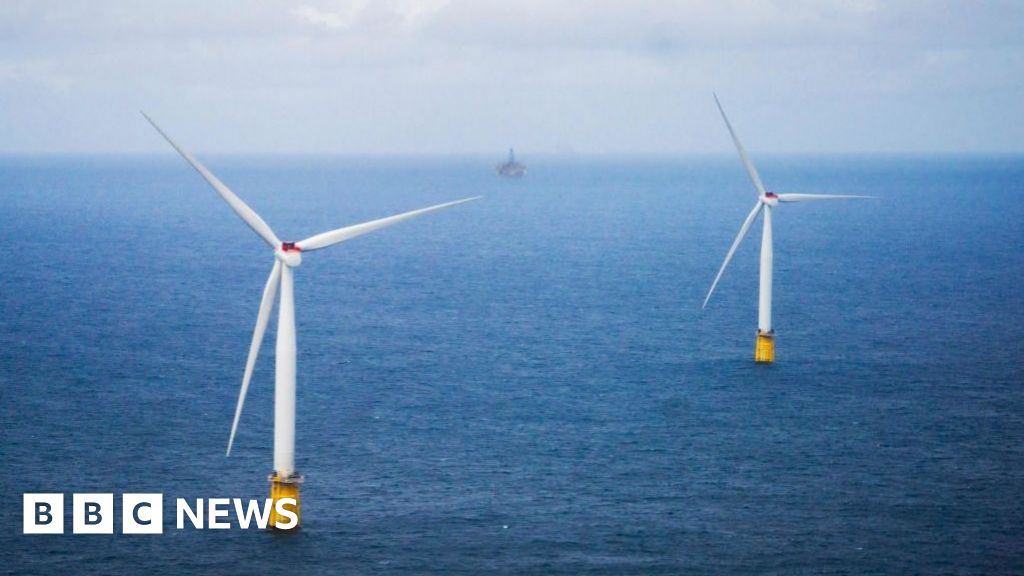
The UK will join nine other North Sea countries in a cross-border offshore wind pact committing to complete 100GW of jointly developed capacity by 2050 (with 20GW under way by 2030) and linking some new wind farms to multiple countries via undersea interconnectors. Policymakers argue the move should strengthen energy security and lower costs — National Grid cites potential cuts to constraint payments and an estimated £1.6bn consumer saving from existing cables since 2023 — while the UK already has ~16GW operating and 20GW contracted (including 8.4GW from a recent auction). Investors should weigh long-term upside for developers, grid and cable suppliers against short-term political friction, export restrictions (e.g., Norway) and the risk that cross-border merchant sales could amplify price volatility during tight supply periods.
Market structure: This deal is a structural win for regulated transmission/infrastructure owners (e.g., NGG) and cable/vessel suppliers while compressing merchant-generator pricing power. 100GW joint build with 20GW by 2030 implies accelerated capex 2025–2035 concentrated in interconnectors, export nodes and HVDC links, shifting margin pools from fuel-to-capex/regulated returns and reducing average peak spreads across connected markets by an estimated mid-single-digit percent over a multi-year horizon.
Risk assessment: Tail risks include export restrictions (Norway-style curbs), coordinated sabotage or prolonged permitting delays that could push constraint payments and price spikes higher; these are low-probability but can create short-term 20–50% swings in local power spreads. Immediate impact (days) is muted; weeks–months will see tender/contractor orderflow and commodity pressure (copper/steel), while quarters–years determine regulated revenue recognition and ROIs.
Trade implications: Favor allocation to transmission/infrastructure and cable makers and underweight merchant thermal/retailers exposed to sustained lower spark spreads. Use 6–18 month directional positions on NGG and cable suppliers, pair trades long regulated grid vs short merchant generators, and option structures to capture asymmetric upside while protecting against short-term political/regulatory shocks.
Contrarian angles: Consensus understates supply-chain lead times and the political backlash risk that can raise consumer bills short-term; interconnectors can paradoxically increase peak price volatility when operators shop power to the highest bidder. Historical parallels (big offshore build cycles) show material front-loaded capex and multi-year delivery slippage — price impact is therefore lumpy, creating tactical entry windows.
AI-powered research, real-time alerts, and portfolio analytics for institutional investors.
Request DemoOverall Sentiment
mildly positive
Sentiment Score
0.25
Ticker Sentiment
