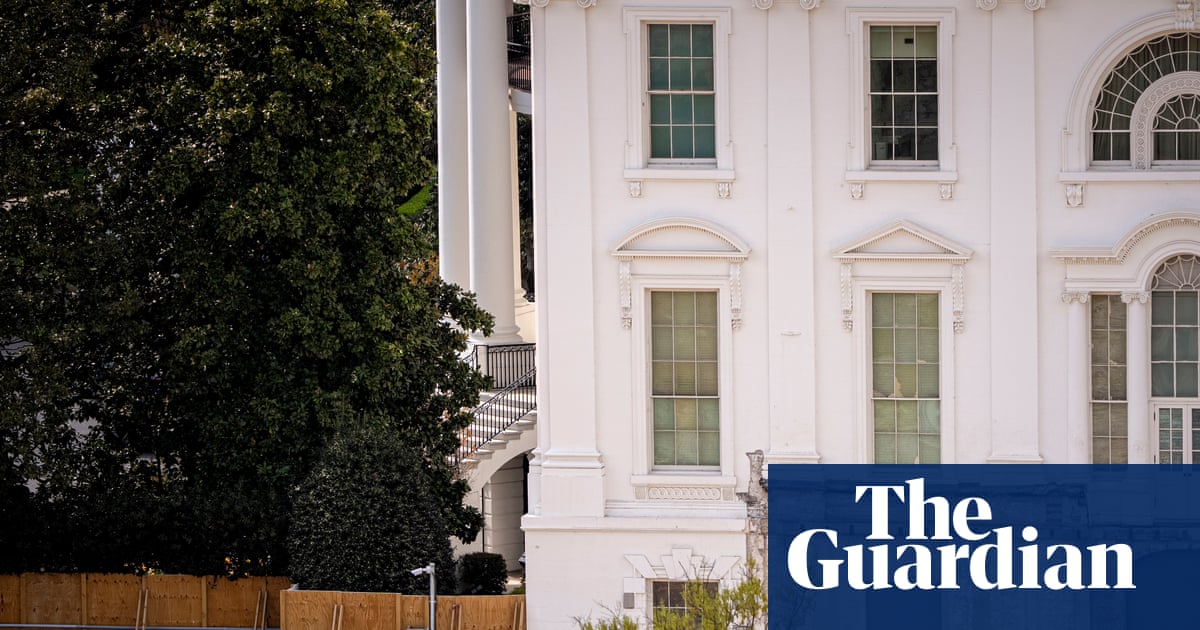
The National Capital Planning Commission will vote Thursday on Donald Trump's $400m, 90,000 sq ft East Wing Modernization ballroom, two days after a federal judge issued a preliminary injunction blocking construction without Congress's approval. The Justice Department has appealed the ruling; the suit was brought by the National Trust for Historic Preservation alleging the president exceeded his authority when he razed the historic East Wing. The commission is chaired by Trump's former lawyer Will Scharf, keeping the approval process politically sensitive and legally uncertain despite the project's private financing.
A pattern of high-visibility federal-area construction funded outside normal appropriations creates a distinct private-public pipeline that incumbent A/E firms, specialty subcontractors and security integrators can monetize over a multi-year window. If even two additional projects of the same profile proceed, the incremental workflow could add on the order of $1–2bn of local construction spend and related systems integration demand over 24–48 months, shifting margin mix toward specialty trades (historic stonework, bespoke MEP, advanced perimeter systems) that carry higher bid volatility and smaller competitive sets.
The principal risk is legal and political delay: litigation timelines and potential congressional responses make near-term cashflows lumpy. Expect a bifurcated timeline — an initial 3–9 month window of procurement noise (RFPs, pre-qualification) followed by a 12–36 month execution phase if approvals hold; cost overruns in delayed scenarios can easily add 15–40% to contractor exposure and compress realized returns on fixed-price scopes.
Second-order effects include a reputational premium/discount applied by institutional clients and donors to contractors and design firms tied to contentious projects; firms that monetize the pipeline but are publicly perceived as politicized may face non-government contract attrition of 2–5% of revenues. Separately, heightened scrutiny of privately funded upgrades to public sites increases lobbying and compliance demand, offering cyclical upside for government IT/security integrators and specialized legal/advisory boutiques over 6–24 months.
Consensus framing treats approvals as binary; the smarter play is to trade the staggered, idiosyncratic event stream (procurement announcements, bond/insurance filings, litigation milestones). Liquidity-constrained subcontractors and specialty suppliers will show early pricing dislocation — those are the best asymmetric opportunities, not headline prime contractors which already price-in headline risk.
AI-powered research, real-time alerts, and portfolio analytics for institutional investors.
Request DemoOverall Sentiment
neutral
Sentiment Score
0.00
