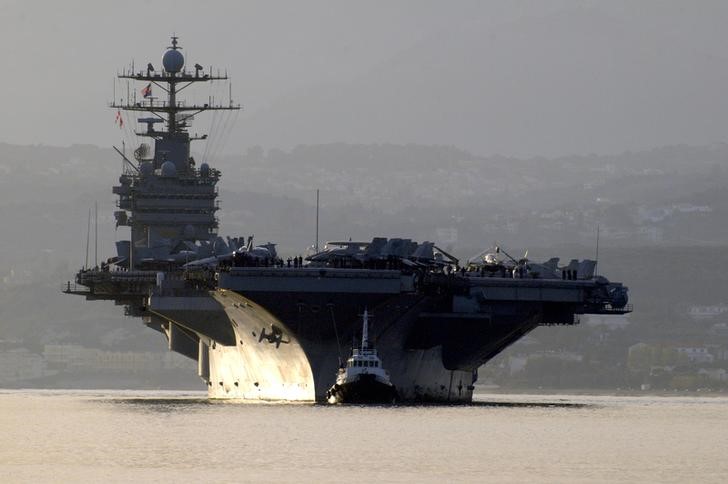
$200 billion: reports the Pentagon is weighing a roughly $200B supplemental funding request to support the Iran war effort. Retired Vice Adm. Colin Kilrain warned the conflict could last far longer than a 4–6 week estimate, diverting resources from Indo-Pacific priorities and contributing to higher oil prices. He flagged growing coordination among China, Russia, Iran and North Korea, rising domestic cyber and drone threats, and a likely shift in procurement toward smaller, cheaper autonomous systems while retaining high-end platforms for major-power competition.
A protracted Middle East kinetic and cyber environment reallocates capital away from big-ticket, long-lead platforms toward distributed compute, edge nodes and modular procurement — a structural tailwind for vendors that sell configurable, short-cycle server and appliance hardware. Expect procurement decision timelines to lengthen (procurements awarded over 6–24 months) but order sizes to become more lumpy and recurring as agencies prioritize rapidly fieldable AI/cyber kits over single large capital platforms. Energy-price volatility and risk-off investor flows will compress digital-ad CPMs and user acquisition economics in the near term (1–3 quarters), which directly pressures ad-dependent monetization models more than enterprise software or hardware spend. Finally, inventory and component sourcing dynamics are the key second-order risk: smaller OEMs can win share quickly but are more exposed to spot-price swings on GPUs, NICs and power supplies, creating both upside on share gains and downside if supply tightens or prices spike.
AI-powered research, real-time alerts, and portfolio analytics for institutional investors.
Request DemoOverall Sentiment
mildly negative
Sentiment Score
-0.30
Ticker Sentiment
