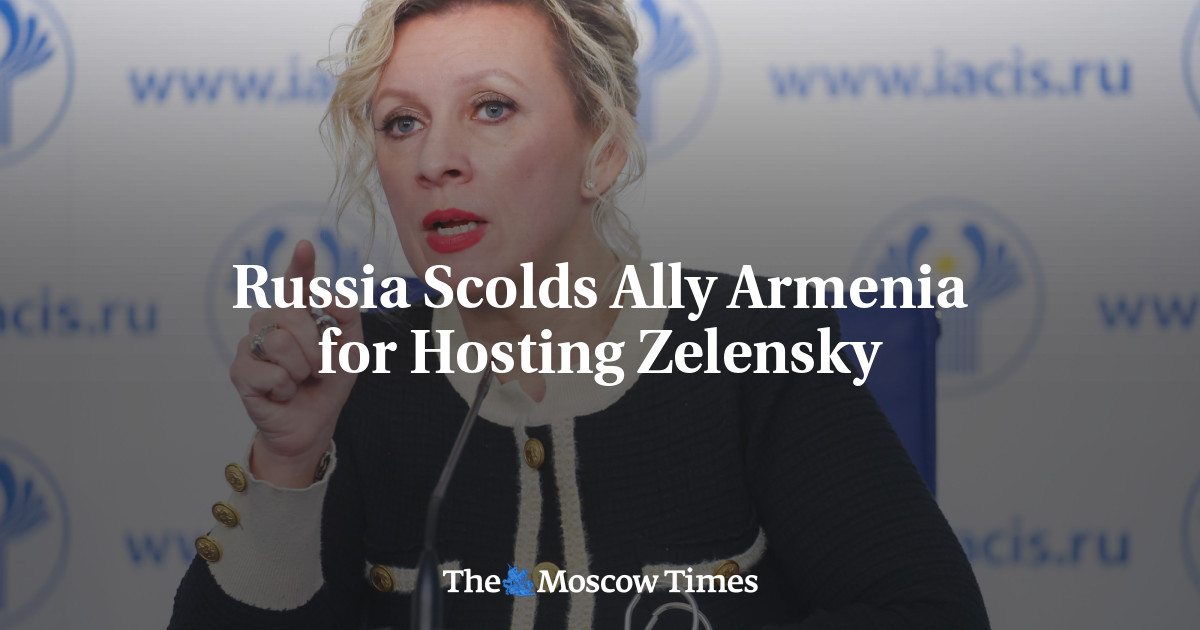
Russia warned Armenia against deeper alignment with the EU after Yerevan hosted Ukrainian President Volodymyr Zelensky at a European summit, signaling further strain in Russia-Armenia relations. Armenian Prime Minister Nikol Pashinyan said Armenia is "not an ally of Russia" on the Ukraine issue and will skip Moscow's May 9 Victory Day parade, underscoring the diplomatic rupture. The article also notes Armenia's EU-membership intent and Russia's warning of political and economic consequences if the country continues on Brussels' path.
This is less about rhetoric and more about a regime-change in Armenia’s financing and security architecture. The market-relevant second order effect is that Yerevan is signaling it will accept the near-term economic cost of partial decoupling from Moscow in exchange for political optionality, which raises the probability of trade friction, remittance pressure, and a slower-than-expected transition in logistics and energy dependence. For a small import-dependent economy, even modest Russian retaliation can translate into currency volatility and a wider risk premium long before any formal sanctions are imposed.
The key loser is any Armenia-linked asset exposed to Russian transit, banking, or consumer demand; the more subtle loser is the Eurasian Economic Union as a credibility construct. If one member can publicly hedge both defense and trade alignment, the bloc’s deterrent power erodes, which could encourage other peripheral members to seek EU-facing hedges of their own. That creates a medium-term contagion risk for Russian influence in the South Caucasus, especially if EU technical assistance and accession language begin to crowd in private capital and infrastructure standards.
Catalyst timing matters: the next 2-6 weeks are mostly headline risk, but the real inflection is into the June parliamentary election and any ensuing cabinet reshuffle. A stronger pro-EU mandate would likely trigger incremental Russian economic coercion rather than an immediate break, making the trade more about gradual repricing than a binary event. Conversely, if domestic politics swing back toward accommodation, the current hawkish spillover into regional risk assets should fade quickly.
The contrarian angle is that the market may overestimate the speed at which Armenia can operationally rewire away from Russia. EU aspiration is not the same as EU accession, and the legal/infrastructure path typically takes years; that means Moscow still holds leverage through labor migration, energy, and payment channels. So the near-term trade is not a full geopolitical break, but a widening optionality premium on Armenian assets and a persistent discount on Russia-adjacent Eurasian integration stories.
AI-powered research, real-time alerts, and portfolio analytics for institutional investors.
Request DemoOverall Sentiment
mildly negative
Sentiment Score
-0.35
