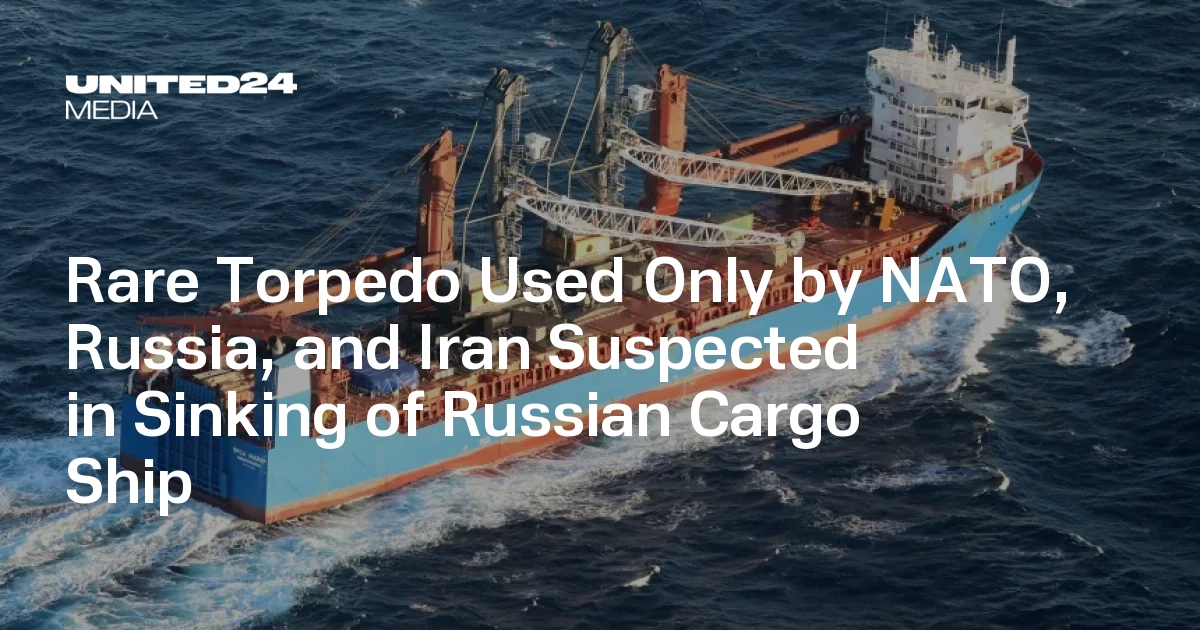
A Russian cargo ship, Ursa Major, sank after multiple explosions roughly 60 miles off Spain on December 23, 2024, with investigators citing a possible Barracuda-type supercavitating torpedo and four nearby seismic events. Two crew members were killed and 14 were rescued, while the vessel may also have been carrying reactor components potentially intended for North Korea. The incident raises geopolitical and defense-related concerns, including possible maritime sabotage and heightened scrutiny of military-linked shipping.
The market implication is not the ship itself but the signaling effect: any credible attribution of a clandestine undersea strike raises the premium on maritime security, port inspection, and naval ISR capabilities across Europe. That favors contractors and subsea surveillance vendors over pure-play shippers, because the first-order damage to shipping insurance is usually smaller than the second-order increase in screening costs, route delays, and defense spending. If the incident is treated as state-linked sabotage, expect governments to accelerate procurement decisions that were already in the pipeline rather than create entirely new budgets. The more important medium-term read-through is on logistics resilience in the Black Sea/Mediterranean corridor. Even isolated attacks can force operators to reprice risk for Russian-origin cargo, dual-use cargo, and any vessel with opaque routing, which can widen charter spreads and increase time-at-sea for non-Russian carriers that are otherwise unaffected. That creates a subtle winner in Western defense supply chains, but a loser in generic dry bulk/tanker names exposed to higher war-risk premiums without corresponding rate gains. A key contrarian point is that the headline may overstate the probability of broad escalation while underestimating investigative uncertainty. If proof remains circumstantial, the episode can fade into a one-off geopolitical noise event rather than a durable shipping disruption, which would reverse any short-term overreaction in marine insurers and defense names within days to weeks. The higher-probability durable effect is not a blockade narrative; it is a slow ratchet higher in budgets for anti-submarine warfare, seabed monitoring, and critical infrastructure protection over the next 6-18 months.
AI-powered research, real-time alerts, and portfolio analytics for institutional investors.
Overall Sentiment
moderately negative
Sentiment Score
-0.45
