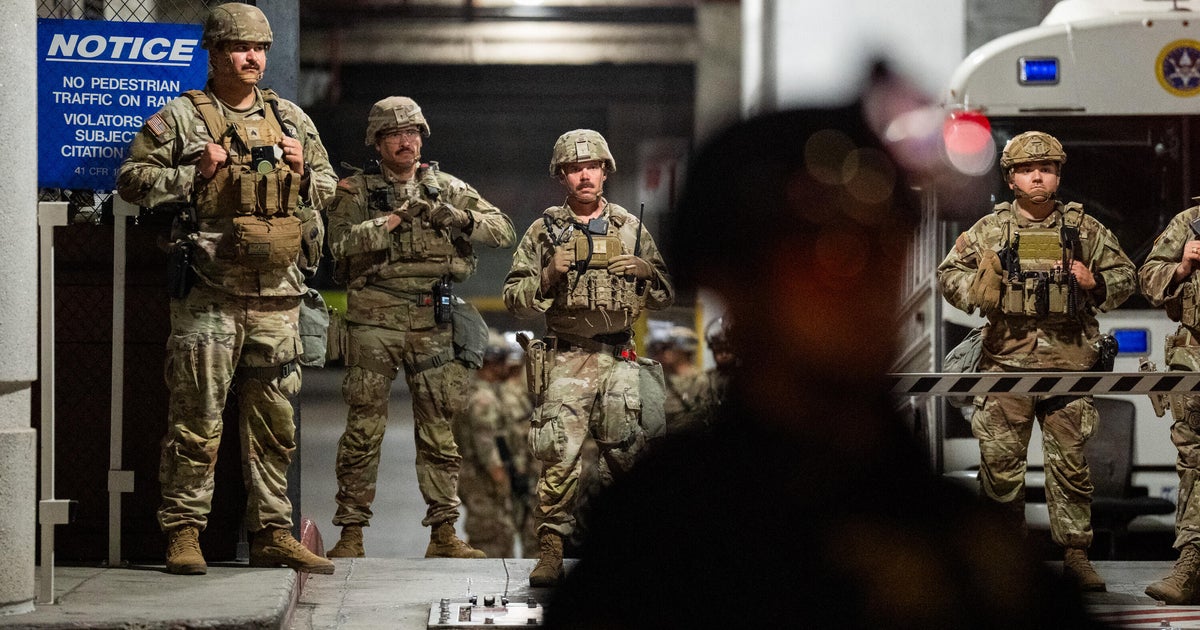
A federal judge in California, U.S. District Judge Charles Breyer, issued a preliminary injunction blocking the Trump administration from deploying roughly 300 federalized California National Guard troops in Los Angeles and ordered their return to Gov. Gavin Newsom, finding no evidence the execution of federal law was impeded and criticizing an expansive use of Title 10 that could create a “traveling national police force.” The decision — the second judicial rebuke in a months-long fight that began with a June federalization of about 4,000 Guardsmen and followed orders from Defense Secretary Pete Hegseth that had sent 200 troops to Oregon — reinforces limits on presidential authority to federalize state forces for immigration enforcement, is likely to be appealed, and has broader implications for federal‑state control of the National Guard and future deployments nationwide.
U.S. District Judge Charles Breyer issued a preliminary injunction blocking the Trump administration from deploying roughly 300 federalized California National Guard troops in Los Angeles and directed their return to Gov. Gavin Newsom, finding no evidence the execution of federal law was impeded. Breyer's 35‑page order targeted Defense Secretary Pete Hegseth's August and October orders that had kept about 300 Guardsmen in federal service—including an October allocation of 200 to Oregon and 100 to Los Angeles—and noted those troops were scheduled to remain federalized through Feb. 2; the judge put his order on hold until Monday to allow for a Justice Department appeal.
The ruling is the second judicial rebuke in a months‑long dispute that began with the June federalization of roughly 4,000 California Guardsmen, after Breyer issued a June 12 temporary restraining order that the 9th Circuit briefly lifted; the 9th Circuit and the Supreme Court are still involved in related appeals. Breyer framed the dispute as a federalism question, warning against an expansive Title 10 interpretation that could create a "traveling national police force," while California officials argued that protest violence had subsided and continued federal control lacked justification.
The article and signals indicate moderately negative political sentiment but limited immediate market impact (market_impact_score 0.12) and no direct corporate tickers implicated, so the primary effect is legal and policy uncertainty rather than a discrete market shock. If appellate courts affirm constraints on Title 10, expect a structural limit on ad‑hoc federal deployments for immigration enforcement that could alter demand patterns for homeland‑security and defense services; the situation remains contingent on appeals and higher‑court rulings.
AI-powered research, real-time alerts, and portfolio analytics for institutional investors.
Request DemoOverall Sentiment
moderately negative
Sentiment Score
-0.35
