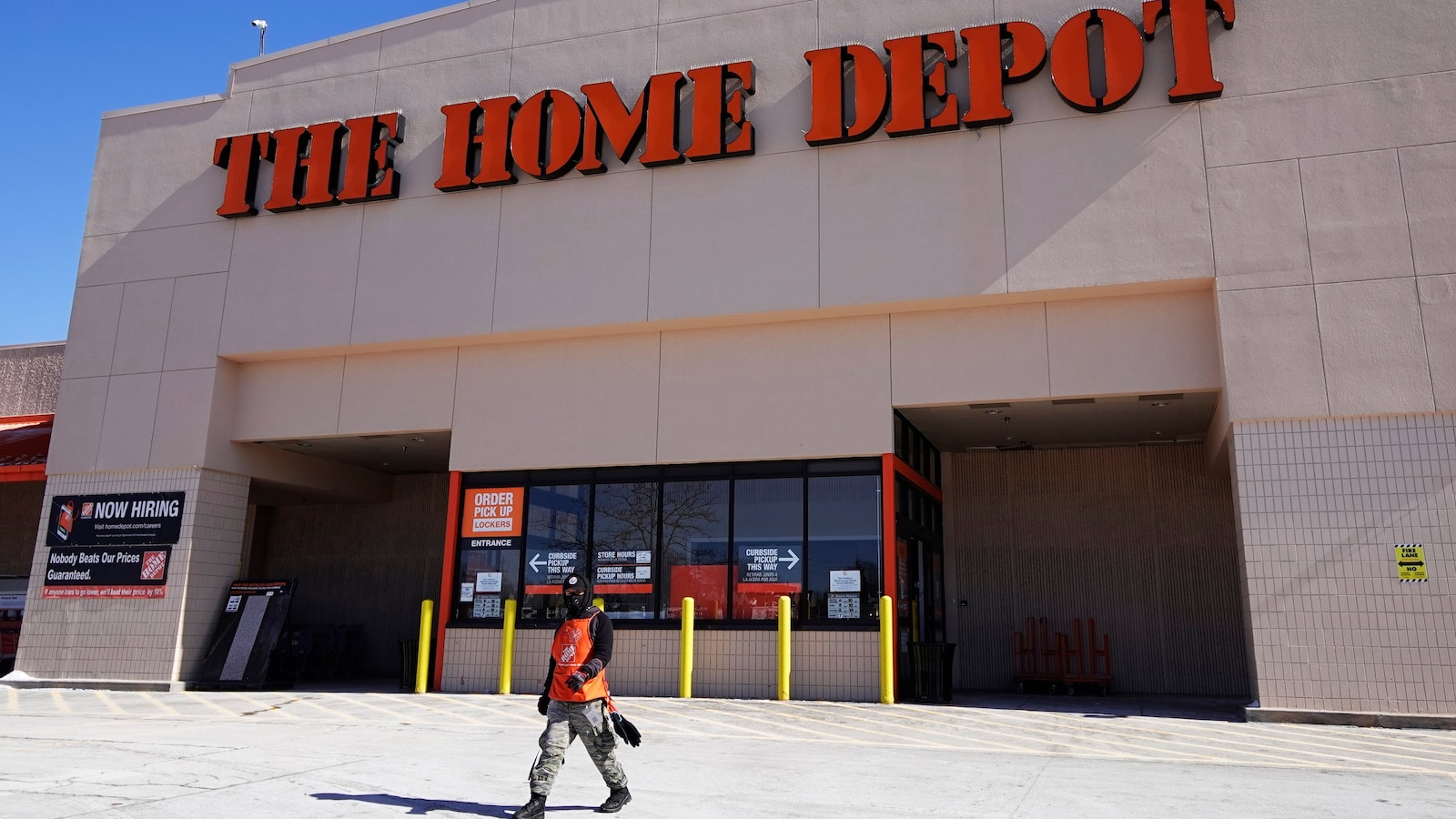
Home Depot posted fiscal Q1 revenue of $41.77B versus $41.59B expected and adjusted EPS of $3.43 versus $3.41 consensus, despite net income falling to $3.29B from $3.43B a year ago. Comparable store sales rose 0.6% overall and 0.4% in the U.S., helped by professional customers and spring stock-up demand, while management reaffirmed fiscal 2026 sales growth of about 2.5% to 4.5%.
The setup is less about a broad DIY rebound and more about a continued mix shift toward professional spend, which is structurally better for margin durability than headline same-store sales. If pro demand is holding while ticket size rises and transactions fall, that usually signals fewer but larger projects — a favorable mix for suppliers with scale, private-label penetration, and install/service attach rates. The second-order loser is smaller regional home-improvement chains and specialty distributors that depend more on discretionary homeowner traffic and lack the pro-account infrastructure to defend share.
The market is likely underestimating how much this quarter de-risks near-term earnings volatility. A flat-to-up guide against a weak housing backdrop implies Home Depot is effectively assuming no macro catalyst, which means upside would come from rate relief or a pick-up in existing-home turnover rather than any need to win incremental wallet share. Over the next 2-3 quarters, the key catalyst is mortgage-rate direction: even a modest decline can unlock deferred maintenance and moving-related spend, which tends to flow through with a lag and disproportionately benefits HD’s higher-margin attachment categories.
The contrarian risk is that pro demand may be more cyclical than it appears; if commercial remodeling and storm-repair spend were pulling forward activity, the current resilience could fade quickly into late summer. Also, the rise in average receipt while transactions decline is a classic “inflationary hold-up” pattern — good for revenue in the short run, but it can mask unit softness that shows up later if consumers trade down or delay projects. If housing affordability stays frozen and fuel-driven inflation persists, the consumer side can remain a drag well into the next fiscal year, limiting multiple expansion even if estimates remain intact.
For broader trade implications, HD strength is a relative positive for building-products suppliers with pro exposure, but a mixed signal for homebuilders because it argues for repair/remodel over new construction. That tilts the opportunity set toward names leveraged to maintenance, tools, and install services rather than cyclically levered housing beta. The best risk/reward is not chasing the stock after an earnings beat; it is using the print to lean into pairs that express sector dispersion if the housing recovery remains absent.
AI-powered research, real-time alerts, and portfolio analytics for institutional investors.
Request DemoOverall Sentiment
mildly positive
Sentiment Score
0.35
Ticker Sentiment
