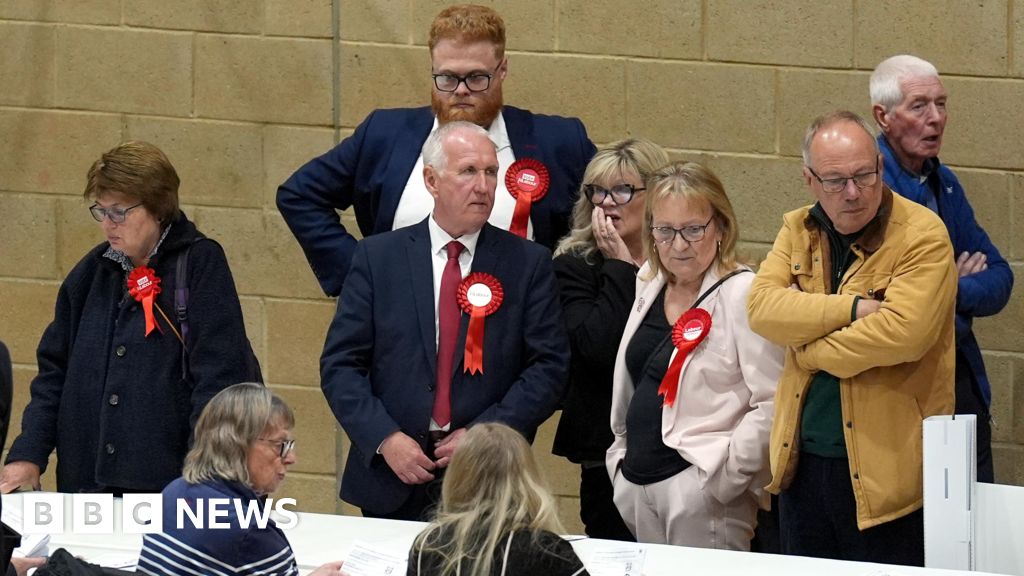
Local election results across parts of England show Reform ahead, winning about a third of declared seats, while Labour has lost just under half of the seats it was defending. Labour suffered especially heavy losses in heartland areas such as Tameside, where it lost 16 of 17 seats, and Wigan, where it lost all 22 seats defended to Reform. The Conservatives are also slipping, while the Liberal Democrats and Greens are making modest gains; turnout is running at 43%, up eight points from 2022.
The market read-through is less about a clean policy shift and more about an acceleration in regime fragmentation. That tends to favor volatility sellers in the very near term only if realized outcomes stay dispersed; otherwise it increases the odds of a broader risk premium in UK domestic assets because no single party is emerging with the mandate to force fiscal or planning reform. The second-order effect is a higher probability of policy drift: fewer decisive local outcomes can translate into more stop-start capital allocation by councils, contractors, and utilities that depend on permitting and procurement.
The biggest medium-term implication is for companies exposed to UK consumer sentiment and local public spending rather than national policy headlines. If the political center keeps bleeding toward protest parties, management teams will be forced to assume a more volatile operating environment: wage pressure, more aggressive local tax/fee decisions, and delayed project awards. That argues for a relative defensive stance on UK domestic cyclicals versus global earners, because the latter can absorb incremental political noise while the former face compounding uncertainty in demand and regulation.
The contrarian point is that the market may overestimate the persistence of this signal into a general election horizon. Local protest voting often peaks before softens once voters confront national trade-offs, so the current move may be an early-cycle warning rather than a durable rerating of UK assets. The key catalyst is whether this becomes a funding problem in the next budget cycle; if councils start tightening services or the government responds with fiscal concessions, the political signal can reverse into a bond-market story within 3-6 months.
AI-powered research, real-time alerts, and portfolio analytics for institutional investors.
Request DemoOverall Sentiment
neutral
Sentiment Score
-0.05
