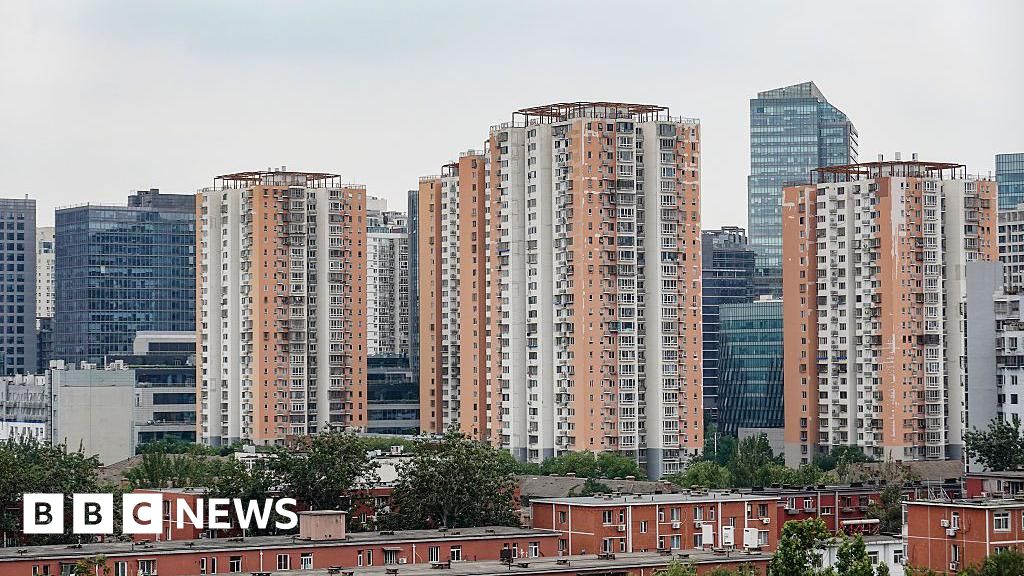
China will ban 'bone ash apartments'—the practice of storing cremated remains in vacant residential units—prohibiting placement of ashes in homes and burials outside licensed cemeteries or approved ecological burial areas. Property prices have fallen ~40% in 2025 vs 2021, contributing to the practice; Beijing burial plots quoted at ~¥10,000–¥200,000, standard tombstone plots ¥150,000–¥300,000, and funerals in 2020 cost nearly 50% of the average annual salary. The State Administration for Market Regulation and the Ministry of Civil Affairs also announced new funeral-industry rules to address high costs, fraud and opaque pricing ahead of the Qingming Festival.
This is primarily a regulatory de-incentivization of an informal use of low-end housing stock, which will re-categorize a portion of currently 'off-market' units back into the rental/resale pipeline. Expect a near-term increase in listings and a transient bump in transaction activity in lower-tier cities as families either sell or formally rent out such units to avoid enforcement; that puts incremental downward pressure on already weak sub-1.5M RMB price segments over the next 3–12 months.
Funeral-sector economics will bifurcate: formal providers and manufacturers of cremation and memorialization hardware/technology benefit from demand shifting onshore into compliant offerings, while ad-hoc, informal service providers and landlords monetizing vacancy lose an income stream. If regulators pair the ban with price-transparency and anti-fraud measures (as signaled), expect a multi-year re-contracting of funeral pricing and a modest reallocation of consumer spend into financial products (prepaid funeral plans, micro-insurance) — a slow but durable revenue stream for incumbents.
Enforcement is the key variable and the biggest latent risk: localities face capacity constraints (inspector manpower, legal ambiguity over residential use restrictions) and fiscal incentives to avoid widespread evictions. Two clear catalyst windows are the immediate Qingming enforcement window (days–weeks) for signaling and Q3–Q4 municipal budget cycles when local governments decide whether to invest in cemetery capacity or incentivize conversions, which will materially change the pace and scale of the effect.
AI-powered research, real-time alerts, and portfolio analytics for institutional investors.
Request DemoOverall Sentiment
neutral
Sentiment Score
0.00
Ticker Sentiment
