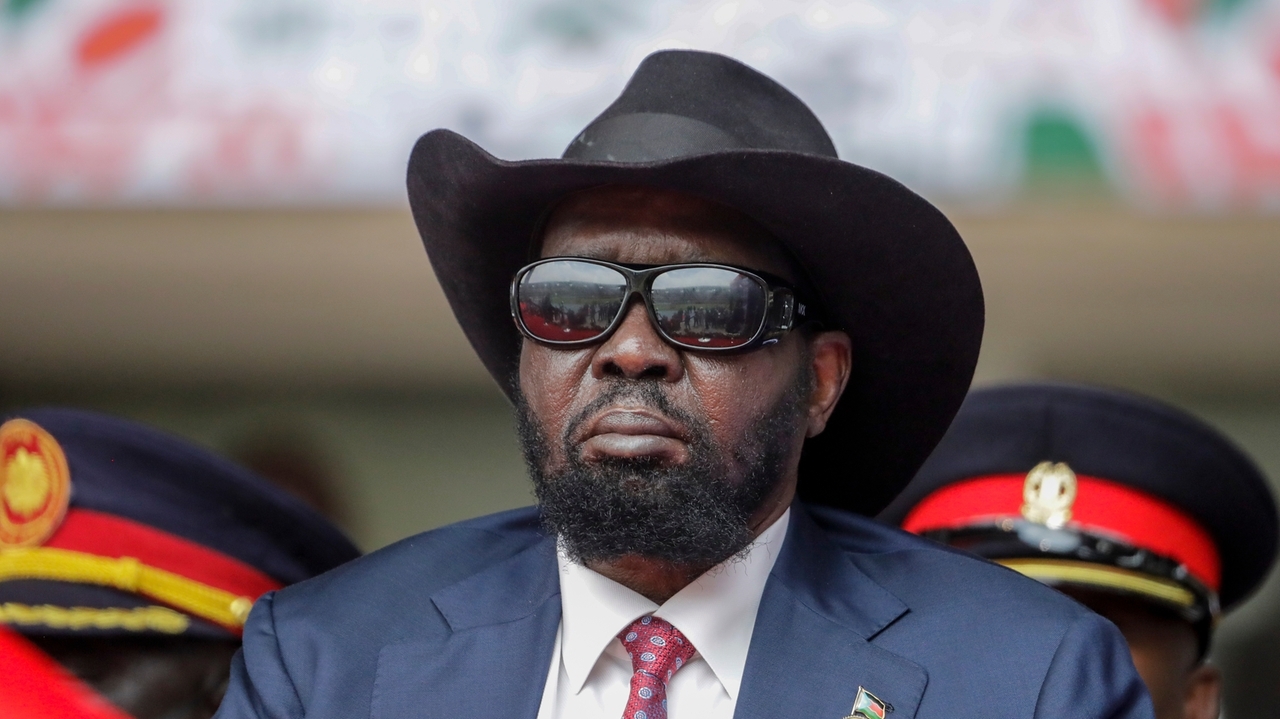
South Sudan’s army announced 'Operation Enduring Peace' to retake towns in Jonglei after opposition forces seized outposts beginning in December, ordering civilians to evacuate three counties and aid groups to leave within 48 hours. The offensive follows the Jan. 16 capture of Pajut and threats to advance toward Juba, while a senior commander’s filmed call to “spare no lives” has raised U.N. alarm and genocide concerns; opposition leader Riek Machar remains under house arrest facing treason charges. The escalation, supported on the ground by thousands of Ugandan troops defending Juba and a government one-week deadline to crush the rebellion, materially raises country-risk and humanitarian risk for investors with exposure to South Sudan or regional assets.
Market structure: Immediate winners are traditional safe-havens and volatility products (USD, U.S. Treasuries, gold, VIX); losers are frontier/EM Africa assets, local FX and regional banks with concentration in South Sudan/Uganda/Kenya corridors. Expect short-term EM FX weakness of 3–8% in affected currencies and 25–75bp widening in African sovereign/EM local spreads if fighting escalates over weeks. Commodity linkage is asymmetric: South Sudan oil (~0.2–0.3mbd historically) is small globally but pipeline risk can transmit a $2–$6/bbl Brent swing if attacks spread regionally.
Risk assessment: Tail risks include regionalization (Uganda/Sudan direct involvement) and a major pipeline attack causing a 10–30% temporary drop in South Sudan output — a low-probability but >$5/bbl upside to Brent for 2–8 weeks. Immediate horizon (days): flight-to-safety flows; short-term (weeks–months): EM credit repricing and refugee-driven budget strains; long-term (quarters–years): protracted instability raising sovereign default probability by +3–7 percentage points for the weakest issuers. Hidden dependency: humanitarian access restrictions amplify reputational and operational risk for NGOs and contractors, creating political contagion to bilateral aid budgets.
Trade implications: Tactical: establish small, size-constrained hedges — 1–2% portfolio long GLD (GLD) and 1–2% long TLT (TLT) within 48–72 hours; add a 0.5–1% VIX hedge via VXX if VIX >18. Reduce EM equity exposure: trim EEM weight by 1–3% and replace with UUP (USD) or GLD. Relative-value: pair trade long GLD (1%) / short EEM (1%) for 1–3 month horizon. Options: buy a 1–3 month Brent call spread (e.g., Brent +$5/$10 strikes) sized to 0.25–0.5% portfolio if Brent > $80.
Contrarian angles: Consensus may overstate systemic market impact — South Sudan is small but political signaling (e.g., trial of Machar, generals’ rhetoric) matters for investor sentiment. Markets often overshoot in first 2–6 weeks; look for idiosyncratic re-entry points: African bank equities and local FX that fall >15% may offer 12–24 month asymmetric returns once violence stabilizes. Watch triggers — a pipeline attack or a formal regional military escalation are binary events that would justify scaling protective hedges to 3–5% of portfolio.
AI-powered research, real-time alerts, and portfolio analytics for institutional investors.
Request DemoOverall Sentiment
strongly negative
Sentiment Score
-0.75
