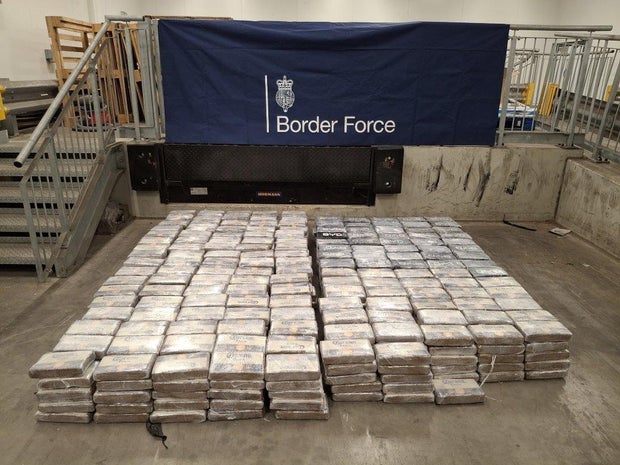
Approximately 1 ton (more than 2,000 lb) of cocaine valued at about £75 million (~$98.9 million) was seized in a banana-filled shipping container at Southampton Docks that arrived from Panama (originally sailed from Nicaragua). Three men — Joshua Berry (28), Daniel Dumitru (37) and Andrew Smyth (46) — have been charged and are due to appear in court, with potential maximum sentences of life imprisonment under U.K. guidelines. Authorities said this seizure is part of a broader pattern of illicit drugs concealed in banana shipments, noting a separate February 2024 seizure of over 12,500 lb at the same port.
Recent, repeated concealment events in perishable maritime supply chains are raising the bar for port authorities and importers, creating a structural increase in inspection intensity and capital spending on screening tech. Expect localized container dwell times to rise 2-5% in the near term (weeks–months) at ports judged ‘high risk’, with perishable-product spoilage and demurrage costs concentrating losses on thin-margin importers.
The largest second-order beneficiary is vendor-capex — providers of non-intrusive inspection, radiation detection and analytics that win government and port contracts will see multi-quarter revenue visibility as ports amortize new scanners and software. Insurers and risk managers will also capture recurring premium upside as underwriting adjusts for higher interception rates and operational delays. Conversely, perishable-focused importers and smaller terminals without scale to absorb inspection capex will see margin compression and potential market-share loss to larger, better-capitalized operators.
Tail risks skew to adaptation by smuggling networks: fragmentation of loads, substitution to less-scrutinized commodities, and relocation to secondary ports — these changes make detection harder and can extend the cycle from months into years. Key catalysts include coordinated regulatory moves (pre-export scanning mandates, origin-country certification) and major port contract awards; both typically play out over 3–18 months and will re-rate equipment suppliers and selected operators. Monitor tender pipelines, customs budget increases, and insurer rate filings for early readthroughs.
AI-powered research, real-time alerts, and portfolio analytics for institutional investors.
Request DemoOverall Sentiment
neutral
Sentiment Score
0.00
