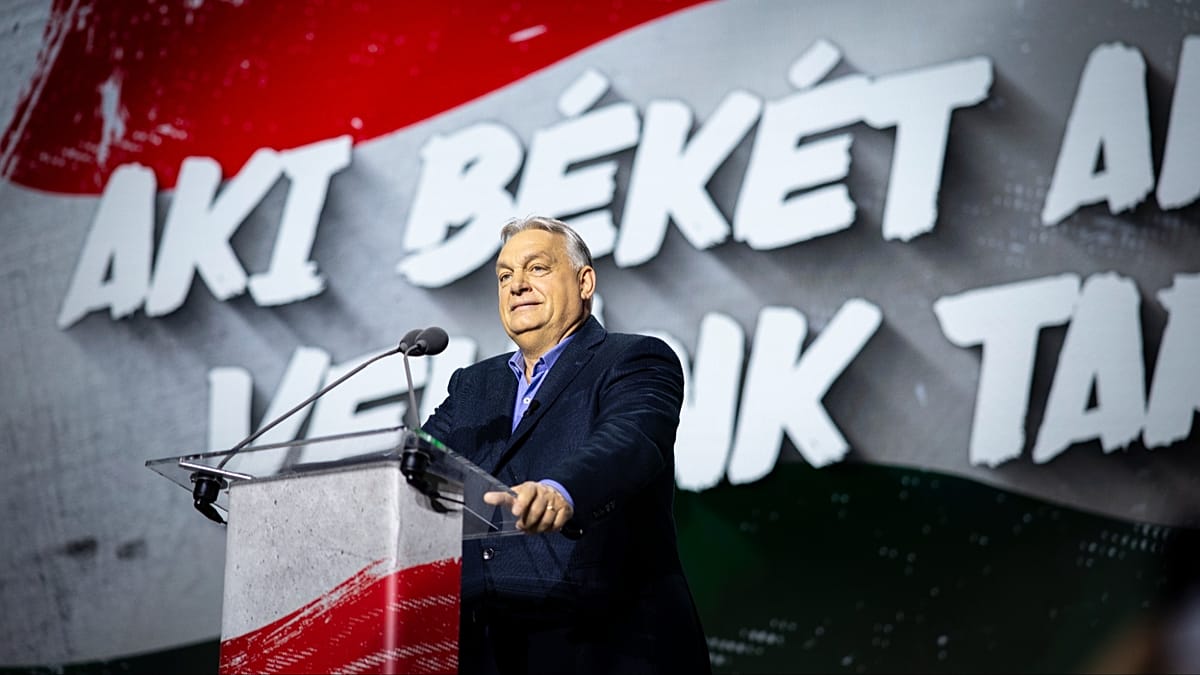
Hungarian Prime Minister Viktor Orbán, campaigning ahead of a competitive election, warned that the collapse of Ukraine would be a disaster for Hungary and urged efforts to prevent it, citing that Hungary supplies roughly 44% of Ukraine’s electricity and 56% of its natural gas, much of which originates from Russian sources. His remarks — including a recent comment that it is “hard to tell who attacked whom” and opposition to assistance that prolongs the conflict — underline Hungary’s energy interdependence, a potential policy divergence from EU consensus, and an elevated political risk that could influence regional energy flows and investor assessments of Central European geopolitical stability.
Market structure: Hungary’s pro-Russia posture raises relative winners (Russian gas suppliers, Hungary’s state-aligned energy firms such as MOL and MVM) and losers (Ukrainian economy, EU-funded reconstruction contractors, Hungarian sovereign credit and domestic banks). Expect near-term pricing power to shift toward Russian pipeline suppliers in Central Europe; European wholesale gas and power markets can reprice quickly if transit/assistance is constrained.
Risk assessment: Tail risks include an EU sanctioning/stopping transfers to Hungary (sovereign spread widening +200–400bps) or a major cut of cross-border energy to Ukraine causing a Dutch TTF shock of +30–80% in weeks. Immediate (days) impacts will show in FX/bond spreads and gas front-months; medium (weeks–months) in bank equities and Č/Supply rerouting costs; long-term (quarters–years) in defense budgets and EU energy diversification capex.
Trade implications: Price moves favor FX shorts (HUF), protection on Hungarian sovereign/banks (OT P) and directional long exposure to European gas/power and defense contractors. Use volatility instruments (3-month TTF call spreads or straddles) to express asymmetric upside in energy; prefer short-duration positions into the election and scale into 3–6 month views for defense/energy names.
Contrarian angles: Consensus may underprice Hungary-specific sanction risk and overprice persistent Russian access — if Orbán softens post-election the HUF and Hungarian equities can snap back quickly, so prefer option-based or size-limited positions. Historical parallels (2010s Hungary) show sharp sovereign repricings then recoveries; unintended consequence: EU pushes faster diversification, creating multi-year winners among grid builders, LNG/shipping and defense contractors.
AI-powered research, real-time alerts, and portfolio analytics for institutional investors.
Request DemoOverall Sentiment
moderately negative
Sentiment Score
-0.35
