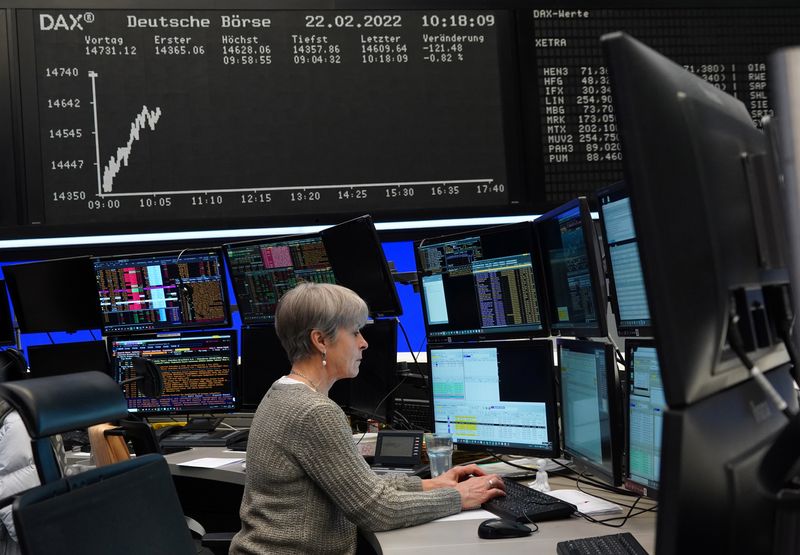
Trump extended the Israel-Lebanon ceasefire by 3 weeks, but uncertainty over Iran, the Strait of Hormuz, and U.S.-Iran hostilities kept markets on edge. European stocks fell 0.1% to 0.4% across major indices, while oil prices moved back above $100 a barrel, stoking inflation and global growth concerns. SAP rose more than 5% after reporting a 17% jump in first-quarter profit, providing a bright spot in otherwise risk-off trading.
The market is treating this as a binary de-escalation story, but the more important setup is duration risk: even a short-lived disruption in the Strait of Hormuz can keep the forward curve bid while physical crude stays tight. That creates a lagged inflation impulse into July/August data, which is more dangerous for equities than the initial oil spike because it compresses multiples exactly when earnings revisions are already vulnerable. The immediate losers are transport, chemicals, and European cyclicals with weak pricing power; the second-order winner is any balance-sheet-strong energy producer with low lifting costs and high free-cash-flow conversion.
For Europe, the bigger issue is not just energy inflation but margin squeeze across import-dependent industries. If crude stays above a psychologically important threshold for several weeks, industrials and consumer discretionary likely see estimate cuts before macro data fully reflects it, because analysts usually model energy pass-through too slowly. Banks are a nuanced beneficiary only if rates stay sticky without a growth break; if growth expectations roll over, higher yields from inflation become a headwind rather than a tailwind.
SAP’s move likely reflects a quality bid rather than pure idiosyncratic earnings strength. In a risk-off tape, software with recurring revenue and cloud mix becomes a relative haven versus hardware, industrial tech, and semis tied to capex cycles. The key second-order effect is that if energy shocks persist, enterprise IT budgets may rotate toward efficiency software and automation, supporting high-multiple software leaders even if broad equities de-rate.
The consensus may be underestimating the chance that this becomes a volatility regime, not a directional oil trade. If shipping insurance, freight rates, and inventory hoarding pick up, the inflation shock can broaden beyond energy into goods inflation within 4-8 weeks, which would keep defensive factor leadership in place longer than the market expects. Conversely, any credible reopening of maritime flows would unwind the premium quickly, so the trade needs tight time discipline.
AI-powered research, real-time alerts, and portfolio analytics for institutional investors.
Request TrialOverall Sentiment
mildly negative
Sentiment Score
-0.28
Ticker Sentiment
