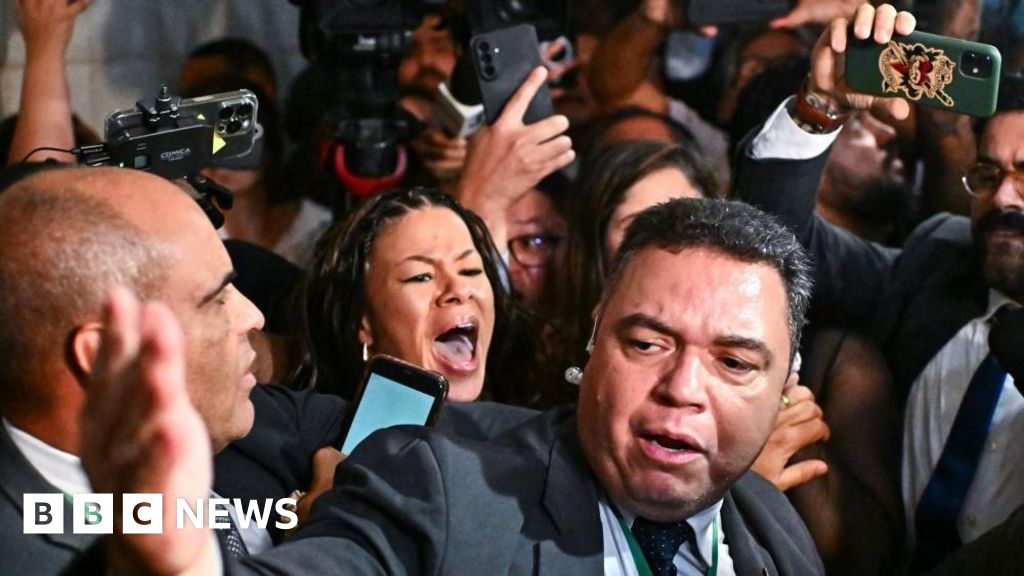
Brazil's lower house erupted into chaos as conservative lawmakers pushed a bill to drastically reduce former president Jair Bolsonaro's 27-year sentence for plotting a coup—potentially cutting it to two years and four months and freeing dozens of supporters convicted over the January 2023 attacks—while Bolsonaro's lawyers separately asked a court for temporary release for surgery and house arrest on health grounds. The heated debate included physical scuffles, the forced removal of a leftist lawmaker who occupied the Speaker's chair, and the cutting of TV feeds and reporters from the chamber; the proposal is part of a broader package of disciplinary reforms and still requires ratification by the Senate. The episode highlights persistent political polarization and institutional risk in Brazil, with potential implications for governance and investor sentiment if the legislature succeeds in substantially rolling back convictions of coup-related offenses.
Brazil's lower house descended into physical confrontations as conservative lawmakers advanced a bill to sharply reduce former president Jair Bolsonaro's 27-year sentence for plotting a coup, with backers proposing a cut to two years and four months and the potential release of dozens convicted for the January 2023 attacks. Bolsonaro's legal team separately filed for temporary release for surgery and asked the court to allow house arrest on health grounds, reiterating parallel judicial avenues to alter his custody status.
The proposal is part of a broader package of disciplinary and criminal-law changes and still requires ratification by the Senate; the chamber vote featured forcible removals, an occupied Speaker's chair and a cut TV feed, underscoring deep institutional strain. Bolsonaro's Liberal Party remains the largest in Congress and conservative parties outnumber Lula-aligned groupings, highlighting political leverage that could keep this issue alive despite earlier amnesty failures and nationwide protest risks.
Market-relevant implications are heightened political and legal uncertainty rather than an immediate policy shift: the article's tone and sentiment outputs signal moderately negative, volatile investor sentiment and measurable market-impact risk. Near-term catalysts to monitor are the Senate ratification timeline and court rulings on Bolsonaro's medical/house-arrest appeals, which will determine whether political risk to governance and investor confidence intensifies or abates.
AI-powered research, real-time alerts, and portfolio analytics for institutional investors.
Request DemoOverall Sentiment
moderately negative
Sentiment Score
-0.40
