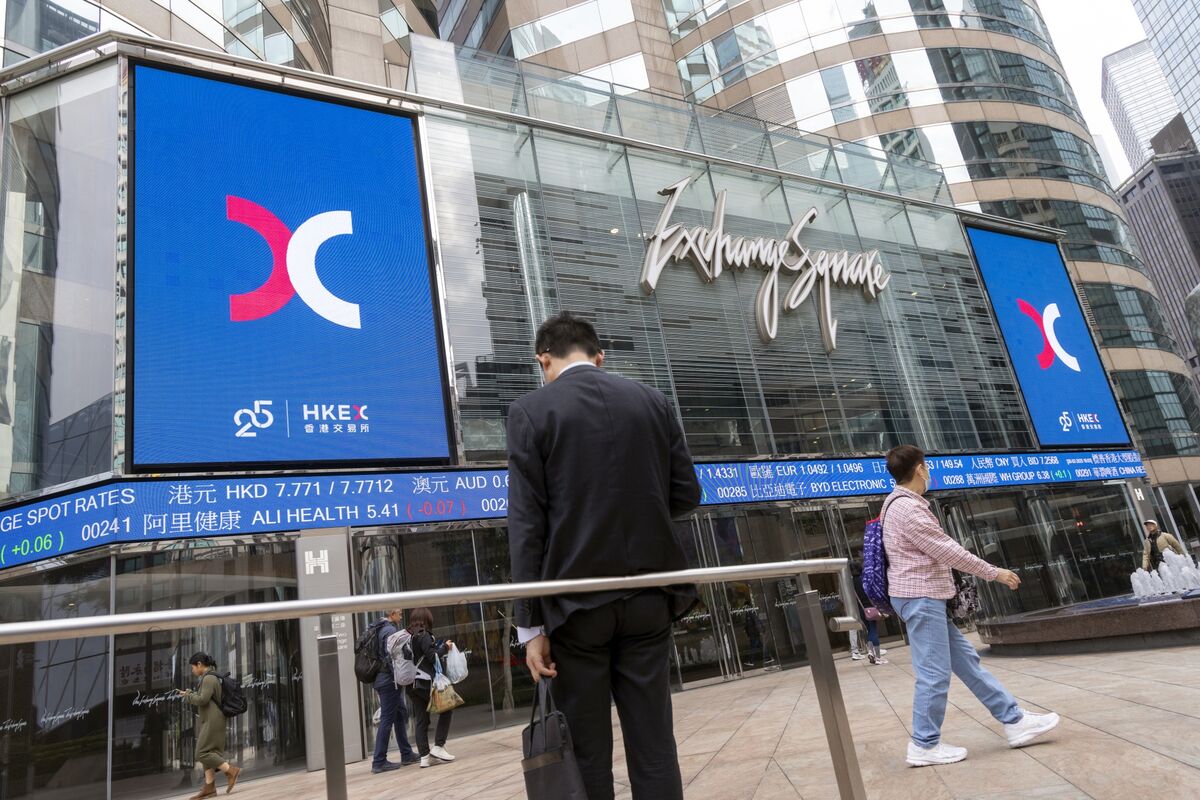
Hong Kong-listed Chinese shares declined on Friday, with the Hang Seng China Enterprises Index falling as much as 2.1%, after U.S. Treasury Secretary Steven Mnuchin indicated that trade negotiations with China have stalled, renewing investor concerns about trade uncertainties; technology and electric-vehicle companies led the decline.
Chinese equities listed in Hong Kong experienced a notable downturn on Friday, with the Hang Seng China Enterprises Index declining by as much as 2.1%. This sell-off was directly attributed to remarks from U.S. Treasury Secretary Scott Bessent, who indicated that trade negotiations between the U.S. and China have "a bit stalled," thereby reigniting investor concerns over trade uncertainties. The decline was particularly pronounced in the technology and electric-vehicle sectors, reflecting their sensitivity to international trade relations and supply chain stability. The market reaction, characterized by a strongly negative sentiment score of -0.7 and a market impact score of 0.65, underscores the significance of these trade developments for investor confidence in Chinese assets, particularly within growth-oriented industries such as technology and automotive, themes identified as relevant to this event.
AI-powered research, real-time alerts, and portfolio analytics for institutional investors.
Request DemoOverall Sentiment
strongly negative
Sentiment Score
-0.70
