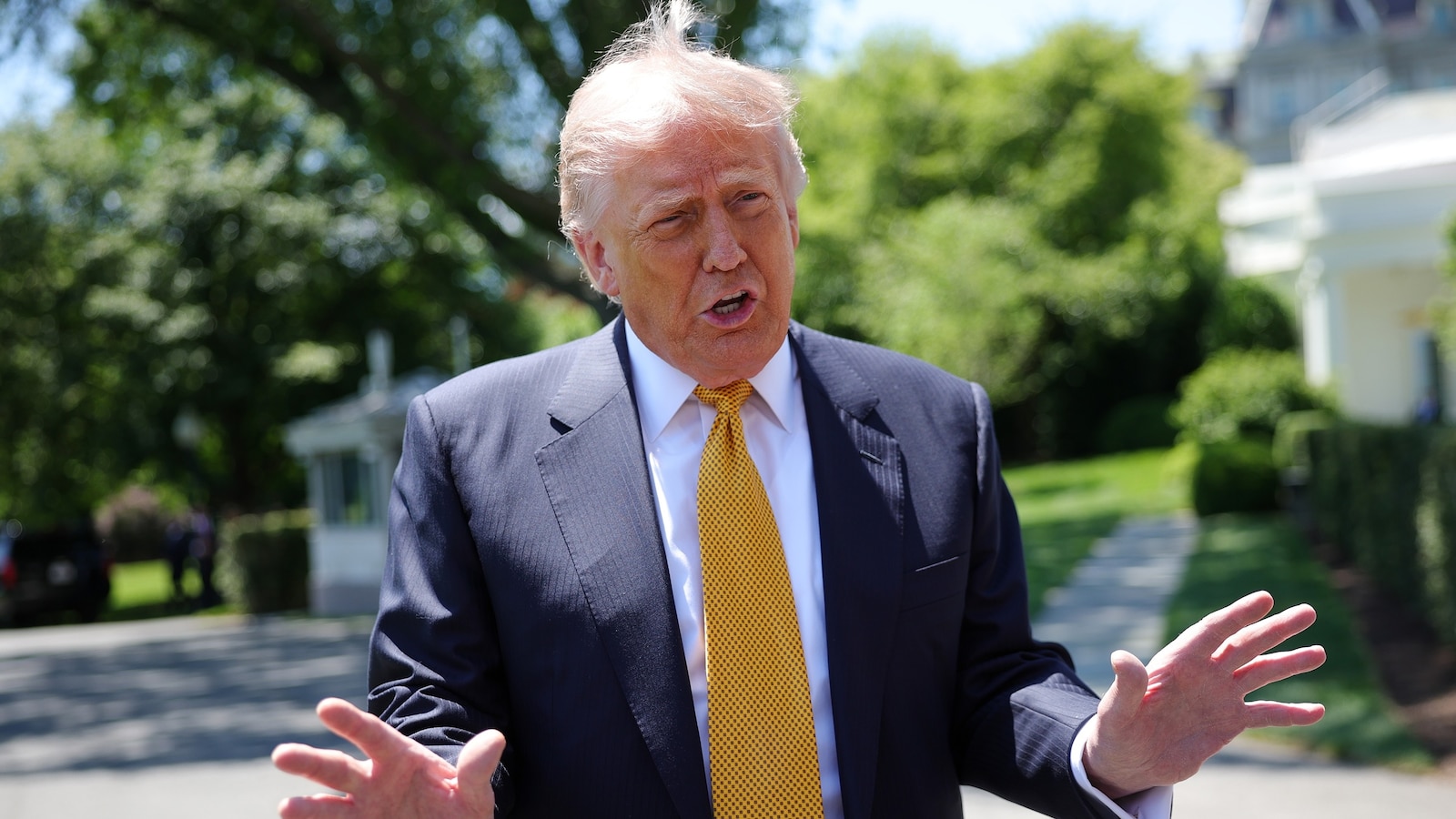
Trump said Americans' financial situation is not a factor in Iran negotiations, emphasizing that Iran cannot have a nuclear weapon. The backdrop is worsening inflation, with U.S. prices up 3.8% year over year in April and gas averaging $4.50 per gallon, more than $1.50 higher since the war began. He argued prices and oil would fall if the conflict ends, but the comments reinforce geopolitical and energy-market risk as inflation remains elevated.
The market is still underpricing the policy transmission from a Middle East de-escalation into inflation breakevens. A meaningful reduction in war-risk premium would hit gasoline first, then feed into headline CPI with a lag, which matters more for rate-cut timing than for current prints. That creates a near-term asymmetry: energy-linked inflation hedges can compress quickly if diplomacy advances, while rate-sensitive assets could re-rate on a cleaner disinflation path.
The bigger second-order effect is political rather than purely economic. With household pain concentrated in fuel, any visible retreat in gasoline prices would likely be interpreted as a validation of the administration’s foreign-policy stance, even if the domestic affordability narrative remains weak. Conversely, if talks stall, the combination of sticky inflation and elevated gas prices becomes a late-cycle tax on consumers and a fresh headwind for discretionary demand, especially lower-income retail and autos.
From a positioning standpoint, the consensus risk is that traders treat this as a binary oil headline when it is really a duration trade in disguise. The market is already long inflation hedges after the latest price data; if geopolitical risk premium fades, the unwind could be sharp in WTI, refiners, and energy equities, while long-end yields could grind lower as breakeven inflation falls. The contrarian angle is that a successful deal may be less bullish for broad equities than the first glance suggests, because cheaper fuel helps consumers only after the market first reprices growth and inflation expectations.
Tail risk is a failed negotiation that hardens into sanctions escalation or supply disruption, which would re-ignite crude and force the Fed/market to choose between growth and inflation over the next 1-3 months. The cleaner setup is for a tactical fade of energy strength into headlines, not a structural bearish call on the sector, because any breakdown in talks can still reset the entire curve upward quickly.
AI-powered research, real-time alerts, and portfolio analytics for institutional investors.
Request DemoOverall Sentiment
mildly negative
Sentiment Score
-0.15
