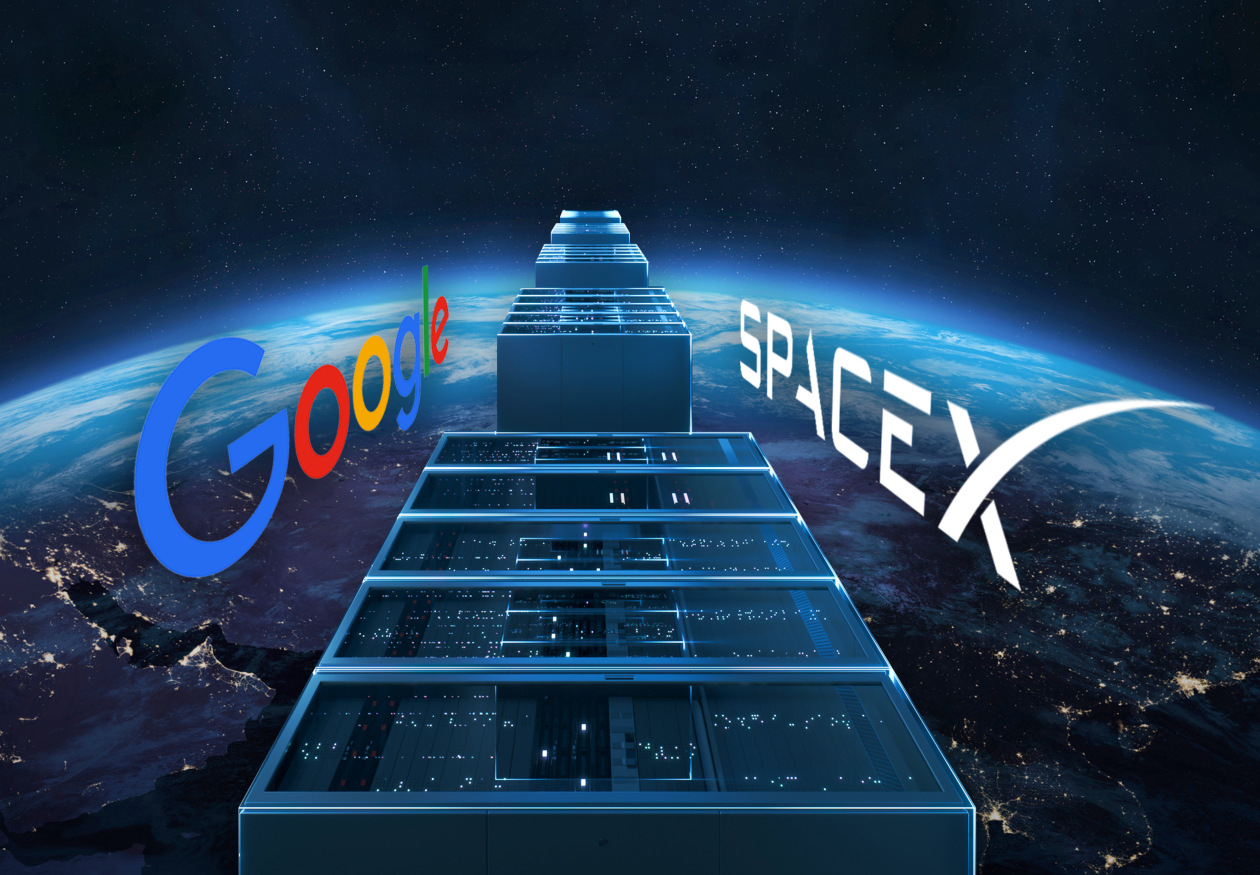
SpaceX and Google are reportedly discussing a potential partnership to build space-based data centers, aimed at addressing rising electricity demand from the AI boom. The deal would deepen an already significant relationship, as Google is a major investor in SpaceX. The article is early-stage and speculative, with limited near-term financial impact.
The strategic value here is less about near-term revenue and more about option value: if space-based compute is even partially viable, it creates a new architectural path for training/inference that bypasses terrestrial grid bottlenecks. That matters most for hyperscalers with the deepest capex pipelines, because the constraint on AI growth is shifting from chips to power availability and permitting. In that frame, a partnership that ties a cloud leader more tightly to a launch provider is a vertical integration move aimed at securing scarce infrastructure, not a science project.
Second-order winners are the adjacent industrial stack: launch cadence, orbital thermal management, advanced materials, laser comms, and satellite servicing. The more interesting loser set is not other clouds per se, but terrestrial data-center infrastructure beneficiaries whose valuation embeds multi-year power-demand growth; if even a small fraction of future AI workloads is re-routed off-grid, the market may need to re-rate electricity-intensive beneficiaries and some edge data-center plays. That said, the time horizon is long—months to years—and the market is likely to overreact to headline risk before any economics are proven.
The key contrarian point is that “space data centers” solve a visible bottleneck, but they may introduce a worse one: launch cost, maintenance complexity, radiation risk, and latency for many workloads. Consensus may be overestimating how much of AI inference can migrate off Earth versus how much this is really a bargaining chip to improve land-based power procurement and grid negotiations. The most likely near-term effect is signaling—helping large-cap AI platforms justify continued capex and land deals—rather than meaningful displacement of terrestrial data-center demand.
Catalyst-wise, watch for whether this becomes a capital-light pilot or a multi-year commitment with disclosed spend; only the latter would justify meaningful re-rating. A reversal would come from regulatory, technical, or insurance setbacks, or from falling power prices/accelerated grid buildout that removes the urgency. Until then, the trade is primarily in the optionality around power-constrained AI winners and against crowded beneficiaries of conventional data-center expansion.
AI-powered research, real-time alerts, and portfolio analytics for institutional investors.
Request DemoOverall Sentiment
neutral
Sentiment Score
0.15
Ticker Sentiment
