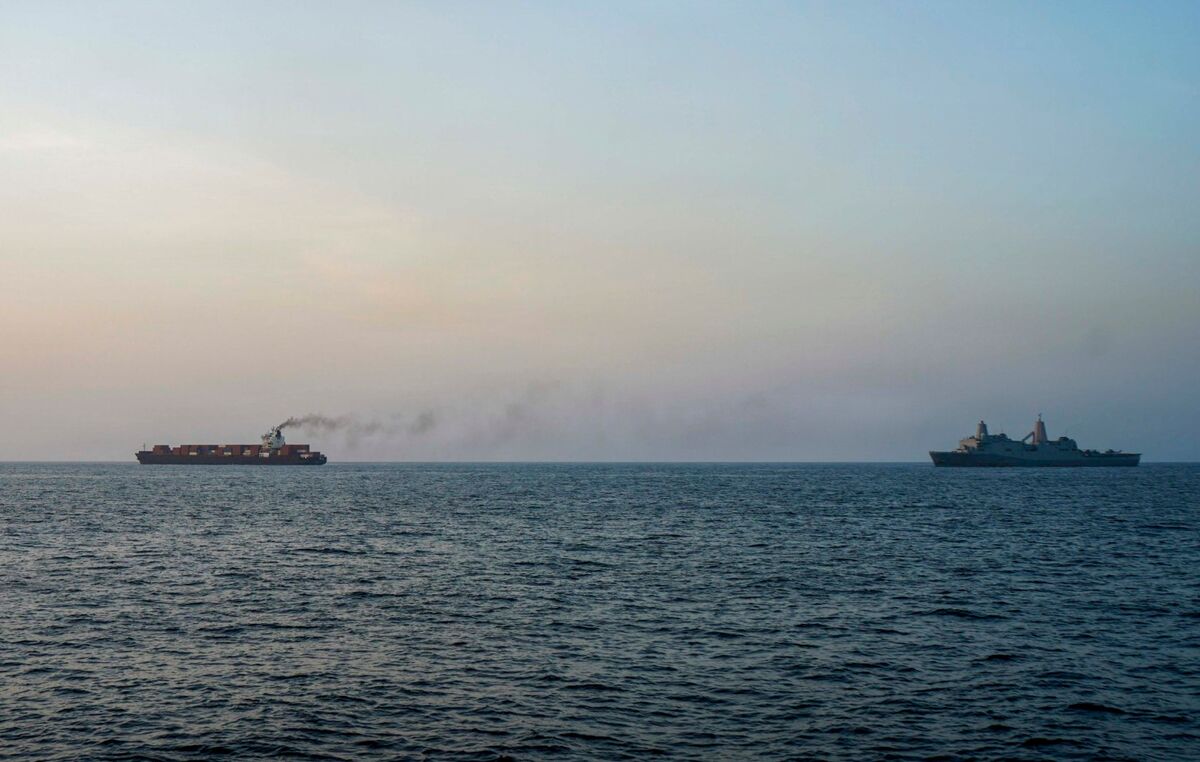
Maersk said its commercial vessel Alliance Fairfax was among US-flagged ships that transited the Strait of Hormuz on Monday with US military assistance. The report underscores elevated geopolitical and shipping-route risk in a key global chokepoint, but provides no evidence of direct damage or disruption. Impact is more likely to show up in freight-risk pricing and logistics sentiment than in immediate company fundamentals.
The immediate beneficiary is not the carrier itself but the security premium now being monetized across the Gulf logistics stack. When maritime flows require military shielding, the hidden winner is any operator with diversified routing, insured capacity, or contracted pricing power; the losers are spot-exposed shippers, petrochemical importers, and any business depending on just-in-time Gulf transit. The first-order market impact is mild, but the second-order effect is a higher floor for freight rates and war-risk insurance, which can persist for weeks even if the headline risk fades. The more interesting dynamic is dispersion inside transportation: large, networked carriers can reprice faster and absorb detours, while smaller operators face margin compression from both slower turns and elevated security costs. Energy flows are also vulnerable to knock-on delays that can tighten product markets without requiring an actual supply interruption, creating a setup where refined products and tankers can outperform the broader equity market if vessels start clustering into convoy-like movements. Infrastructure and defense contractors gain a quieter option value here: every additional escort mission reinforces budget urgency around naval readiness, sensors, and maritime surveillance. The key risk is complacency after a few uneventful transits. Markets tend to underprice tail risk until there is a near-miss, and then the repricing is abrupt; the relevant horizon is days to weeks for freight/insurance, but months for supply-chain rerouting and capital allocation. A de-escalation signal from regional actors or a successful pattern of safe passage would unwind the premium quickly, but absent that, the base case is elevated operating friction rather than a one-time shock. Contrarian view: this may be less about immediate supply disruption and more about normalized militarization of commerce. If convoys become routine, the market could stop treating it as a crisis and start valuing it as a durable, albeit modest, cost layer — which means the trade is in relative winners, not a broad macro short. The mispricing is likely in low-quality transportation names and insure-tech/defense adjacencies, not in outright energy beta.
AI-powered research, real-time alerts, and portfolio analytics for institutional investors.
Request DemoOverall Sentiment
neutral
Sentiment Score
-0.10
