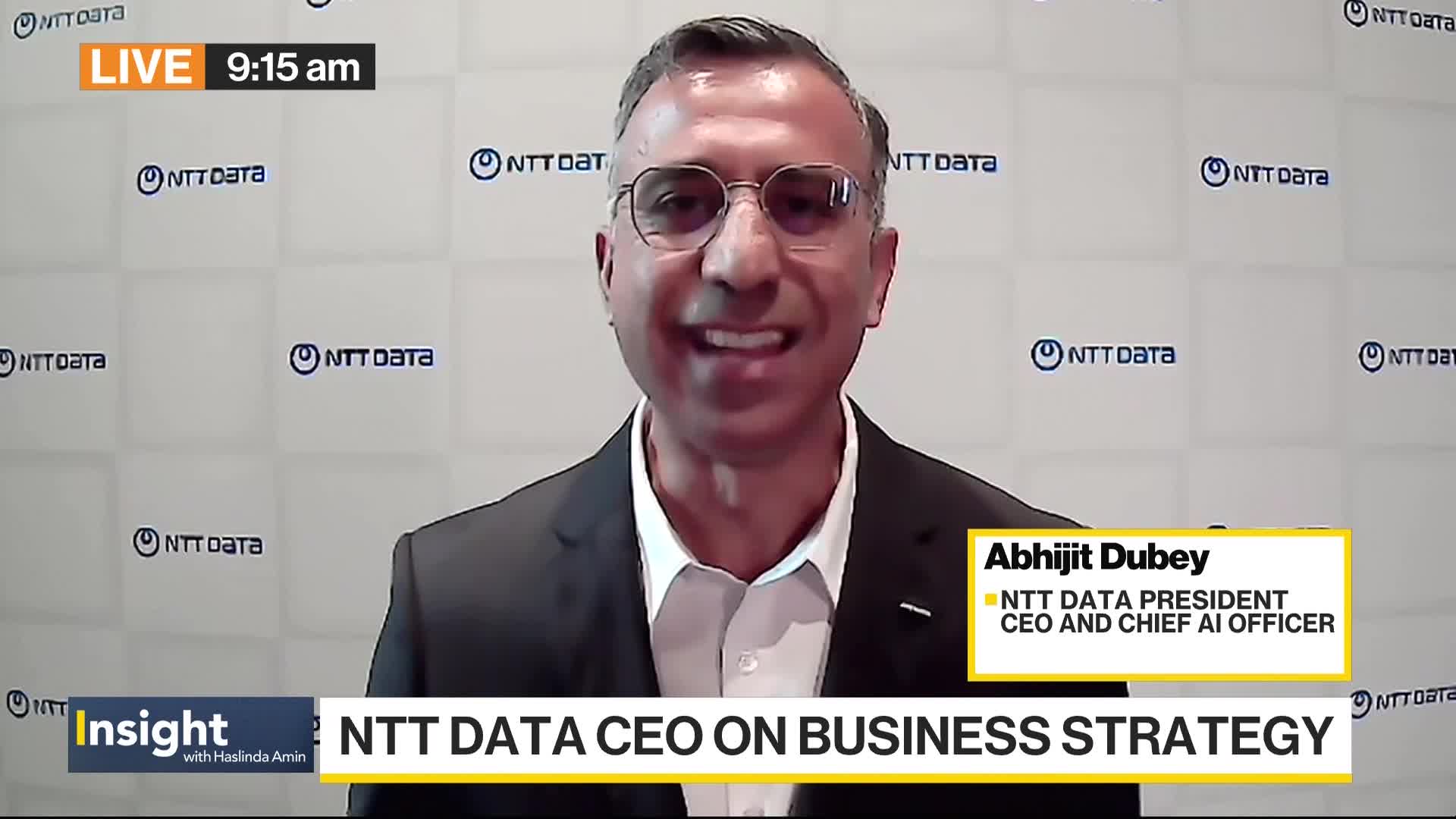
NTT Data's CEO warns of a near-term AI infrastructure capacity bubble that could 'reckon' within 12 months but remains bullish long-term, outlining substantial capital commitments — $3.0bn deployed in India to date, an additional $1.5bn planned there, and roughly $10bn globally over the next three years. The company (described as a roughly $30bn services and infrastructure business) expects datacenter growth in the high single digits (having grown 20%+ recently) and high-single-digit growth in technology services, while flagging key risks: geopolitical fragmentation, macro uncertainty, power and land constraints for data centers, and the need for standardized AI regulation; it also highlights opportunities in sovereign AI and cyber defense (six autonomous cyber defense centers and a partnership with LLM provider Mistral).
Market structure: The NTT Data commentary signals a bifurcation — short-term oversupply in datacenter capacity vs. long-term secular AI-driven demand. Hyperscalers (AMZN, MSFT, GOOGL) and full-stack regional players (NTT Data/9613.T, local sovereign vendors) win pricing power and capture strategic sovereign mandates; smaller, commodity datacenter owners face utilization and ASK pressure (vacancy risk +5–15% within 12 months). Energy and power supply constraints will reprice operating costs, favoring operators with locked long-term power contracts.
Risk assessment: Key tail risks are abrupt regulatory fragmentation (data-localization or sovereign AI procurement rules), a 12-month demand correction that forces asset write-downs, and localized power shortfalls creating stranded assets. Immediate (days) risk: headlines on sovereign AI rules; short-term (3–12 months): occupancy and revenue misses at mid-cap REITs; long-term (2–5 years): structural re-rating of integrators that fail to build AI-native services. Hidden dependencies include grid capacity, land-permitting timelines and chip supply bottlenecks.
Trade implications: Favor hyperscalers and AI chipmakers with 6–18 month theses (NVDA, MSFT, AMZN) and cybersecurity/AI-services (CRWD, PANW) for durable revenue; underweight mid/small-cap datacenter REITs (CONE-like) and legacy integrators (DXC). Use directional options to control downside: buy 9–12 month call exposure on NVDA/MSFT and 3–6 month put spreads on smaller REITs. Rotate into the trade on earnings windows and sovereign RFP announcements.
Contrarian angles: Consensus focuses on overbuild; market under-appreciates sovereign AI procurement and AI-native services that create non-linear revenue streams (NTT’s $10B capex commitment is strategic, not purely speculative). If sovereign/regional procurement accelerates, regional full-stack players could see 20–40% upside over 12–24 months while some REIT distress creates selective buying opportunities after 6–12 month price dislocations.
AI-powered research, real-time alerts, and portfolio analytics for institutional investors.
Request DemoOverall Sentiment
mixed
Sentiment Score
0.12
