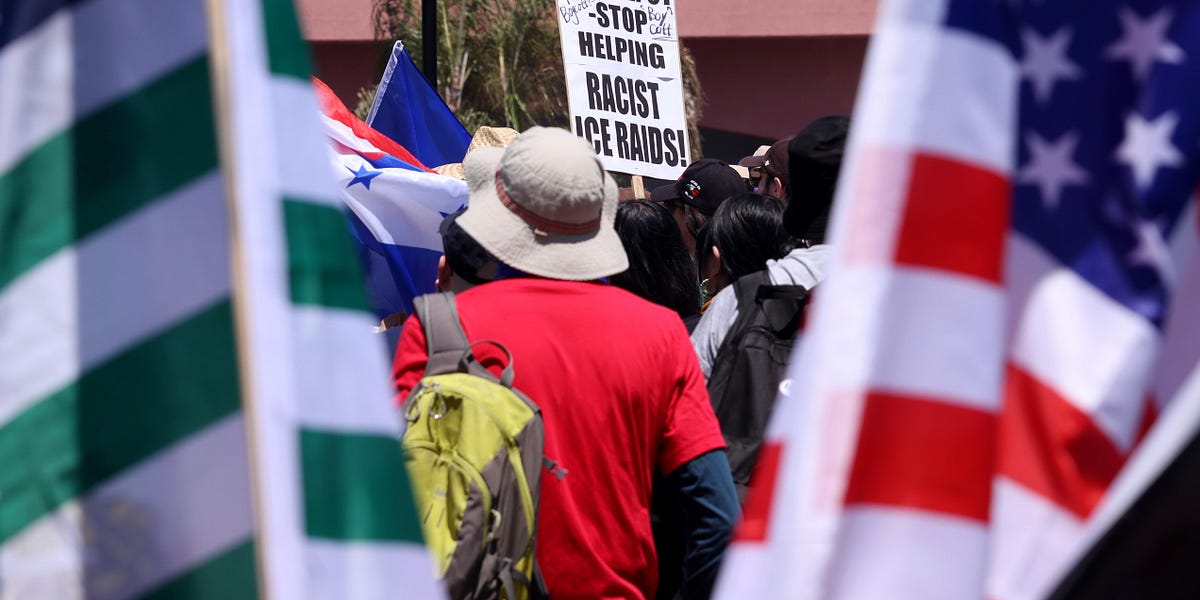
Consumer- and activist-driven backlash is targeting companies perceived to be enabling ICE operations, with Home Depot facing national boycott threats after its parking lots were used for raids and a disruptive “ice-scraper” protest forced a Monrovia store to temporarily close. Activist groups (NDLON, People’s Action) are pressuring AT&T over government contracts (a reported $146m ten-year DHS contract, an $11m ICE contract, and a $14m CBP deal) and targeting Amazon over cloud/data services; petitions exceed 12,000 signatures. Critics are also calling out a $2.2m no-bid Hendrick Motorsports vehicle contract, highlighting reputational and operational risk that could depress retail foot traffic, customer spending and generate negative PR for large-cap targets, though direct revenue exposure from the cited government contracts appears limited relative to the firms’ overall size.
Market structure: Consumer-facing retailers (Home Depot - HD) are direct losers due to viral, low-cost tactical protests that can create measurable localized traffic loss (estimate 0.5–2.0% weekly sales hit in affected stores if protests persist) and reputational costs; competitors not publicly tied to ICE (e.g., Lowe’s) are potential beneficiaries of share reallocation. Technology contractors (AMZN, PLTR) face reputational and regulatory pressure but the DHS/ICE contracts cited are immaterial to revenue (AT&T’s $146m/10yr ≈ $14.6m/year; AWS revenue $80B+ context), so market reaction risks being headline-driven rather than fundamentals-driven. Cross-asset: expect modest risk-off in small-cap retail names, temporary IV spikes in options for HD/T/AMZN, and negligible sovereign FX or commodity moves unless protests scale nationally.
Risk assessment: Tail risks include state-level procurement bans, multi-state boycotts scaling to a 3–6 month brand hit (1–5% EPS downside for a retailer like HD) or a privacy/regulatory probe into AMZN/PLTR that could trigger multi-quarter contract freezes. Time horizons: days (news-driven IV spikes, store disruptions), weeks–months (sustained boycott or legislative inquiries), quarters+ (brand damage, contract renegotiations). Hidden dependencies: cloud/data contracts create political leverage — a focused campaign can produce outsized headlines versus financial exposure. Catalysts: viral incidents, congressional letters, state AG actions, or contractor de-platforming by municipalities within 30–90 days.
Trade implications: Direct plays — short HD exposure and protect with options; long LOW as a relative winner (3–9 month horizon). For AT&T and AMZN, prefer event-driven micro-positions: buy AMZN on headline-driven pullbacks >4% intraday given fundamentals; keep T limited exposure given small DHS revenue but reputational drag (use 3–6 month put spreads only on catalyst). Options: buy 3-month HD put spreads to hedge; consider selling short-dated IV after initial spike. Sector rotation: reduce overweight on politically sensitive retail/defense-tech names and redeploy to staples/consumer names without public ties to enforcement over next 1–3 quarters.
Contrarian angles: Consensus overstresses headline risk vs. economic reality — AT&T and AMZN fundamentals dwarf the cited contract revenue, so crashes >8–12% would likely be overdone buying opportunities within 1–3 months. Historical parallels (targeted boycotts vs. corporate policy) show rapid press-driven shocks that fade if companies issue policy changes or minor concessions; HD is the highest-probability name to sustain longer damage due to daily foot traffic. Unintended consequences: aggressive shorting could provoke defensive buybacks or PR remediation that snap back shares; conversely, prolonged protests could force insurance/legal costs to rise, pressuring margins by several hundred basis points if sustained beyond six months.
AI-powered research, real-time alerts, and portfolio analytics for institutional investors.
Request DemoOverall Sentiment
moderately negative
Sentiment Score
-0.45
Ticker Sentiment
